Money-Back Guarantee · 100 days Free Worldwide Delivery
449,564artworks 30,613artists 4,658museums 32languages
Catalogue entry

Annunciation

Acrylic On Canvas.

Fig. 1. El Greco, Annunciation. Shown as the reproduction you are specifying: , .

§ 1Catalogue data

§ 2Abstract

Collectible Description

Explore the captivating world of El Greco! Discover his unique style, spiritual intensity, and lasting impact on art history. Learn about this Renaissance master's life, iconic paintings & legacy.

Artist Biography

El Greco's Mannerist style shines in The Burial of the Count of Orgaz. Discover his spiritual and dramatic masterpieces today.

§ 3Commentary

The Divine Encounter: El Greco’s ‘The Annunciation’

Doménikos Theotokópoulos, universally known as El Greco – “the Greek” – stands apart in the annals of art history. Born in Crete in 1541, under Venetian dominion, his artistic journey traversed Venice and Rome before anchoring itself firmly in the spiritual landscape of Spain: Toledo. He wasn’t merely responding to these locales; he synthesized their influences into a style utterly distinctive—one that foreshadowed the emotional fervor of Expressionism and the fractured forms of Cubism centuries ahead. His formative years within Byzantine tradition instilled in him meticulous attention to detail and a profound understanding of religious iconography, shaping his artistic vision from its inception. Yet, El Greco refused to be confined by convention. He proudly signed his works in Greek – “Krḗs” – asserting his Cretan heritage as he boldly embraced new artistic horizons. The genesis of his singular style resides in this paradoxical blend of tradition and innovation.
  • Subject Matter: The painting depicts the pivotal biblical narrative of Mary’s annunciation—the angel Gabriel informing her that she will conceive Jesus Christ, a cornerstone of Christian faith.
  • Style: El Greco's style is unequivocally Mannerist, characterized by elongated figures, dramatic poses, and flattened perspectives. This stylistic choice deliberately departs from the naturalism prevalent in earlier Renaissance art, prioritizing spiritual intensity over realistic representation.

Technique & Materials

El Greco employed tempera on panel—a technique demanding patience and precision—to achieve his ethereal effects. Tempera pigments bind to a prepared wooden surface using egg yolk, resulting in vibrant colors and remarkable durability. The artist meticulously layered translucent glazes over the initial underpainting, creating depth and luminosity that imbues the scene with an otherworldly glow. This masterful manipulation of light and color underscores El Greco’s commitment to conveying emotion and spiritual contemplation.
  • Color Palette: Dominant hues include reds—representing Mary's purity and divine grace—and blues—symbolizing heaven and spirituality—creating a harmonious visual dialogue.
  • Brushwork: El Greco utilized expressive brushstrokes, often applying paint in thick impasto to heighten textural contrast and emphasize the figures’ emotional presence.

Historical Context & Significance

Painted circa 1570, ‘The Annunciation’ emerged during a period of fervent religious fervor in Spain—a time when Catholicism held sway over societal life. El Greco's depiction aligns with the broader artistic trends of his era, reflecting the Mannerist preoccupation with psychological drama and symbolic representation. The painting transcends mere historical documentation; it embodies the profound spiritual yearning characteristic of its time, capturing a moment of divine revelation with breathtaking artistry. Its influence extended far beyond Toledo, inspiring artists across Europe who sought to express similar themes of faith and transcendence.

Symbolism & Emotional Impact

The composition itself is laden with symbolic significance. The angel Gabriel’s outstretched hand signifies divine grace and communication, while Mary's downward gaze embodies humility and receptivity. The halo surrounding Mary reinforces her sanctity and elevates the scene to a realm of spiritual contemplation. El Greco’s masterful rendering captures not only the narrative details but also the palpable emotion—the awe and wonder—experienced by those witnessing this momentous event. Viewing ‘The Annunciation’ evokes feelings of serenity, reverence, and profound connection to the divine—a testament to El Greco's enduring artistic legacy.

Reproductions & Inspiration

At AllPaintingsStore, you can acquire a stunning high-quality reproduction of El Greco’s ‘The Annunciation,’ allowing you to bring this iconic masterpiece into your home or studio. Explore the nuances of Venetian influences and Byzantine tradition—a celebration of Renaissance art history!

Questions & Answers

How do movement and era meet in "Annunciation" by El Greco?

"Annunciation" belongs to the Mannerist Expressionism movement, and its creator worked in the Renaissance era.

What underlying hue runs through "Annunciation" by El Greco?

A warm sunset tones hue runs through "Annunciation" by El Greco.

What space matches the colors of "Annunciation" by El Greco?

Considering its earthy colors, "Annunciation" is suggested for a living room.
§ 4The artist

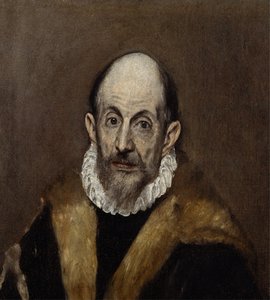
El Greco

El Greco

1541 - 1614, Greece

Artist Biography

The Cretan Foundation

Doménikos Theotokópoulos, known to history as El Greco, began his life in 1541 on the island of Crete. At that time, the island was a Venetian possession, a fact that would later allow him to bridge the gap between Eastern and Western traditions. He was trained as an icon painter within the Byzantine tradition, a discipline that demanded a meticulous attention to detail and a focus on the spiritual essence of a subject rather than mere physical likeness. This early immersion in the Cretan school provided him with a sense of symbolic precision that would remain a constant, even as his style underwent radical transformations.

By the age of twenty-six, he moved to Venice, seeking to expand his understanding of the natural world. In the Venetian Republic, he encountered the works of Titian and Tintoretto, absorbing their mastery of color and the use of light to define form. He learned to move away from the rigid lines of his youth, embracing a more fluid brushwork and a sense of dynamism. This period was not a rejection of his roots but an expansion of them, as he began to blend the disciplined iconography of his Greek heritage with the atmospheric sensuality of the Italian Renaissance.

The Toledo Transformation

After a period in Rome, where he encountered the elongated forms and sophisticated compositions of Mannerism, El Greco settled in Toledo, Spain, in 1577. This move proved decisive. Toledo was a center of intense religious fervor during the Counter-Reformation, providing a landscape perfectly suited to his increasingly mystical vision. It was here that his style reached its most distinctive phase, characterized by figures that appeared stretched and contorted, as if pulled by an unseen spiritual force. He used color not to mimic reality, but to heighten emotional impact, often employing unnatural hues to depict the divine.

His work in Spain was marked by a tension between the earthly and the ethereal. In The Burial of the Count of Orgaz (1586-1588), he juxtaposed the realistic portrayal of contemporary figures with elongated, celestial forms, creating a visual bridge between the mortal and the divine. His ability to manipulate light and shadow allowed him to create a sense of drama that felt both theatrical and deeply personal. He did not merely paint scenes; he attempted to render the emotional and spiritual realities that exist beyond the surface of the physical world.

A Legacy of Form and Light

The later years of his life saw a move toward even greater abstraction and mysticism. His compositions became more complex, and his figures more distorted, reflecting a growing detachment from conventional artistic norms. While he achieved success and received significant commissions from churches and monasteries in Toledo, his influence was not immediately felt by the broader art world after his death in 1614. For a long period, he was viewed as an eccentric, his work largely overlooked by the mainstream of art history.

It was not until the 20th century that his importance was fully recognized. Modernists found in his work a precursor to the expressive and fragmented styles of the future. His ability to distort proportion and use bold, emotive color resonated with those seeking to convey internal psychological states. Today, his paintings are viewed as windows into the human spirit, celebrated for their unique ability to capture the intensity of faith and the struggle for transcendence.

Notable works include:

§ 5Comparanda

§ 6Questions

Quick Facts

  • Movement: Mannerism
  • Artist: El Greco
  • Title: The Annunciation
  • Subject or theme: Religious Iconography
  • Influences:
    • Byzantine Tradition
    • Venetian Style

§ 7Cite this entry

AllPaintingsStore.com, “El Greco, Annunciation”, https://allpaintingsstore.com/en/art/el-greco-annunciation-8EWFT3-en/ (accessed 12 October 2026).

§ 8The reproduction

Hand Made Oil Reproduction

Hand-painted oil on canvas in your size and frame, made to order by our artists. ( Switch to Print Switch to Digital Image)

It is specified on the order sheet in the margin; the present state of that sheet reads as follows.

Annunciation

Reproduction Medium

Reproduction Size

-

Elite Senior Artist

More detail, finesse, and extra production time

-

Reproduction Frame

-

-

For artworks or reproductions larger than 105 cm (approximately 41 inches) on any side, the frame will be shipped as a kit, disassembled. This method ensures safe delivery and prevents damage during transport.

Professional assembly required - this is not a DIY product.
The kit must be assembled and the canvas stretched by an experienced professional framer, using wood glue (not supplied), a canvas stretching plier and clamps to hold the bars square while the glue dries. Incorrect assembly or uneven canvas tension can permanently damage the artwork and is not covered by our warranty.

  • All solid wood bars are included, precisely cut to size.

  • Assembled with the screws provided, plus wood glue for the corner joints, which is not supplied and must be sourced by your framer.

  • Professional tools are required and not included: a canvas stretching plier (tensioner) and clamps to hold the bars square while the glue dries.

Important:
The corner joints require wood glue, the bars must be held with clamps until the glue is fully dry, and tightening the canvas on the assembled frame requires a canvas stretching plier. None of these are included in the kit. Please arrange an experienced professional framer before ordering this size.

Nameplate

-

-

Protective Varnish

Glossy Varnish (enhances colors, protects against light/moisture)

-

Customize My Artwork

Examples of what can be changed: Replace face with customer photo; Add pet (e.g., replace cat with dog); Include hidden message in background; Change background landscape or elements.

-

Urgent

Worldwide Delivery () in 3/4 weeks instead of standard 5 weeks. (9 November). No compromise on quality.

-

Express Shipping

Worldwide Delivery () in 5 weeks. (16 November).

Included

Total Price

$ 258

Included with every order

  • Free Worldwide Express Shipping
  • High-Quality Linen Canvas
  • Full Shipping Insurance
  • Customs Tax Refund Guarantee
  • True Color Matching Guarantee
  • 100-Day Return Policy (Defects Only)
  • 100% Money-Back Guarantee
  • Bulk Discount Offer
Order sheet