Money-Back Guarantee · 100 days Free Worldwide Delivery
449,564artworks 30,613artists 4,660museums 32languages
Catalogue entry

St Ildefonso

1608. Oil On Canvas, 112.0 x 65.0 cm. National Gallery of Art.

Fig. 1. El Greco, St Ildefonso, 1608. Shown as the reproduction you are specifying: , .

§ 1Catalogue data

Dimensions
112.0 x 65.0 cm

§ 2Abstract

Collectible Description

Explore El Greco’s "St Ildefonso" – a dramatic Baroque masterpiece! Witness chiaroscuro, Virgin Mary symbolism & intricate detail in this 1608 oil painting. #ElGreco #BaroqueArt

Artist Biography

Explore El Greco's dramatic art! Discover Mannerist masterpieces, religious scenes & elongated figures. A pioneer of Expressionism & Cubism – view his iconic paintings!

§ 3Commentary

A Celestial Whisper in Toledo

In the quiet, scholarly solitude of a private chamber, a profound miracle unfolds upon the canvas. El Greco’s St Ildefonso captures not merely a man at work, but a soul caught in the luminous grip of the divine. The scene centers on Saint Ildefonso, deeply immersed in his theological writings, yet he is far from alone. Hovering with an ethereal, weightable grace, the Virgin Mary descends to present him with a stole—a sacred symbol of his ecclesiastical authority and a testament to the inspiration flowing directly from heaven. This is not a static portrait; it is a captured breath, a moment where the boundary between the earthly and the celestial dissolves into a single, breathtaking encounter. The emotional weight of the piece lies in this very tension, inviting the viewer to witness the exact second that human intellect meets divine revelation.

The Alchemy of Light and Shadow

To behold this masterpiece is to witness El Greco’s unparalleled ability to manipulate light as if it were a spiritual substance. Utilizing a dramatic chiaroscuro, the artist plunges much of the background into deep, mysterious shadows, forcing the viewer’s gaze toward the radiant focal points: the saint’s focused face and his industrious hands. His technique, a sophisticated blend of Venetian colorism and the rigid, iconographic beauty of his Byzantine roots, creates a texture that feels almost tactile. One can sense the heavy weight of the liturgical fabrics and the shimmering lightness of the silk, all achieved through meticulous layers of oil paint. The elongated, flickering forms characteristic of El Greco’s mature style lend the composition an otherworldly energy, making the apparition of the Virgin appear as a luminous flame emerging from the darkness, pulling the viewer into his unique, visionary world.

An Enduring Legacy for the Discerning Collector

For the art enthusiast or the interior designer seeking to infuse a space with profound depth and soul, St Ildefonso offers an unparalleled presence. Its dramatic verticality and intense emotional resonance make it a commanding centerpiece for any curated collection. Whether placed in a sunlit gallery or a moody, contemporary study, the painting brings with it a sense of historical gravity and spiritual contemplation. The interplay of rich textures and dramatic lighting provides a sophisticated anchor for classical or modern decor alike. Owning a high-quality reproduction of this work allows one to invite El Greco’s unique brand of spiritual drama into the modern home, providing a window into a period where art served as the ultimate bridge between man and the infinite. It is more than mere decoration; it is an invitation to pause, to reflect, and to marvel at the enduring power of artistic genius.

Questions & Answers

What stage of El Greco's career does "St Ildefonso" (1608) belong to?

"St Ildefonso", created in 1608, belongs to the Mature Period of El Greco's career.

How big is the original "St Ildefonso"?

"St Ildefonso" measures 112 x 65 cm in its original form. Original dimensions are a useful reference when choosing a reproduction size.

How harmonious are the colors of "St Ildefonso" by El Greco?

The colors of "St Ildefonso" by El Greco show a strong color unity harmony. Harmony describes how the colors relate to each other.
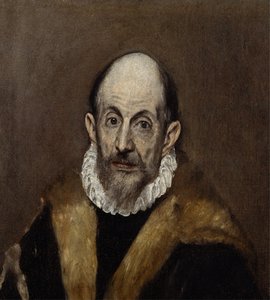
§ 4The artist

El Greco

El Greco

1541 - 1614, Greece

Quick facts about El Greco

  • Artistic Movement Or Style: Mannerism, Baroque
  • Artists Or Movements Influenced By This Artist:
    • Expressionism
    • Cubism
  • Artists Who Influenced This Artist:
    • Titian
    • Tintoretto
  • Date Of Birth: 1541
  • Date Of Death: 1614
  • Full Name: Doménikos Theotokópoulos
  • Nationality: Greek-Spanish
  • Notable Artworks:
    • Burial of the Count of Orgaz
    • View of Toledo
    • El Espolio
    • St. Sebastian
  • Place Of Birth: Crete, Greece

Artist Biography

A Life Forged in Faith and Fire

Doménikos Theotokópoulos, known to the world as El Greco – “the Greek” – was a painter whose life and work defied easy categorization. Born in 1541 on the island of Crete, then under Venetian rule, his artistic journey led him through Venice and Rome before finding its ultimate expression in the spiritual heartland of Spain: Toledo. El Greco wasn’t merely a product of these places; he synthesized their influences into something wholly unique, a style that anticipated the emotional intensity of Expressionism and the fragmented forms of Cubism centuries later. His early training within the Byzantine tradition instilled in him a meticulous attention to detail and a profound understanding of religious iconography. This foundation, however, wouldn’t confine him. He signed his works in Greek, often appending “Krḗs” – Cretan – as a proud declaration of his origins, even as he ventured into new artistic territories. The seeds of his distinctive style were sown not just in technique but also in the fervent religious climate of his homeland and the rich tapestry of Venetian art.

From Venice to Toledo: A Transformation

The move to Venice around 1567 marked a pivotal moment. Immersed in the vibrant artistic scene, El Greco studied the masters – Titian, Tintoretto, Veronese – absorbing their mastery of color, composition, and dramatic lighting. He learned to loosen his brushwork, to embrace the sensuality of oil paint, and to depict figures with a newfound dynamism. This Venetian influence is visible in early works like *St. Sebastian* (1600), where anatomical detail blends seamlessly with an almost theatrical use of light and shadow. A subsequent sojourn in Rome exposed him to Mannerism, a style characterized by elongated forms, distorted perspectives, and sophisticated compositions. While he demonstrated considerable talent, El Greco found it difficult to gain widespread recognition in the competitive Roman art world. It was his relocation to Toledo in 1577 that finally allowed his singular vision to flourish. The city, then a center of religious fervor during the Counter-Reformation, provided both patronage and an atmosphere conducive to his intensely spiritual paintings.

A Style Unlike Any Other

El Greco’s artistic style is instantly recognizable – and utterly captivating. His figures are often dramatically elongated, their bodies stretched and contorted in poses that convey a sense of spiritual ecstasy or profound anguish. This isn't mere stylistic affectation; it’s an attempt to depict the unseen, the emotional and spiritual realities that lie beyond the surface of things. He masterfully employed color – not necessarily realistic color, but vibrant, often unnatural hues – to heighten the emotional impact of his work. Dramatic lighting, with stark contrasts between light and shadow, creates a theatrical effect, drawing the viewer into the heart of the scene. The Burial of the Count of Orgaz (1586-1588), considered his masterpiece, exemplifies these qualities perfectly. The painting depicts a miraculous event – the descent of saints to bury a pious nobleman – with remarkable realism in the portrayal of contemporary figures juxtaposed against ethereal, elongated forms representing divine intervention. He blended Byzantine traditions with Italian Renaissance techniques, forging a style that was both innovative and deeply personal. His later works became increasingly mystical, reflecting his own profound religious beliefs and a growing detachment from conventional artistic norms.

Legacy and Rediscovery

Despite achieving considerable success during his lifetime – receiving important commissions from churches and monasteries in Toledo – El Greco’s work fell into relative obscurity after his death in 1614. For centuries, he was largely overlooked by art historians, dismissed as an eccentric or a provincial artist. It wasn't until the 20th century that his genius began to be fully appreciated. Artists like Picasso and Braque recognized him as a precursor to modern art, particularly Cubism, admiring his distorted forms and unconventional perspectives. His expressive style resonated with the Expressionists, who sought to convey emotional intensity through bold colors and dramatic compositions. Today, El Greco is celebrated as one of the most important figures in Western art history – a visionary painter whose work continues to captivate audiences with its spiritual depth, emotional power, and unique artistic vision. His paintings are not merely representations of religious scenes; they are windows into the soul, testaments to the enduring power of faith, and celebrations of the human spirit’s capacity for transcendence.

Notable Works

  • The Burial of the Count of Orgaz (1586-1588): His undisputed masterpiece, a monumental work blending realism and spiritual intensity.
  • View of Toledo (1596-1600): A dramatic landscape showcasing the city in a swirling, atmospheric style, capturing its essence with an almost visionary quality.
  • The Opening of the Fifth Seal (1608-1614): Part of a series inspired by the Book of Revelation, this painting exemplifies El Greco’s apocalyptic vision and his mastery of dramatic composition.
  • St. Sebastian (1600): A powerful depiction of the saint, blending anatomical detail with theatrical lighting and emotional intensity.
  • El Espolio (The Disrobing of Christ) (1577-1579): An early work showcasing his Venetian influences and dramatic use of color and light.

§ 5Comparanda

§ 6Questions

Quick Facts

  • movement: Baroque, Mannerism
  • artist: El Greco (Doménikos Theotokópoulos)
  • title: St Ildefonso
  • medium: Oil on canvas
  • subject: Religious - Saint Ildefonso writing, depiction of the Virgin Mary

Art Quiz

There is only one correct answer for each question.

Question 1:
In what year was 'St Ildefonso' painted?
Question 2:
Which artistic movement is most strongly associated with El Greco and evident in 'St Ildefonso'?
Question 3:
What technique, characterized by strong contrasts between light and dark, is prominently used in this painting?
Question 4:
The presence of the Virgin Mary in 'St Ildefonso' most likely symbolizes what?
Question 5:
El Greco’s artistic style was significantly influenced by artists from which city during his earlier career?

§ 7Cite this entry

AllPaintingsStore.com, “El Greco, St Ildefonso (1608)”, https://allpaintingsstore.com/en/art/el-greco-st-ildefonso-8YE22L-en/ArtistReproduction/ (accessed 5 October 2026).

§ 8The reproduction

Hand Made Oil Reproduction

Hand-painted oil on canvas in your size and frame, made to order by our artists. ( Switch to Print Switch to Digital Image)

It is specified on the order sheet in the margin; the present state of that sheet reads as follows.

St Ildefonso

Reproduction Medium

Reproduction Size

-

Elite Senior Artist

More detail, finesse, and extra production time

-

Reproduction Frame

-

-

For artworks or reproductions larger than 105 cm (approximately 41 inches) on any side, the frame will be shipped as a kit, disassembled. This method ensures safe delivery and prevents damage during transport.

Professional assembly required - this is not a DIY product.
The kit must be assembled and the canvas stretched by an experienced professional framer, using wood glue (not supplied), a canvas stretching plier and clamps to hold the bars square while the glue dries. Incorrect assembly or uneven canvas tension can permanently damage the artwork and is not covered by our warranty.

  • All solid wood bars are included, precisely cut to size.

  • Assembled with the screws provided, plus wood glue for the corner joints, which is not supplied and must be sourced by your framer.

  • Professional tools are required and not included: a canvas stretching plier (tensioner) and clamps to hold the bars square while the glue dries.

Important:
The corner joints require wood glue, the bars must be held with clamps until the glue is fully dry, and tightening the canvas on the assembled frame requires a canvas stretching plier. None of these are included in the kit. Please arrange an experienced professional framer before ordering this size.

Nameplate

-

-

Protective Varnish

Glossy Varnish (enhances colors, protects against light/moisture)

-

Customize My Artwork

Examples of what can be changed: Replace face with customer photo; Add pet (e.g., replace cat with dog); Include hidden message in background; Change background landscape or elements.

-

Urgent

Worldwide Delivery () in 3/4 weeks instead of standard 5 weeks. (2 November). No compromise on quality.

-

Express Shipping

Worldwide Delivery () in 5 weeks. (9 November).

Included

Total Price

$ 258

Included with every order

  • Free Worldwide Express Shipping
  • High-Quality Linen Canvas
  • Full Shipping Insurance
  • Customs Tax Refund Guarantee
  • True Color Matching Guarantee
  • 100-Day Return Policy (Defects Only)
  • 100% Money-Back Guarantee
  • Bulk Discount Offer
Order sheet