Money-Back Guarantee · 100 days Free Worldwide Delivery
449,564artworks 30,613artists 4,660museums 32languages
Catalogue entry

Study

1663. Acrylic On Paper, 210.0 x 162.0 cm. Walker Art Gallery.

Fig. 1. Elisabetta Sirani, Study, 1663. Shown as the reproduction you are specifying: , .

§ 1Catalogue data

Dimensions
210.0 x 162.0 cm

§ 2Abstract

Collectible Description

Discover "Study" by Elisabetta Sirani – a captivating 17th-century chalk drawing of two figures, showcasing Baroque artistry and the artist's remarkable skill. Explore its history & beauty!

Artist Biography

Discover Elisabetta Sirani (1638-1665), a Baroque master from Bologna! This pioneering painter ran a successful workshop & founded an academy for women artists, celebrated for portraits and religious scenes.

§ 3Commentary

A Moment Frozen in Charcoal: Elisabetta Sirani’s “Study”

Within the hallowed halls of the Walker Art Gallery in Liverpool resides a deceptively simple yet profoundly moving work – Elisabetta Sirani's "Study," executed in 1663. More than just a preparatory sketch, it is a miniature world brimming with tenderness, quiet observation, and an exquisite understanding of human connection. The drawing, rendered primarily in delicate shades of brown and beige using charcoal on paper, immediately draws the eye with its intimate scale – measuring a modest 210 x 162 centimeters – inviting viewers to step into a private, almost sacred space.

Sirani’s genius lies not in grand gestures or dramatic displays, but rather in her ability to capture fleeting moments of genuine emotion. The composition centers on a young woman, presumably the artist's sister, gently lifting the sleeve of a child – likely her own son, Giovanni Andrea – revealing his small hand. This simple act, frozen in charcoal, speaks volumes about familial love and the quiet intimacy of domestic life. The pose is remarkably naturalistic; Sirani eschews overly stylized figures, opting instead for a directness that feels utterly honest and unpretentious.

Baroque Simplicity: Technique and Style

“Study” exemplifies the hallmarks of Baroque art while simultaneously forging its own distinctive path. Sirani’s technique is characterized by an economy of line – she employs minimal outlining, relying instead on subtle tonal variations to define form and create a sense of volume. The use of *grisaille*, a monochrome drawing technique using shades of gray, allows her to focus entirely on capturing the essence of the subject without distraction from color. The paper itself is laid down, adding texture and visual interest to the composition.

Noticeably absent are any elaborate details or decorative flourishes typical of some Baroque works. Instead, Sirani’s strength lies in her masterful control of light and shadow – a technique known as *chiaroscuro* – which imbues the scene with a palpable sense of depth and atmosphere. The soft, diffused lighting suggests an interior setting, perhaps a room bathed in natural light, further enhancing the feeling of intimacy.

A Window into 17th-Century Bologna

To fully appreciate “Study,” it’s crucial to understand its historical context. Elisabetta Sirani emerged as one of the first women artists to achieve significant recognition in early modern Bologna – a city renowned for its vibrant artistic community and patronage system. Despite facing considerable societal obstacles, she established herself as a respected painter, producing both commissioned works and independent studies. “Study” offers a rare glimpse into her working methods and artistic philosophy.

The drawing’s creation coincided with a period of intense artistic innovation in Bologna, influenced by the legacy of Guido Reni and the prevailing trends of the Baroque style. However, Sirani's approach was distinctly her own – characterized by a refined sensibility and an unwavering commitment to capturing the emotional truth of her subjects. It is believed that this drawing served as a study for a larger allegorical composition, likely commissioned by Prince Leopoldo de’ Medici in Florence, highlighting the virtues associated with his family’s rule.

The Enduring Power of Observation

“Study” transcends its technical merits to become a poignant meditation on human connection. The simple act of a mother tending to her child is rendered with such sensitivity and grace that it resonates deeply with viewers across centuries. Sirani's ability to distill complex emotions into a single, carefully observed drawing speaks to the enduring power of art to illuminate the beauty and fragility of everyday life.

Today, reproductions of “Study” are readily available through platforms like AllPaintingsStore.com, offering art enthusiasts the opportunity to bring this exquisite work into their homes and offices. It’s a testament to Sirani's skill that her drawing continues to captivate audiences with its quiet dignity and profound emotional resonance – a timeless reminder of the simple joys of family and the enduring power of observation.

Questions & Answers

What is "Study" made with, and in which style?

In "Study", the acrylic on paper technique meets the Baroque Art movement.

Is "Study" a famous Baroque Art artwork?

"Study" is recorded as recognized among the Baroque Art works in the catalog.

Can I see an X-ray view of "Study" by Elisabetta Sirani?

"Study" can be examined layer by layer on the artwork's X-Ray page, a viewer inspired by a conservator's light bench with eleven optical readings of the image.

§ 4The artist

Elisabetta Sirani

Elisabetta Sirani

1638 - 1665, Italy

Quick facts about Elisabetta Sirani

  • Full Name: Elisabetta Sirani
  • Nationality: Italian
  • Date Of Birth: 1638
  • Date Of Death: 1665
  • Place Of Birth: Bologna, Italy
  • Notable Artworks:
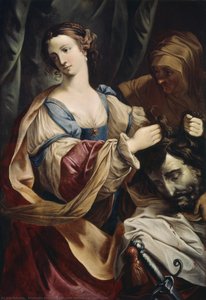
    • Judith with Holofernes
    • Self-Portrait
    • Baptism of Christ
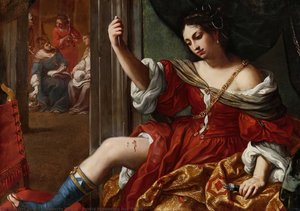
    • Portia Wounding Thigh
    • Virgin Crowned Roses
  • Artistic Movement Or Style: Baroque painting
  • Artists Who Influenced This Artist: ['Guido Reni']

Artist Biography

A Life in Baroque Bologna

Elisabetta Sirani was a luminous figure in the 17th-century art world, a testament to talent and determination flourishing amidst the societal constraints of her time. Born in Bologna in January 1638, she rose to prominence as one of the most celebrated painters of the Italian Baroque period—a remarkable feat for any artist, but particularly extraordinary for a woman navigating a profession overwhelmingly dominated by men. Her story is not merely that of an artistic prodigy; it’s a narrative interwoven with entrepreneurial spirit, familial dedication, and a progressive vision that extended to establishing opportunities for other women in the arts.

Artistic Roots and Early Development

Elisabetta's artistic journey began within the vibrant atmosphere of her family home. Her father, Giovanni Andrea Sirani, was himself a respected painter and art merchant, deeply connected to the Bolognese school—a tradition profoundly influenced by the legacy of Guido Reni. While some accounts suggest initial hesitation on her father’s part regarding fully embracing Elisabetta as a pupil, fearing she might surpass his own skill, it quickly became evident that her talent was exceptional. She absorbed and mastered his techniques with astonishing speed, developing a distinctive style that blended the grace and idealism of Reni with an emerging dynamism all her own. Giovanni Andrea had been a student and close collaborator of Guido Reni, ensuring that this master’s influence permeated the family studio. This connection to Reni was crucial; it instilled in Elisabetta a mastery of light and shadow, elegant compositions, and a refined sense of form that would characterize much of her work. Beyond technical skill, she received a broad education encompassing classical mythology and biblical narratives—essential foundations for an artist working within the religious and mythological traditions of the Baroque era.

A Prolific Career and Innovative Style

Despite a tragically short career – she died at just 27 years old in August 1665 – Elisabetta Sirani produced an astonishing body of work. Over 120 paintings, countless drawings, and numerous etchings attest to her relentless creativity and productivity. This output wasn’t simply the result of innate talent; it was fueled by necessity. By 1654, with her father incapacitated by gout, Elisabetta assumed responsibility for managing the family workshop, becoming the primary breadwinner for her parents and siblings. She skillfully balanced artistic creation with the demands of running a business—accepting commissions for portraits, religious scenes, and mythological subjects while simultaneously teaching students in her studio. Her style was characterized by dynamic compositions, vibrant colors, and an ability to capture emotion and movement with remarkable skill. Contemporaries like Carlo Cesare Malvasia praised her “originality of composition,” her distinctive drawing style, and the speed with which she worked—a testament to both her technical prowess and her artistic vision. She wasn’t merely replicating existing styles; she was forging a new path, infusing traditional subjects with a fresh energy and emotional depth.

Legacy and Lasting Significance

Elisabetta Sirani cultivated a devoted following during her lifetime, becoming arguably more famous than both her father and sisters. She was often hailed as the “diva” of Bolognese painting—the female reincarnation of Guido Reni himself. Her sudden death at such a young age, initially shrouded in suspicion due to accusations of poisoning by a maidservant (though these charges were later dropped), only amplified public fascination with her life and work. The most likely cause was peritonitis resulting from a ruptured peptic ulcer, exacerbated by the stresses of managing her household and workshop. Her elaborate funeral—complete with an enormous catafalque adorned with a life-sized sculpture and orations composed in her honor—underscored the high esteem in which she was held by her contemporaries. Beyond her artistic achievements, Elisabetta’s most enduring legacy lies in her commitment to empowering other women artists. She established an academy for female artists in Bologna, providing them with opportunities for training and professional development at a time when such avenues were largely closed to them. This act of defiance against societal norms cemented her place as a pioneer—a champion of gender equality within the art world. Today, Elisabetta Sirani’s contributions are increasingly recognized, solidifying her position as a significant figure in Baroque art history and an inspiration for generations of artists to come. Her story serves as a powerful reminder that talent knows no gender and that determination can overcome even the most formidable barriers.

Key Works

  • Judith with the Head of Holofernes: A dramatic depiction of the biblical heroine, showcasing Sirani’s mastery of chiaroscuro and emotional intensity.
  • Self-Portrait: An intimate and revealing portrayal of the artist herself, offering a glimpse into her personality and artistic confidence.
  • Study for the Baptism of Christ: A dynamic sketch demonstrating Sirani’s skill in capturing movement and anatomical detail.
  • Portia Wounding Her Thigh: An unusual and compelling interpretation of a Shakespearean scene, highlighting Sirani’s willingness to tackle complex narratives.
  • The Virgin Crowned by Christ Child with Roses: A tender and devotional image showcasing Sirani's ability to convey warmth and intimacy in her religious paintings.

§ 5Comparanda

§ 6Questions

Quick Facts

  • Dimensions: 210 x 162 cm
  • Title: Study
  • Artistic style: Realistic
  • Year: 1663
  • Location: Walker Art Gallery, Liverpool
  • Artist: Elisabetta Sirani

Art Quiz

There is only one correct answer for each question.

Question 1:
What is the primary medium used in Elisabetta Sirani’s ‘Study’?
Question 2:
The drawing 'Study' is primarily a preparatory study for what type of commission?
Question 3:
What is a notable characteristic of Elisabetta Sirani’s technique as demonstrated in ‘Study’?
Question 4:
In what century was Elisabetta Sirani’s ‘Study’ created?
Question 5:
The drawing 'Study' features which of the following subjects?

§ 7Cite this entry

AllPaintingsStore.com, “Elisabetta Sirani, Study (1663)”, https://allpaintingsstore.com/en/art/elisabetta-sirani-study-8XZVHF-en/ArtistReproduction/ (accessed 8 October 2026).

§ 8The reproduction

Hand Made Oil Reproduction

Hand-painted oil on canvas in your size and frame, made to order by our artists. ( Switch to Print Switch to Digital Image)

It is specified on the order sheet in the margin; the present state of that sheet reads as follows.

Study

Reproduction Medium

Reproduction Size

-

Elite Senior Artist

More detail, finesse, and extra production time

-

Reproduction Frame

-

-

For artworks or reproductions larger than 105 cm (approximately 41 inches) on any side, the frame will be shipped as a kit, disassembled. This method ensures safe delivery and prevents damage during transport.

Professional assembly required - this is not a DIY product.
The kit must be assembled and the canvas stretched by an experienced professional framer, using wood glue (not supplied), a canvas stretching plier and clamps to hold the bars square while the glue dries. Incorrect assembly or uneven canvas tension can permanently damage the artwork and is not covered by our warranty.

  • All solid wood bars are included, precisely cut to size.

  • Assembled with the screws provided, plus wood glue for the corner joints, which is not supplied and must be sourced by your framer.

  • Professional tools are required and not included: a canvas stretching plier (tensioner) and clamps to hold the bars square while the glue dries.

Important:
The corner joints require wood glue, the bars must be held with clamps until the glue is fully dry, and tightening the canvas on the assembled frame requires a canvas stretching plier. None of these are included in the kit. Please arrange an experienced professional framer before ordering this size.

Nameplate

-

-

Protective Varnish

Glossy Varnish (enhances colors, protects against light/moisture)

-

Customize My Artwork

Examples of what can be changed: Replace face with customer photo; Add pet (e.g., replace cat with dog); Include hidden message in background; Change background landscape or elements.

-

Urgent

Worldwide Delivery () in 3/4 weeks instead of standard 5 weeks. (5 November). No compromise on quality.

-

Express Shipping

Worldwide Delivery () in 5 weeks. (12 November).

Included

Total Price

$ 258

Included with every order

  • Free Worldwide Express Shipping
  • High-Quality Linen Canvas
  • Full Shipping Insurance
  • Customs Tax Refund Guarantee
  • True Color Matching Guarantee
  • 100-Day Return Policy (Defects Only)
  • 100% Money-Back Guarantee
  • Bulk Discount Offer
Order sheet