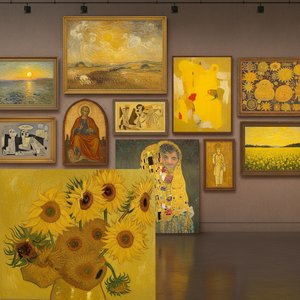
1909. Acrylic On Canvas.

§ 1Catalogue data


§ 2Abstract
Collectible Description
 Read More
Artist Biography
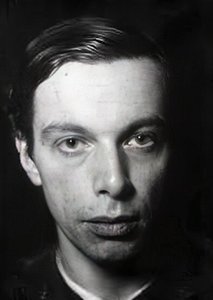
Ernst Ludwig Kirchner (1880-1938): A leading German Expressionist & Die Brücke founder. Explore his bold, emotive paintings of urban life, nudes, and landscapes – a powerful voice of early 20th-century art.
§ 3Commentary
Marcella – A Portrait of Anxiety in Expressionist Color
Ernst Ludwig Kirchner’s “Marcella,” painted in 1909, stands as a cornerstone of German Expressionism—a movement defined by its fervent embrace of subjective emotion and a deliberate distortion of reality. More than just a depiction of a young woman, it's an exploration of psychological unease rendered with audacious color palettes and unsettling compositional choices that continue to resonate with viewers today.
Composition & Perspective: Flattened Space
The artwork’s simplicity is deceptive; Kirchner meticulously crafted a scene designed to convey intense feeling. The figure occupies the majority of the frame, positioned slightly off-center—a deliberate tactic that disrupts traditional perspective and contributes to the overall sense of claustrophobia. A large yellow plane dominates the background, punctuated by abstract shapes hinting at architectural elements like mirrors or windows on the left side – these additions amplify the feeling of confinement.
Color Palette & Texture: Bold Declarations Against Tranquility
Kirchner’s color choices are deliberately jarring. The dominant hue is a vibrant yellow—a color often associated with optimism and enlightenment, yet here it serves as a backdrop for muted pinks and creams representing flesh tones, shadowed by deep browns and blacks. This stark contrast underscores the emotional turmoil at play. Thick brushstrokes create a palpable texture, an impression of impasto that captures the artist’s energetic technique—a deliberate rejection of academic smoothness in favor of expressive materiality.
Style & Technique: Distortion as Emotional Expression
"Marcella" exemplifies Expressionism's core tenets. Kirchner employs angular lines to delineate the figure’s form, rejecting naturalistic representation and prioritizing emotional impact. The striped pattern on the skirt adds another layer of visual complexity—a subtle gesture that reinforces the artwork’s unsettling atmosphere. He achieves tonal variations within the planes of color through layering and blending, demonstrating a masterful command of oil paint.
Symbolism & Emotional Resonance: Fear Beneath the Surface
Beyond its formal elements, “Marcella” is laden with symbolic significance. The woman's somber expression—coupled with her gaze directly at the viewer—suggests introspection and vulnerability. The white bow adorning her hair could be interpreted as an attempt to conceal inner anxieties, mirroring themes explored in Munch’s *The Scream*. Ultimately, Kirchner’s “Marcella” compels us to confront uncomfortable truths about human experience—a testament to the enduring power of Expressionist art.
Questions & Answers
How strong are the colors of "Marcella"?
The colors of "Marcella" by Ernst Ludwig Kirchner show a clear color presence saturation with a vivid intensity.
Can I see "Marcella" by Ernst Ludwig Kirchner on my own wall before buying?
"Marcella" has an augmented reality preview: the artwork's AR Preview page shows it in your own space on a compatible device.
Which period of Ernst Ludwig Kirchner's career does "Marcella" belong to?
Within Ernst Ludwig Kirchner's career, "Marcella" falls in the Early Period. The phase helps compare it with the artist's other works.




 Switch to Print


 For artworks or reproductions larger than 105 cm (approximately 41 inches) on any side, the frame will be shipped as a kit, disassembled. This method ensures safe delivery and prevents damage during transport.