- Home

- Oil Painting Reproduction
- Felix Nussbaum
- In the camp

 Buy print
 Send
Send Share
Share
 Details

 Download
 Similars
 X-Ray
X-Ray Diaporama
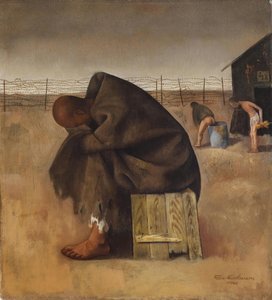
In the camp
 Acrylic On Canvas
- WallArt
- Surrealism
 1940
1940 47.0 x 42.0 cm
 German Historical Museum
 Read More
Hand Made Oil Reproduction
Hand-painted oil on canvas in your size and frame, made to order by our artists.




P118B $10

P118H $10

P118W $10

P438Z $10

P508JH $12

P508YH $12

P805H $10

P805Z $10

P919BZ $10

P919G $10

P919XJ $10

P959ZH $10

P968JZ $12

W106C $8

W218G $10

W218JH $8

W218Y $10

W307PJ $10

W316G $10

W316PJ $8

W316Y $10

W398PJ $8

W4111J $10

W500HY $15

W500JH $15

W692G $12

W849H $8

W940BG $15

W953PJ $8




Pick from our preset sizes that match the artwork's original proportions.

You may enter your own dimensions to fit a specific frame or space. If your selected size does not match the original image's proportions, we will either crop the artwork or extend the painting with additional hand-painted elements. A digital mockup will be sent for your approval before production begins.
Please note that the on-screen preview does not reflect the actual cropping or extension. Only the mockup will accurately show the final composition.
While custom sizes are available, we recommend selecting a dimension from the predefined list to preserve the original proportions.
After order, AllPaintingsStore.com team will email client for instructions and provide a mockup preview
Worldwide Delivery () in 3/4 weeks instead of standard 5 weeks. (16 July). No compromise on quality.

Free Worldwide Express Shipping

High-Quality Linen Canvas

Full Shipping Insurance

Customs Tax Refund Guarantee

True Color Matching Guarantee

60-Day Return Policy (Defects Only)

100% Money-Back Guarantee

Bulk Discount Offer
 Glass option is only available in size under 110 CM

In the camp
Reproduction Medium
Reproduction Size
-


Total Price
-
Artwork Description
Felix Nussbaum’s “In The Camp” – A Portrait of Despair Rendered in Bold Minimalism
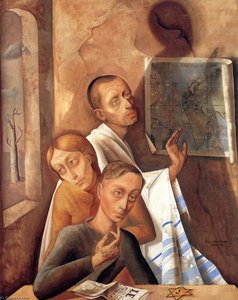
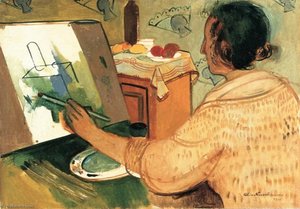
The painting "In The Camp" by Felix Nussbaum, created in 1940 during his imprisonment at Saint Cyprien internment camp—a harrowing experience that encapsulates the psychological toll of Nazi persecution—stands as a testament to both artistic innovation and profound human emotion. Nussbaum’s oeuvre is marked by Neue Sachlichkeit, or New Objectivity, an art movement born from disillusionment with Expressionism's emotional fervor following World War I. This stylistic choice reflects Nussbaum’s desire to confront the brutal realities of his situation without resorting to sentimental melodrama—a deliberate rejection of artistic conventions that would have obscured the gravity of the subject matter.- Subject Matter: The painting depicts a man seated on a crate in the sand, positioned against a bleak landscape dominated by barbed wire and scattered bones. This stark visual representation underscores the dehumanizing conditions endured by Jewish internees during the occupation of France.
- Composition & Technique: Nussbaum employs a minimalist approach—primarily black and white—to heighten the impact of his depiction. The subdued palette amplifies the sense of isolation and hopelessness, mirroring the psychological state of those imprisoned. Thick brushstrokes contribute to textural richness, conveying both physical discomfort and emotional turmoil.
- Symbolism: Several elements within the painting carry symbolic weight. The man’s slumped posture embodies defeat and resignation; his downward gaze signifies introspection and despair. The woman defecating into a steel drum serves as a visceral reminder of the degradation inherent in the camp environment, symbolizing loss of dignity and humanity.
- Historical Context: Created during the Second World War, “In The Camp” captures the pervasive atmosphere of fear and uncertainty that gripped Europe under Nazi rule. Nussbaum’s artistic response to this crisis reflects a broader trend toward confronting uncomfortable truths—a courageous assertion of human experience amidst unimaginable suffering.
Exploring Nussbaum's Artistic Vision: Neue Sachlichkeit & Its Influence
Neue Sachlichkeit, championed by artists like Georg Grosz and Otto Dix, rejected the expressive distortions favored by Expressionism in favor of a rigorously objective portrayal of reality—often unflinching in its depiction of social ills. Nussbaum’s stylistic commitment aligns perfectly with this movement's ethos: he eschews emotional embellishment to convey the bleakness of his surroundings with uncompromising honesty. This deliberate aesthetic choice underscores Nussbaum’s conviction that art should serve as a conduit for confronting difficult truths and fostering empathy for those experiencing hardship.The Emotional Resonance of “In The Camp”: A Window Into Existential Angst
Beyond its formal qualities, "In The Camp" possesses a palpable emotional resonance—a haunting portrayal of existential angst that transcends time and circumstance. Nussbaum’s masterful use of light and shadow contributes to the painting's dramatic intensity, emphasizing the man’s vulnerability against the backdrop of oppressive surroundings. The overall impression is one of profound sadness and disillusionment—a poignant reminder of the human cost of ideological extremism.Reproductions & Artistic Legacy: Bringing Nussbaum’s Vision Home
High-quality reproductions of “In The Camp” offer a captivating glimpse into Nussbaum's artistic genius and his unflinching engagement with the horrors of the Holocaust. These prints allow viewers to appreciate the painting’s meticulous detail and expressive power—a testament to Nussbaum’s enduring legacy as an artist who bravely confronted darkness while striving to preserve beauty amidst despair. Consider framing it in a neutral tone to maximize its impact, enhancing its contemplative mood.Related Artworks



Artist Biography
A Life Etched in Exile: The Haunting Vision of Felix Nussbaum
Felix Nussbaum’s story is a stark and profoundly moving testament to the power of art born from unimaginable suffering. Born in Osnabrück, Germany, in 1904, his life unfolded against the backdrop of rising nationalism and escalating persecution, culminating in the horrors of the Holocaust. He wasn't simply a victim *of* history; he was an artist who meticulously documented its impact on his soul, creating a body of work that stands as both a personal lament and a universal warning. Nussbaum’s paintings offer a rare, unflinching glimpse into the psychological landscape of displacement, fear, and ultimately, annihilation – a perspective often absent from broader historical narratives. His father, Philipp Nussbaum, a World War I veteran with an early passion for painting himself, recognized and nurtured his son's talent, providing encouragement that would prove vital in the darkening years to come. This initial support fostered a lifelong dedication to art, even as political realities increasingly constricted his path.Formative Years and Artistic Influences
Nussbaum’s artistic journey began with formal studies in Hamburg and Berlin in 1920, continuing for as long as circumstances allowed. His early work reveals a clear debt to the Post-Impressionist masters, particularly Vincent van Gogh and Henri Rousseau. The vibrant colors and expressive brushwork of these artists provided a foundation upon which Nussbaum would later build his unique style. However, he wasn’t content with mere imitation. He actively sought out new influences, drawn to the unsettling dreamscapes of Giorgio de Chirico and Carlo Carrà, pioneers of the *pittura metafisica* movement. The careful attention to color demonstrated by Carl Hofer's expressionist paintings also left a lasting impression on Nussbaum’s approach. These diverse inspirations coalesced into what would become known as his “New Objectivity” style – a blend of realism and surrealism, characterized by precise detail, unsettling compositions, and a pervasive sense of alienation. This period was marked by experimentation and growth, but the looming shadow of Nazi ideology soon threatened to extinguish his artistic promise.Exile, Isolation, and the Shadow of War
The ascent of the Nazis in 1933 irrevocably altered Nussbaum’s life. Studying on a scholarship in Rome at the Berlin Academy of the Arts, he witnessed firsthand the chilling pronouncements of Hitler's propaganda minister, outlining the tenets of Nazi art – glorification of heroism and the Aryan race. It became painfully clear that as a Jew, his place within the German artistic establishment was untenable. This realization forced him into exile, first to Paris and then to Belgium, where he married Felka Platek in 1937. The following decade was defined by fear and isolation. Despite finding some measure of safety, Nussbaum lived under constant threat, haunted by the knowledge of his parents’ perilous situation back in Germany. They had initially resisted his pleas to join them in exile, clinging to a misguided hope that things would improve, but ultimately returned home only to face the full force of Nazi persecution. This loss – the severing of his spiritual and financial support – deeply impacted Nussbaum's work, infusing it with an increasingly desperate and melancholic tone. He continued to paint prolifically during this period, finding solace and purpose in his art even as his world crumbled around him.A Testament to Suffering: Late Works and Lasting Legacy
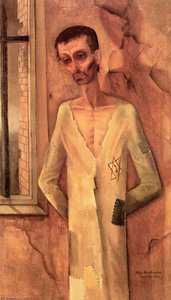
The Nazi invasion of Belgium in 1940 marked a turning point. Nussbaum was arrested as a “hostile alien” and interned at the Saint-Cyprien camp in France, an experience that profoundly shaped his artistic vision. He managed to escape and went into hiding with Felka, relying on the generosity of friends for shelter and supplies. The final years of his life were spent in constant danger, producing some of his most powerful and haunting works. Self-Portrait with Jewish Identity Card (1943) is perhaps his most iconic painting – a stark and unflinching depiction of dehumanization, showing Nussbaum clutching the document that marked him as an outcast. Triumph of Death (1944), another masterpiece from this period, is filled with symbolic details—a crumpled music score playing “The Lambeth Walk,” a popular tune ironically juxtaposed with the surrounding despair—revealing Nussbaum’s meticulous attention to detail and his ability to imbue even mundane objects with profound meaning. Tragically, in 1944, Nussbaum's parents were murdered at Auschwitz. Shortly after, he and Felka were discovered by German forces, deported to Mechelen transit camp, and ultimately sent to Auschwitz themselves, where Felix was murdered upon arrival in August of that year. His brother and sister-in-law followed soon after, completing the annihilation of his family within a single year. Despite this unimaginable loss, Nussbaum’s art endures as a powerful testament to the resilience of the human spirit and a chilling reminder of the horrors of the Holocaust. The Felix Nussbaum Haus in Osnabrück stands as a fitting tribute to his life and work, ensuring that his voice continues to resonate for generations to come. His inclusion in documentaries like *Eyewitness* further solidifies his place among those artists who bore witness to history’s darkest chapters.
Felix Nussbaum
1904 - 1945 , Germany
Quick Facts
- Artistic Movement Or Style: Surrealism, New Objectivity
- Artists Who Influenced This Artist:
- Van Gogh
- Rousseau
- De Chirico
- Carrà
- Hofer
- Date Of Birth: 1904
- Date Of Death: 1945
- Full Name: Felix Nussbaum
- Nationality: German-Jewish
- Notable Artworks:
- Self Portrait with Jewish Identity Card
- Triumph of Death
- Felka Platek Painting
- Masquerade
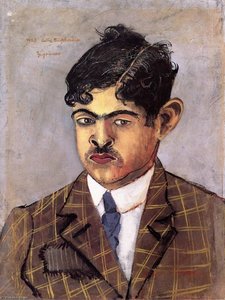
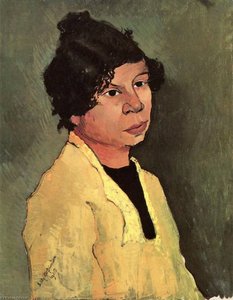
- Gypsy
- Place Of Birth: Osnabrück, Germany
Related Articles
Max Ernst's Masterpieces: 25 Surreal Visions for Art Lovers & Home Decor
Journey into the surreal world of Max Ernst! Explore 25 iconic paintings, from Dada to abstract expressionism. Discover the stories behind his masterpieces & find museum-quality art reproductions for your home decor at AllPaintingsStore.com.

Frida Kahlo: A Life Painted – Surrealism, Identity & Autobiographical Narrative
Explore the life & art of Frida Kahlo – a journey through surrealism, identity, pain, and resilience. Discover her autobiographical masterpieces & lasting feminist legacy with AllPaintingsStore.

Jacek Yerka: Surreal Visions & Nostalgia in Contemporary Polish Painting
Explore the captivating surreal worlds of Jacek Yerka, a leading Polish painter renowned for his meticulous Flemish technique & dreamlike landscapes. Discover his unique style and learn about collecting this exceptional artist's work.

Neue Sachlichkeit: Objectivity, Realism & Social Commentary in Interwar German Art
Explore Neue Sachlichkeit – the pivotal German art movement critiquing Weimar society with unflinching realism. Discover key artists like Dix & Grosz, its historical context, and collecting insights for discerning investors.

Otto Dix: Trauma, Society & Artistic Rebellion in Weimar Germany
Explore the powerful and unsettling art of Otto Dix, a key figure of Neue Sachlichkeit. Discover his unflinching depictions of Weimar Germany's trauma, society, and war through insightful analysis & iconic masterpieces.