- Home

- Oil Painting Reproduction
- Felix Nussbaum
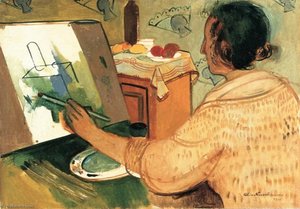
- My Mother

 Buy print
 Send
Send Share
Share
 Details

 Download
 Similars
 X-Ray
X-Ray Diaporama
My Mother
 Acrylic On Canvas
- WallArt
- Surrealism
 1926
1926 50.0 x 55.0 cm
 Kulturgeschichtliche Museum Osnabrück
 Read More
Hand Made Oil Reproduction
Hand-painted oil on canvas in your size and frame, made to order by our artists.




P118B $10

P118H $10

P118W $10

P438Z $10

P508JH $12

P508YH $12

P805H $10

P805Z $10

P919BZ $10

P919G $10

P919XJ $10

P959ZH $10

P968JZ $12

W106C $8

W218G $10

W218JH $8

W218Y $10

W307PJ $10

W316G $10

W316PJ $8

W316Y $10

W398PJ $8

W4111J $10

W500HY $15

W500JH $15

W692G $12

W849H $8

W940BG $15

W953PJ $8




Pick from our preset sizes that match the artwork's original proportions.

You may enter your own dimensions to fit a specific frame or space. If your selected size does not match the original image's proportions, we will either crop the artwork or extend the painting with additional hand-painted elements. A digital mockup will be sent for your approval before production begins.
Please note that the on-screen preview does not reflect the actual cropping or extension. Only the mockup will accurately show the final composition.
While custom sizes are available, we recommend selecting a dimension from the predefined list to preserve the original proportions.
After order, AllPaintingsStore.com team will email client for instructions and provide a mockup preview
Worldwide Delivery () in 3/4 weeks instead of standard 5 weeks. (16 July). No compromise on quality.

Free Worldwide Express Shipping

High-Quality Linen Canvas

Full Shipping Insurance

Customs Tax Refund Guarantee

True Color Matching Guarantee

60-Day Return Policy (Defects Only)

100% Money-Back Guarantee

Bulk Discount Offer
 Glass option is only available in size under 110 CM

My Mother
Reproduction Medium
Reproduction Size
-


Total Price
-
Artwork Description
Felix Nussbaum’s “My Mother” – A Silent Testament to Displacement
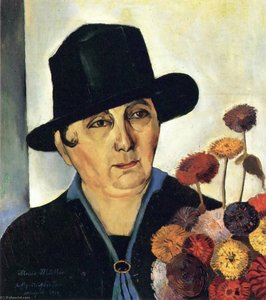
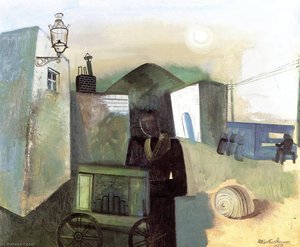
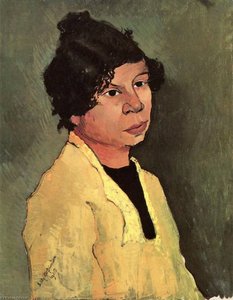
The painting "My Mother," created by Felix Nussbaum in 1926, transcends mere representation; it embodies the profound emotional resonance of exile and the enduring power of familial connection. Nussbaum, a German-Jewish Surrealist artist grappling with the burgeoning anxieties of his time, meticulously crafted this piece as a response to the evolving artistic landscape—influenced heavily by masters like Giorgio de Chirico, Henri Rousseau, and Vincent van Gogh—marking a pivotal moment in his oeuvre. The artwork’s understated elegance belies its weighty subject matter: a portrait of his mother rendered in a realistic style with subtle attention to detail, capturing her gaze with remarkable sensitivity.- Style & Technique: Nussbaum's approach aligns closely with the New Objectivity movement, prioritizing precise observation and conveying emotion through carefully considered color palettes and textural nuances. The painting utilizes muted tones—primarily browns and creams—creating a contemplative atmosphere that mirrors the solemnity of the subject matter. Brushstrokes are deliberate and controlled, emphasizing form and capturing the contours of his mother’s face with remarkable accuracy.
- Historical Context: Created before the widespread dissemination of Nazi propaganda and persecution, “My Mother” speaks to a pre-war period marked by intellectual ferment and artistic experimentation. Nussbaum's formative years were shaped by exposure to Expressionist painting, particularly Franz Marc’s work, which instilled in him a commitment to conveying inner psychological states through visual imagery—a characteristic that finds its expression here.
- Symbolism & Emotion: The composition itself is imbued with symbolic significance. The woman's profile view directs the viewer's gaze inward, prompting reflection on themes of memory, identity, and maternal love. Her serene expression conveys a quiet dignity despite the unspoken anxieties surrounding her son’s impending departure from Germany—a poignant foreshadowing of the turbulent years that would soon engulf Europe.
- Material & Dimensions: Executed in oil paint on canvas measuring 50 x 55 cm, “My Mother” exemplifies Nussbaum's dedication to craftsmanship and artistic precision. The canvas’s texture contributes to the painting’s overall mood—a subtle reminder of the tangible world amidst the intangible realm of emotion.
Further Exploration & Artistic Influence
Nussbaum’s artistic journey continued after 1926, marked by displacement and persecution during World War II. His experiences profoundly impacted his creative output, culminating in powerful self-portraits that powerfully articulate the trauma of exile—a testament to his unwavering commitment to confronting difficult truths through art. The painting "My Mother" stands as a cornerstone of Nussbaum’s artistic legacy, demonstrating his ability to distill complex emotions into deceptively simple visual forms. It remains an enduring symbol of resilience and remembrance—a poignant reminder that even in moments of profound sorrow, beauty can persist.Where to Find Reproductions
High-quality reproductions of “My Mother” are available from reputable art dealers and online platforms specializing in fine art prints. Consider framing options that complement the painting’s muted palette and understated elegance—enhancing its visual impact and preserving its artistic integrity for generations to come.Related Artworks




Artist Biography
A Life Etched in Exile: The Haunting Vision of Felix Nussbaum
Felix Nussbaum’s story is a stark and profoundly moving testament to the power of art born from unimaginable suffering. Born in Osnabrück, Germany, in 1904, his life unfolded against the backdrop of rising nationalism and escalating persecution, culminating in the horrors of the Holocaust. He wasn't simply a victim *of* history; he was an artist who meticulously documented its impact on his soul, creating a body of work that stands as both a personal lament and a universal warning. Nussbaum’s paintings offer a rare, unflinching glimpse into the psychological landscape of displacement, fear, and ultimately, annihilation – a perspective often absent from broader historical narratives. His father, Philipp Nussbaum, a World War I veteran with an early passion for painting himself, recognized and nurtured his son's talent, providing encouragement that would prove vital in the darkening years to come. This initial support fostered a lifelong dedication to art, even as political realities increasingly constricted his path.Formative Years and Artistic Influences
Nussbaum’s artistic journey began with formal studies in Hamburg and Berlin in 1920, continuing for as long as circumstances allowed. His early work reveals a clear debt to the Post-Impressionist masters, particularly Vincent van Gogh and Henri Rousseau. The vibrant colors and expressive brushwork of these artists provided a foundation upon which Nussbaum would later build his unique style. However, he wasn’t content with mere imitation. He actively sought out new influences, drawn to the unsettling dreamscapes of Giorgio de Chirico and Carlo Carrà, pioneers of the *pittura metafisica* movement. The careful attention to color demonstrated by Carl Hofer's expressionist paintings also left a lasting impression on Nussbaum’s approach. These diverse inspirations coalesced into what would become known as his “New Objectivity” style – a blend of realism and surrealism, characterized by precise detail, unsettling compositions, and a pervasive sense of alienation. This period was marked by experimentation and growth, but the looming shadow of Nazi ideology soon threatened to extinguish his artistic promise.Exile, Isolation, and the Shadow of War
The ascent of the Nazis in 1933 irrevocably altered Nussbaum’s life. Studying on a scholarship in Rome at the Berlin Academy of the Arts, he witnessed firsthand the chilling pronouncements of Hitler's propaganda minister, outlining the tenets of Nazi art – glorification of heroism and the Aryan race. It became painfully clear that as a Jew, his place within the German artistic establishment was untenable. This realization forced him into exile, first to Paris and then to Belgium, where he married Felka Platek in 1937. The following decade was defined by fear and isolation. Despite finding some measure of safety, Nussbaum lived under constant threat, haunted by the knowledge of his parents’ perilous situation back in Germany. They had initially resisted his pleas to join them in exile, clinging to a misguided hope that things would improve, but ultimately returned home only to face the full force of Nazi persecution. This loss – the severing of his spiritual and financial support – deeply impacted Nussbaum's work, infusing it with an increasingly desperate and melancholic tone. He continued to paint prolifically during this period, finding solace and purpose in his art even as his world crumbled around him.A Testament to Suffering: Late Works and Lasting Legacy
The Nazi invasion of Belgium in 1940 marked a turning point. Nussbaum was arrested as a “hostile alien” and interned at the Saint-Cyprien camp in France, an experience that profoundly shaped his artistic vision. He managed to escape and went into hiding with Felka, relying on the generosity of friends for shelter and supplies. The final years of his life were spent in constant danger, producing some of his most powerful and haunting works. Self-Portrait with Jewish Identity Card (1943) is perhaps his most iconic painting – a stark and unflinching depiction of dehumanization, showing Nussbaum clutching the document that marked him as an outcast. Triumph of Death (1944), another masterpiece from this period, is filled with symbolic details—a crumpled music score playing “The Lambeth Walk,” a popular tune ironically juxtaposed with the surrounding despair—revealing Nussbaum’s meticulous attention to detail and his ability to imbue even mundane objects with profound meaning. Tragically, in 1944, Nussbaum's parents were murdered at Auschwitz. Shortly after, he and Felka were discovered by German forces, deported to Mechelen transit camp, and ultimately sent to Auschwitz themselves, where Felix was murdered upon arrival in August of that year. His brother and sister-in-law followed soon after, completing the annihilation of his family within a single year. Despite this unimaginable loss, Nussbaum’s art endures as a powerful testament to the resilience of the human spirit and a chilling reminder of the horrors of the Holocaust. The Felix Nussbaum Haus in Osnabrück stands as a fitting tribute to his life and work, ensuring that his voice continues to resonate for generations to come. His inclusion in documentaries like *Eyewitness* further solidifies his place among those artists who bore witness to history’s darkest chapters.
Felix Nussbaum
1904 - 1945 , Germany
Quick Facts
- Artistic Movement Or Style: Surrealism, New Objectivity
- Artists Who Influenced This Artist:
- Van Gogh
- Rousseau
- De Chirico
- Carrà
- Hofer
- Date Of Birth: 1904
- Date Of Death: 1945
- Full Name: Felix Nussbaum
- Nationality: German-Jewish
- Notable Artworks:
- Self Portrait with Jewish Identity Card
- Triumph of Death
- Felka Platek Painting
- Masquerade
- Gypsy
- Place Of Birth: Osnabrück, Germany
Related Articles

Beyond Reality's Grasp: Surrealism & Expressionism in 20th-Century Art
Explore the captivating interplay of Surrealism & Expressionism in 20th-century art. Discover key artists like Masson and Pollock, automatism techniques, and their lasting influence. Expert insights for art enthusiasts.

The Enduring Gaze: A Historical & Artistic Exploration of Portrait Painting Across Cultures
Explore the rich history of portrait painting with expert insights into Renaissance masterpieces & modern innovations. Discover artists, movements & commission a custom oil painting at AllPaintingsStore.

The Enduring Appeal of Figurative Art: A Historical Survey of Representation, Emotion & Modern Interpretations
Explore the rich history of figurative art from Renaissance masterpieces to contemporary expressions. Discover key artists, movements & collecting insights with AllPaintingsStore – your trusted source for museum-quality reproductions and expert art guidance.
The Eloquent Body: A Historical & Artistic Exploration of Figures in Painting & Sculpture
Explore the rich history of figure painting & sculpture! Discover classical masterpieces, modern interpretations, and expert insights for art lovers & collectors. AllPaintingsStore offers museum-quality reproductions.

Edvard Munch's Masterpieces: 25 Iconic Paintings for Art Lovers | AllPaintingsStore
Explore 25 iconic Edvard Munch paintings, from 'The Scream' to lesser-known masterpieces. Discover the stories behind Expressionism’s most emotional works & find museum-quality art reproductions for your home at AllPaintingsStore.com.