- Home

- Oil Painting Reproduction
- Eugène Delacroix
- Wild Horse Coming out of the Water. Cheval sauvage

 Buy print
 Send
Send Share
Share
 Details

 Download
 Similars
 X-Ray
X-Ray Diaporama
Wild Horse Coming out of the Water. Cheval sauvage

 Read More
Hand Made Oil Reproduction
Hand-painted oil on canvas in your size and frame, made to order by our artists.




P118B $10

P118H $10

P118W $10

P438Z $10

P508JH $12

P508YH $12

P805H $10

P805Z $10

P919BZ $10

P919G $10

P919XJ $10

P959ZH $10

P968JZ $12

W106C $8

W218G $10

W218JH $8

W218Y $10

W307PJ $10

W316G $10

W316PJ $8

W316Y $10

W398PJ $8

W4111J $10

W500HY $15

W500JH $15

W692G $12

W849H $8

W940BG $15

W953PJ $8




Pick from our preset sizes that match the artwork's original proportions.

You may enter your own dimensions to fit a specific frame or space. If your selected size does not match the original image's proportions, we will either crop the artwork or extend the painting with additional hand-painted elements. A digital mockup will be sent for your approval before production begins.
Please note that the on-screen preview does not reflect the actual cropping or extension. Only the mockup will accurately show the final composition.
While custom sizes are available, we recommend selecting a dimension from the predefined list to preserve the original proportions.
After order, AllPaintingsStore.com team will email client for instructions and provide a mockup preview
Worldwide Delivery () in 3/4 weeks instead of standard 5 weeks. (16 July). No compromise on quality.

Free Worldwide Express Shipping

High-Quality Linen Canvas

Full Shipping Insurance

Customs Tax Refund Guarantee

True Color Matching Guarantee

60-Day Return Policy (Defects Only)

100% Money-Back Guarantee

Bulk Discount Offer
 Glass option is only available in size under 110 CM

Wild Horse Coming out of the Water. Cheval sauvage
Reproduction Medium
Reproduction Size
-


Total Price
-
Artwork Description
A Moment of Wild Freedom: Delacroix’s ‘Cheval sauvage’
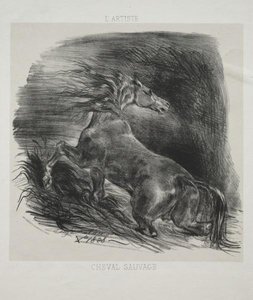
Eugène Delacroix, a pivotal figure in the Romantic movement, captures raw energy and untamed spirit in his captivating black and white drawing, Wild Horse Coming out of the Water (Cheval sauvage). This work offers a compelling glimpse into Delacroix's mastery of line and form, diverging from the rigid precision of Neoclassicism to embrace dynamic expression.
Subject & Composition: A Glimpse into Nature’s Realm
The artwork centers on a magnificent horse emerging from water, its head turned alertly as if responding to an unseen stimulus. This immediate sense of responsiveness imbues the scene with dramatic tension. Two additional horses subtly populate the background – one positioned to the left and another further back on the right – suggesting a small herd dynamic. A dog is included near the center, introducing a touch of domesticity within this otherwise wild landscape. The composition isn’t about photographic realism; it's about distilling a fleeting moment of natural interaction and primal power.
Style & Technique: Romanticism in Line
Delacroix demonstrates exceptional skill through fluid, expressive lines and delicate shading. Executed solely in drawing, the work focuses attention on the horse’s powerful musculature and the rippling texture of the water. This concentrated approach highlights Delacroix's ability to convey dramatic tension even within a seemingly simple sketch – a hallmark of his Romantic style. While renowned for his vibrant oil paintings, this drawing reveals his foundational artistry and artistic vision in an intimate format.
Historical Context & Influences: Echoes of the Masters
Delacroix was profoundly influenced by Baroque masters like Peter Paul Rubens and Venetian Renaissance artists, seeking to emulate their dynamic compositions and rich visual language. He also drew inspiration from literary figures such as Lord Byron, whose themes of passion, rebellion, and the sublime resonate throughout his oeuvre. His lifelong fascination with horses – a recurring motif in his work – is evident here, reflecting a broader interest in capturing the raw energy of nature and the untamed spirit of animals.
Symbolism & Emotional Impact: Freedom and Instinct
Wild Horse Coming out of the Water evokes feelings of freedom, power, and natural beauty. The horse’s alert posture suggests both vulnerability and strength, embodying a wildness that resonates with our own primal instincts. The artwork invites contemplation on the enduring allure of the natural world and the untamed spirit within us all. It's a celebration of life in its most raw and authentic form.
Display & Interior Design Recommendations
- Living Room: Pair this drawing with neutral tones, natural materials like wood and linen, to enhance its organic feel. A gallery wall featuring equestrian themes would be a stunning complement.
- Study/Home Office: The dynamic energy of the artwork can inspire creativity and focus, making it an ideal addition to a workspace.
- Equestrian-themed Decor: This drawing serves as a perfect focal point for any room celebrating equestrian pursuits or a love of animals.
To preserve the artwork’s integrity, framing under museum-quality glass with UV protection is recommended. A simple, elegant frame that complements the drawing without overpowering it will best showcase its beauty.
Provenance and Dimensions are currently unknown.Related Artworks




Artist Biography
A Revolutionary Brush: The Life and Legacy of Eugène Delacroix
Ferdinand Victor Eugène Delacroix, born in Charenton-Saint-Maurice near Paris in 1798, was more than just a painter; he was the embodiment of Romanticism’s fervent spirit. Emerging as a leading figure in French art during a period of societal upheaval and shifting aesthetic ideals, Delacroix rejected the rigid formalism of Neoclassicism, instead embracing drama, emotion, and a vibrant palette that would forever alter the course of painting. His life, though marked by personal tragedy, became inextricably linked with his artistic vision—a quest to capture the sublime, explore exotic realms, and express the raw power of human experience.
Delacroix’s early years were shaped by a complex family history and a somewhat fragile health. Orphaned at sixteen, he found guidance in the influential figure of Charles-Maurice de Talleyrand-Périgord, who many believed to be his true father. This connection provided him with crucial patronage and access to the Parisian art world. He initially studied under Pierre-Narcisse Guérin, a respected academic painter, but it was the work of Théodore Géricault—particularly his monumental *The Raft of the Medusa*—that truly ignited Delacroix’s artistic passion. He even posed for Géricault, absorbing the elder artist's commitment to realism and emotional intensity.
From Historical Scenes to Exotic Visions
Delacroix burst onto the Salon scene in 1822 with *Dante and Virgil in Hell*, a work that immediately signaled his departure from established norms. Inspired by Dante Alighieri’s *Inferno*, the painting showcased a bold use of color, dynamic composition, and a palpable sense of psychological turmoil. This marked the beginning of a career dedicated to exploring themes of passion, conflict, and the human condition. While initially met with mixed reactions—some critics lauded his originality, others dismissed his work as chaotic and lacking in classical refinement—Delacroix persevered, developing a distinctive style characterized by loose brushwork, rich textures, and an emphasis on movement.
His fascination extended beyond historical and literary subjects. A pivotal journey to North Africa in 1832 profoundly impacted his artistic trajectory. Immersing himself in the vibrant culture of Morocco, Delacroix was captivated by the exotic landscapes, the nomadic lifestyle of the Arab tribes, and the intensity of their traditions. This experience infused his paintings with a newfound sense of color, light, and energy, as seen in works like *Arab Horses Fighting* and numerous studies of Algerian life. He wasn’t merely documenting these scenes; he was seeking to understand the underlying spirit of a culture vastly different from his own.
The Power of Color and Political Engagement
Delacroix's mastery of color is arguably his most enduring legacy. He drew inspiration from the Baroque exuberance of Rubens and the Venetian Renaissance masters, prioritizing chromatic intensity over precise draftsmanship. He understood that color could evoke emotion, create atmosphere, and convey meaning in ways that line alone could not. This innovative approach profoundly influenced subsequent generations of artists, paving the way for Impressionism and Post-Impressionism.
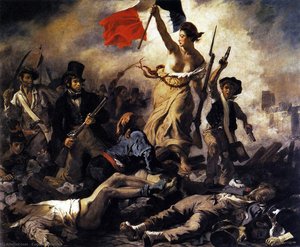
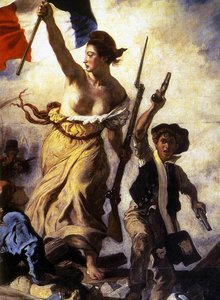
Beyond his aesthetic innovations, Delacroix was a politically engaged artist. His most iconic work, *Liberty Leading the People* (1830), is not simply a depiction of the July Revolution; it’s a powerful allegory for freedom and rebellion. The painting's dynamic composition, allegorical figures, and raw emotional power cemented its place in art history as a symbol of French national identity and revolutionary ideals. It wasn’t just about documenting an event; it was about capturing the spirit of a nation fighting for its liberty.
A Lasting Influence
Delacroix continued to paint prolifically throughout his life, exploring diverse themes ranging from Shakespearean tragedies to biblical narratives. He also made significant contributions as a lithographer, illustrating works by literary giants like William Scott and Johann Wolfgang von Goethe. His studio became a hub for artistic exchange, attracting aspiring painters who were drawn to his unconventional approach.
By the time of his death in 1863, Delacroix had firmly established himself as one of France’s greatest artists. His influence extended far beyond the Romantic movement, shaping the development of modern painting and inspiring countless artists with his bold use of color, dynamic compositions, and unwavering commitment to emotional expression. He remains a pivotal figure in art history—a testament to the power of individual vision and the enduring allure of the sublime.

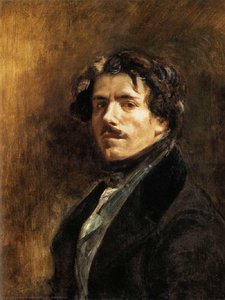
Eugène Delacroix
1798 - 1863 , France
Quick Facts
- Artistic Movement Or Style: Romanticism
- Artists Or Movements Influenced By This Artist:
- Impressionism
- Post-Impressionism
- Artists Who Influenced This Artist:
- Rubens
- Venetian Renaissance painters
- Date Of Birth: April 26, 1798
- Date Of Death: August 13, 1863
- Full Name: Eugène Delacroix
- Nationality: French
- Notable Artworks:
- Liberty Leading the People
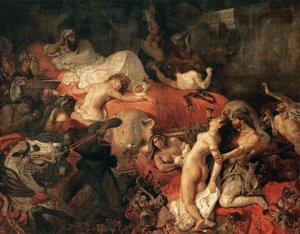
- The Death of Sardanapalus
- Arab Horses Fighting
- Place Of Birth: Chantonnay, France
Related Articles
Ivory Black Masters: 10 Paintings That Define Dramatic Art |
Delve into the power of 'Ivory Black' with 10 iconic paintings by masters like Rembrandt & Caravaggio. Explore dramatic chiaroscuro, gothic moods & timeless art history. Find museum-quality reproductions and elevate your home decor at
Mars Black Masterpieces: 10 Iconic Paintings & Timeless Art Decor Ideas
Delve into the power of 'Mars Black' with 10 iconic paintings by masters like Rembrandt & Caravaggio. Explore dramatic chiaroscuro, gothic art, and timeless beauty. Find museum-quality reproductions & elevate your home decor on .

Dark Masterpieces: 10 Iconic Paintings Dominated by Black Tones |
Explore 10 iconic paintings dominated by black tones, from Rembrandt’s chiaroscuro to Goya's dark expressions. Discover the stories behind these masterpieces & find museum-quality art reproductions for your home at .
Monochrome Visions: Exploring the Aesthetic & Historical Significance of Black & White Photography
Explore the rich history & artistic power of black and white photography. From early techniques to iconic masters like Ansel Adams, discover why monochrome continues to captivate art lovers today. Expert insights for collectors.

Chromatic Absence: Exploring the Aesthetic Power of Black & White Art
Explore the captivating world of monochrome art! Discover its rich history, influential artists like Malevich & Klein, and profound emotional impact. Expert insights for collectors & design enthusiasts.