

Acrylic On Canvas.

§ 1Catalogue data


§ 2Abstract
Collectible Description
Vibrant abstract artwork by Fernand Léger, Deauville showcases bold geometric shapes and a purist style reflecting early 20th-century modernism. Explore this dynamic piece and bring home a unique art reproduction.
 Read More
Artist Biography
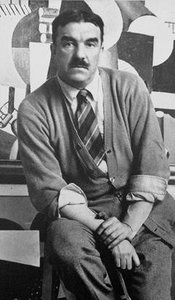
Discover Fernand Léger (1881-1955): Pioneer of Cubism & 'Tubism'! Explore bold paintings celebrating modern life, machinery, and the human form – a key forerunner to Pop Art.
§ 3Commentary
Fernand Léger’s ‘Deauville’: A Symphony of Machine and Color
Fernand Léger's “Deauville,” a vibrant explosion of color and geometric forms, offers a compelling glimpse into the heart of early 20th-century abstraction. Painted by one of the most significant figures in modern art, this work transcends mere representation, instead embodying Léger’s profound engagement with the burgeoning industrial age and his desire to translate its dynamism onto canvas. The painting's bold palette – dominated by assertive reds, yellows, blues, greens, and whites – immediately commands attention, drawing the viewer into a world where traditional notions of beauty are deliberately subverted.
Purist Vision: Echoes of an Industrial Age
Created during Léger’s pivotal period as a “purist,” “Deauville” reflects his commitment to capturing the essence of modern life. Born in 1881 in Argentan, Normandy, Léger's upbringing amidst the rural landscape profoundly shaped his artistic sensibility. However, his relocation to Paris around 1900 ignited a passion for the burgeoning industrial world – the factories, machines, and urban sprawl that were rapidly transforming Europe. This fascination is brilliantly articulated through the painting’s fractured forms: circles, squares, and triangles, reminiscent of gears, wheels, and other mechanical components. The scattered dots further amplify this effect, suggesting a fragmented, almost chaotic, yet ultimately ordered vision of progress.
Technique and Composition – A Calculated Chaos
Léger’s technique is characterized by a deliberate application of paint, often employing thick impasto to build up texture and emphasize the physicality of his forms. The composition itself is remarkably expansive, filling almost the entire canvas with its energetic arrangement. This vastness contributes to the painting's immersive quality, enveloping the viewer within its vibrant world. The artist’s use of color isn’t simply decorative; it’s a carefully considered strategy for conveying movement and energy. The juxtaposition of warm and cool tones creates visual tension, mirroring the dynamism he sought to capture.
Symbolism: Beyond the Mechanical
While “Deauville” undeniably reflects Léger's fascination with machinery, it’s important to recognize that the painting carries deeper symbolic weight. It represents a broader exploration of humanity’s relationship with technology and its impact on society. The fragmented forms can be interpreted as representing the breakdown of traditional values and the emergence of a new, mechanized world order. Yet, despite this potentially unsettling vision, there's also an underlying sense of optimism – a belief in the potential for progress and innovation. Léger wasn’t simply depicting machines; he was attempting to capture their spirit, their power, and their transformative influence.
A Legacy of Innovation
Fernand Léger's “Deauville” stands as a testament to his groundbreaking contribution to modern art. His work paved the way for subsequent generations of abstract artists and continues to resonate with viewers today. This large-scale reproduction offers an exceptional opportunity to experience firsthand the power and beauty of Léger’s vision – a bold, vibrant, and profoundly influential masterpiece.
Questions & Answers
Is "Deauville" by Fernand Léger in the public domain, and why?
"Deauville" by Fernand Léger is in the public domain - its copyright has expired. Copyright terms are measured from the artist's death, and Fernand Léger died in 1955.
How strong is the contrast in "Deauville" by Fernand Léger?
"Deauville" by Fernand Léger shows a statement contrast between its light and dark areas.
Is there a guide for "Deauville" by Fernand Léger?
A Guide page is available for "Deauville" by Fernand Léger: a printable factsheet about the artwork, designed for students and classroom use.


 Switch to Print


 For artworks or reproductions larger than 105 cm (approximately 41 inches) on any side, the frame will be shipped as a kit, disassembled. This method ensures safe delivery and prevents damage during transport.


