


 Preview
 Send
Send Share
Share
 Details
 Guide
Guide

 Download
 Similars
 X-Ray
X-Ray Diaporama
 Q&A
Q&A Stats
StatsSecond Version of Triptych 1944


 Read More
The artwork displayed on this page is protected by copyright law, which means we cannot legally create or sell an identical reproduction. This protection is enforced under international agreements such as the Berne Convention and by national laws, including those outlined by the U.S. Copyright Law - Title 17.
This method fully complies with copyright regulations because it does not involve copying or duplicating the protected artwork. Instead, it is a creative reinterpretation - a new painting that is influenced by the original but not identical to it.
Giclée / Art Print
Museum-quality giclée or canvas print with fast production and flexible finish options. ( Buy Hand Made Painting Switch to Digital Image)




P118B $10

P118H $10

P118W $10

P438Z $10

P508JH $12

P508YH $12

P805H $10

P805Z $10

P919BZ $10

P919G $10

P919XJ $10

P959ZH $10

P968JZ $12

W106C $8

W218G $10

W218JH $8

W218Y $10

W307PJ $10

W316G $10

W316PJ $8

W316Y $10

W398PJ $8

W4111J $10

W500HY $15

W500JH $15

W692G $12

W849H $8

W940BG $15

W953PJ $8




Pick from our preset sizes that match the artwork's original proportions.

Type the width and the height you need, to fit your frame or your wall. A print can only be cut, never made bigger than the picture, so a size with a different shape loses a part of the image. We send you a digital mockup to approve before we print anything. The picture shown on this page does not show the real cut — only the mockup does.
Worldwide Delivery () in 2 weeks instead of standard 4/5 weeks. (5 November)

Free Worldwide Express Shipping

High-Quality Linen Canvas

Full Shipping Insurance

Customs Tax Refund Guarantee

True Color Matching Guarantee

100-Day Return Policy (Defects Only)

100% Money-Back Guarantee

Bulk Discount Offer
 Glass option is only available in size under 110 CM

Second Version of Triptych 1944
Giclée / Art Print
Reproduction Size
-


Total Price
$ 65
Second Version of Triptych 1944: A Descent Into Visceral Horror
Francis Bacon’s *Second Version of Triptych 1944*, completed in 1988, stands as a monumental testament to the artist's unwavering commitment to confronting the darkest recesses of human experience. It is not merely a repetition of his seminal 1944 masterpiece, *Three Studies for Figures at the Base of a Crucifixion*; rather, it’s an amplification—a deliberate deepening of the unsettling psychological landscape established by its predecessor. Executed in acrylic on canvas, this expansive piece embodies Bacon's signature style: grotesque, fragmented figures rendered against a stark crimson backdrop that pulsates with latent menace.- Historical Context
- Stylistic Innovations
- Symbolism and Imagery
- Technique: The Alchemy of Texture
- Emotional Resonance
Historical Context: Echoes of Trauma and Artistic Legacy
Bacon’s artistic journey began amidst the turbulent aftermath of World War II, a period marked by profound disillusionment and existential questioning. Influenced heavily by Picasso's biomorphs—distorted representations of human forms—and deeply affected by Nietzsche’s philosophy of eternal recurrence, Bacon wrestled with themes of suffering, mortality, and the inescapable brutality inherent in existence. *Three Studies for Figures at the Base of a Crucifixion*, created just two years prior, served as a crucible for these anxieties, distilling them into three powerfully unsettling images—a man seated on a bench, a figure standing before a red wall, and a man holding an umbrella beside a chair. The triptych’s genesis in Aeschylus's *Oresteia*, specifically the Furies—demons embodying retribution and vengeance—underscores Bacon’s preoccupation with primal forces and moral dilemmas. The 1988 reworking wasn’t simply a casual revisiting of this iconic work; it was a conscious effort to grapple with the legacy of its initial impact, acknowledging both its aesthetic brilliance and its unsettling psychological depth.Stylistic Innovations: Expanding Upon Formality
While retaining the core compositional elements of *Three Studies*, Bacon dramatically increased the scale of his second version—reaching 78 × 58 inches—a decision that profoundly altered the artwork’s expressive potential. The crimson hue replacing the burnt orange background intensifies the sense of dread and claustrophobia, mirroring the psychological tension inherent in the original. Critics noted a subtle shift away from the stark simplicity of the earlier piece; Bacon deliberately layered textures and employed techniques designed to heighten visual impact. This deliberate expansion wasn’t merely about grandeur—it was about allowing for a more immersive experience of the artwork's unsettling imagery. As John Russell observed, “there was painting in England before the Three Studies, and painting after them, and no one ... can confuse the two.”Symbolism and Imagery: Confronting The Primordial
The figures themselves—rendered in acrylic on canvas—remain strikingly similar to those depicted in *Three Studies*, embodying Bacon’s fascination with distorted human forms. These semi-anthropomorphic creatures are positioned against a backdrop that evokes the desolate landscapes of myth and legend, mirroring the influence of Nietzsche's philosophy. The deliberate fragmentation of the figures—their limbs contorted into grotesque postures—serves as a visual metaphor for psychological disintegration and the inescapable confrontation with mortality. Bacon’s use of geometric structures—the three radiating lines from the central figure—further reinforces this thematic preoccupation, channeling the energy of ancient Greek tragedy and highlighting the inescapable cycle of violence and retribution.Technique: The Alchemy of Texture
Bacon's meticulous approach to painting involved layering acrylic paint onto canvas with painstaking precision. He achieved remarkable textural effects through a combination of brushstrokes and glazing techniques—a deliberate departure from more polished styles prevalent at the time. The resulting surface is characterized by palpable roughness, conveying an immediacy and visceral energy that transcends mere visual representation. This technique wasn’t simply about achieving aesthetic beauty; it was about capturing the essence of psychological torment—the feeling of being trapped within a suffocating space where primal forces threaten to overwhelm reason.Emotional Resonance: An Unflinching Portrait of Darkness
Ultimately, *Second Version of Triptych 1944* succeeds in conveying Bacon’s profound pessimism and his unwavering commitment to confronting the darkest aspects of human consciousness. Like its predecessor, it refuses to offer easy answers or comforting illusions—instead presenting a starkly honest depiction of suffering, fear, and the inescapable confrontation with death. It stands as a powerful reminder that art can serve as a catalyst for introspection and a conduit for grappling with existential anxieties—a legacy cemented by Bacon’s enduring influence on subsequent generations of artists.Questions & Answers
Where does "Second Version of Triptych 1944" sit within Francis Bacon's body of work?
"Second Version of Triptych 1944" belongs to Francis Bacon's Expressionist Horror work, whose recorded themes include picasso, nietzsche, aeschylus, trauma, suffering, morality, iconic, legacy.
How do contrast and harmony combine in "Second Version of Triptych 1944"?
In "Second Version of Triptych 1944", a statement contrast is paired with a unified palette harmony.
What are the date and style of "Second Version of Triptych 1944" by Francis Bacon?
"Second Version of Triptych 1944" was made in 1988, within the Expressionist Horror movement.
Related Artworks


Artist Biography
The Brutality of the Human Image
To look at a Francis Bacon canvas is to encounter a direct assault on the nervous system. He did not seek to decorate; he sought to capture the raw, often terrifying reality of existence through a distinctive and disturbing realism. While his contemporaries drifted toward the safety of abstraction, Bacon anchored himself in the human form, though he stripped that form of any dignity or comfort. His work functions as a visceral response to the mid-twentieth century, translating anxiety and physical vulnerability into smeared, violent colors and contorted limbs.
The power of his imagery stems from a refusal to look away from degradation. He utilized oils with a fluidity that allowed for the depiction of flesh that seems to be dissolving or bruising under pressure. By placing figures within geometric structures—transparent cages or architectural space-frames—he forced a sense of claustrophobia upon the viewer. These frames were not mere compositional tools; they were devices to concentrate the image and trap the subject in a state of permanent isolation.
A Life of Displacement and Design
Bacon’s path to the canvas was far from academic. Born in Dublin, Ireland, his early years were marked by instability and a difficult relationship with his parents. He moved through London, Berlin, and Paris, living a life that was often as turbulent as his later paintings. Before he was recognized as a painter, he worked as an interior designer and decorator. This period of his life produced tangible, structured objects:
- Royal Wilton rugs featuring abstract motifs.
- Cocktail shelves and room screens with geometric silhouettes.
- Calfskin pouffes and tubular steel furniture.
This background in design provided a structural foundation that would later manifest in his use of cubic, architectural framing. He was a self-taught artist who bypassed the traditional art school route, instead absorbing influences through direct observation and chance encounters. His transition from decorator to painter was catalyzed by seeing Picasso’s work in Paris, which revealed the possibilities of using organic, bone-like structures to distort the human image.
The Mechanics of Terror
Bacon’s visual language was built from a specific set of cinematic and classical references. He did not invent his horrors in a vacuum; he reconfigured existing imagery to suit a more primal purpose. The screaming face, a recurring motif, finds its roots in the visceral imagery of Sergei Eisenstein's film Battleship Potemkin. Similarly, his fascination with the distortion of the body was informed by the works of Picasso and the studies of motion by Eadweard Muybridge.
His most famous reinterpretations involved taking established authority and breaking it. In his series of works based on Velázquez’s Portrait of Pope Innocent X, he transformed a dignified papal figure into a nightmarish, screaming specter. He used the concept of the crucifixion not as a religious statement, but as an armature to hang sensations of suffering. This approach allowed him to explore universal themes of mortality and the human condition without the distraction of spiritual solace.
The Final Verdict
Bacon’s significance lies in his ability to confront the darker corners of the soul with brutal honesty. He rejected the polished beauty of traditional portraiture in favor of an unflinching portrayal of agony and isolation. His later works, while often utilizing lighter colors, maintained this core intensity, focusing on the psychological weight of his subjects, including his lover George Dyer. He remains a central figure because he provided a visual language for the twentieth century's deepest anxieties, ensuring that the image of the suffering human remains impossible to ignore.
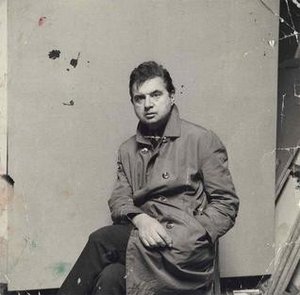
Francis Bacon
1909 - 1992 , Ireland
Quick Facts
- Artistic Movement Or Style: Expressionism, Cubism, Surrealism
- Artists Or Movements Influenced By This Artist: ['Post-War Expressionism']
- Artists Who Influenced This Artist:
- Pablo Picasso
- Egon Schiele
- Diego Velázquez
- Sergei Eisenstein
- Full Name: Francis Bacon
- Nationality: Irish/British
- Notable Artworks:
- Three Studies for Figures at the Base of a Crucifixion
- Study After Velázquez’s Portrait of Pope Innocent X
- Place Of Birth: Dublin, Ireland
- Date Of Birth: 1909
- Date Of Death: 1992
Related Articles

The Enduring Legacy of Printmaking: Techniques, Themes & Artistic Innovation Across Centuries
Explore the rich history of printmaking with AllPaintingsStore. Discover techniques from intaglio to lithography, learn about collecting valuable prints & find museum-quality reproductions. Expert insights for art enthusiasts and collectors.

The Enduring Legacy of Fine Art Prints: Technique, History & Aesthetic Impact
Explore the rich history & techniques of fine art prints. Discover investment potential, assess authenticity, and learn how to preserve your collection with expert guidance. Trusted insights for discerning collectors.

Echoes of Time: Exploring the Enduring Appeal & Historical Context of Vintage Art Prints
Explore the captivating world of vintage art prints! Discover their history, collecting tips & enduring appeal. Expert insights on chromolithography and building a legacy collection with AllPaintingsStore.

The Raw Power of Fear: Top 25 Masterpieces by Francis Bacon
Explore 25 visceral Francis Bacon masterpieces. Discover the raw power of his distorted figures on AllPaintingsStore.com.

Giclée Prints: Archival Quality & Aesthetic Nuances for the Discerning Collector
Explore the world of giclée prints with AllPaintingsStore. Learn about archival quality, aesthetic nuances & investment potential. Expert guidance for discerning art collectors seeking museum-quality reproductions and lasting value.


