


 Preview
 Send
Send Share
Share
 Details
 Guide
Guide

 Download
 Similars
 X-Ray
X-Ray Diaporama
 Q&A
Q&A Stats
StatsTriptych 1


 Read More
Get a print-ready file that goes far beyond the web preview. Every digital image we sell comes from a high-resolution master in our stock database — usually 5,000 to 15,000 pixels wide — so you can print large, crop tightly, or reproduce fine detail with confidence.
No file leaves our studio untouched. A digital expert checks the colors against the original painting and corrects them if needed, then improves clarity and detail with professional retouching tools — always staying faithful to the artist's brushwork and style. The result is an image that looks like the painting, not like a filtered scan.
You approve before you're done: our expert sends the image by e-mail within 72 hours for your review. Not satisfied? Ask for improvements or corrections, or request a refund if the quality falls short.
This is the quality relied on by publishers, design studios, galleries and print shops.
Digital Image
Download a high-resolution file for personal display, printing, and creative projects. ( Switch to Print Buy Hand Made Painting)
Included in Every Digital Image Order
Expert Digital Delivery, Guaranteed
When you choose AllPaintingsStore.com, you're not just getting an image - you're receiving a professionally enhanced digital artwork, crafted with precision and backed by a satisfaction guarantee. Here's everything that comes with your order, automatically:

Fast Email Delivery
Your high-resolution digital image file will be emailed to you within 72 hours of ordering - ready for immediate use.

AI-Enhanced Digital File
Your artwork is professionally optimized using advanced AI tools and manual editing, ensuring maximum detail, clarity, and color accuracy.

Free Lifetime Re-Delivery
Accidentally deleted or lost your file? No worries - we'll resend it to you anytime, free of charge.

No Import Fees - Ever
Enjoy your artwork instantly with zero customs, duties, or delivery fees - digital downloads are always tax-free.

Color Accuracy Guarantee
We ensure your digital image reflects the original colors as closely as possible using professional tools and color management.

100-Day Satisfaction Guarantee
If you're not satisfied with your digital image, we'll revise it or refund 100% within 100 days - no questions asked.

100% Money-Back Guarantee
Not satisfied? Get a full refund within 100 days of receiving your digital file - no questions asked.

Bulk Order Discounts
Buy 3 images, save 10% - Buy 5, save 15% - Buy 10+, save 20%. Great for creative projects, galleries, and agencies.
A Descent Into Darkness: The Haunting Resonance of Triptych 1
To encounter Francis Bacon’s Triptych 1 is to step into a realm where the boundary between reality and nightmare begins to dissolve. Completed in 1947, this monumental work serves as a profound psychological landscape, capturing the heavy, suffocating atmosphere of post-war Britain. At first glance, the viewer is met with an unsettling stillness, a deceptive calm that masks a deep well of existential dread. The painting does not merely depict a scene; it orchestrates a visceral experience of human vulnerability. Through his masterful command of form and shadow, Bacon invites us to witness a moment of profound isolation, making this piece an essential cornerstone for any collection focused on the raw power of 20th-century expressionism.
The composition is a masterclass in claustrophobic tension. The central panel presents a meticulously rendered yet deeply disturbing workspace—a desk cluttered with objects that seem to pulse with their own dark energy. A skull, a violin, and crumpled papers are not merely incidental details; they are potent symbols of mortality, the fragmentation of thought, and the agony of artistic struggle. By compressing the figure within this cramped environment, Bacon mirrors the internal entrapment of the human psyche grappling with trauma. The arrangement forces the eye to wander through a labyrinth of shadows, where every object carries the weight of a silent scream, creating a narrative of decay and psychological disintegration that is as captivating as it is unsettling.
Technique and the Language of Distortion
Bacon’s technical prowess lies in his ability to blend brutal realism with surrealist distortion. In Triptych 1, he employs a technique that feels both observed and imagined, layering paint with a textured intensity that gives the canvas a palpable, fleshy quality. He eschews traditional, comforting perspectives in favor of flattened planes and blurred boundaries, a choice that height even greater disorientation for the viewer. The lighting is dramatic and uneven, casting deep, impenetrable shadows that swallow parts of the composition, leaving only fragments of the subject visible to the light. This interplay of light and dark creates a sense of movement within the stillness, as if the figures are caught in a state of permanent, agonizing transition.
For the discerning collector or interior designer, this work offers an unparalleled emotional depth. The color palette—dominated by somber blacks, earthy browns, and muted, bruised reds—provides a sophisticated yet intense focal point for a space. It is a piece that demands contemplation, offering a rich tapestry of textures and tones that can anchor a room with its gravity and historical significance. Whether viewed as a study in the human condition or as a triumph of post-war modernism, Triptych 1 remains an enduring icon of art history, promising to provoke thought and inspire awe in all who behold its haunting beauty.
Questions & Answers
Do the colors of "Triptych 1" appear strong or soft?
"Triptych 1" by Francis Bacon shows a monochromatic color intensity.
What does "Triptych 1" by Francis Bacon bring to an interior?
"Triptych 1" by Francis Bacon has a dramatic atmosphere and is recommended for a living room. The mood is what the work brings to the space around it.
What kind of piece is "Triptych 1"?
In the catalog, "Triptych 1" by Francis Bacon is filed as wall art. The category helps find similar works.
Related Artworks


Artist Biography
The Brutality of the Human Image
To look at a Francis Bacon canvas is to encounter a direct assault on the nervous system. He did not seek to decorate; he sought to capture the raw, often terrifying reality of existence through a distinctive and disturbing realism. While his contemporaries drifted toward the safety of abstraction, Bacon anchored himself in the human form, though he stripped that form of any dignity or comfort. His work functions as a visceral response to the mid-twentieth century, translating anxiety and physical vulnerability into smeared, violent colors and contorted limbs.
The power of his imagery stems from a refusal to look away from degradation. He utilized oils with a fluidity that allowed for the depiction of flesh that seems to be dissolving or bruising under pressure. By placing figures within geometric structures—transparent cages or architectural space-frames—he forced a sense of claustrophobia upon the viewer. These frames were not mere compositional tools; they were devices to concentrate the image and trap the subject in a state of permanent isolation.
A Life of Displacement and Design
Bacon’s path to the canvas was far from academic. Born in Dublin, Ireland, his early years were marked by instability and a difficult relationship with his parents. He moved through London, Berlin, and Paris, living a life that was often as turbulent as his later paintings. Before he was recognized as a painter, he worked as an interior designer and decorator. This period of his life produced tangible, structured objects:
- Royal Wilton rugs featuring abstract motifs.
- Cocktail shelves and room screens with geometric silhouettes.
- Calfskin pouffes and tubular steel furniture.
This background in design provided a structural foundation that would later manifest in his use of cubic, architectural framing. He was a self-taught artist who bypassed the traditional art school route, instead absorbing influences through direct observation and chance encounters. His transition from decorator to painter was catalyzed by seeing Picasso’s work in Paris, which revealed the possibilities of using organic, bone-like structures to distort the human image.
The Mechanics of Terror
Bacon’s visual language was built from a specific set of cinematic and classical references. He did not invent his horrors in a vacuum; he reconfigured existing imagery to suit a more primal purpose. The screaming face, a recurring motif, finds its roots in the visceral imagery of Sergei Eisenstein's film Battleship Potemkin. Similarly, his fascination with the distortion of the body was informed by the works of Picasso and the studies of motion by Eadweard Muybridge.
His most famous reinterpretations involved taking established authority and breaking it. In his series of works based on Velázquez’s Portrait of Pope Innocent X, he transformed a dignified papal figure into a nightmarish, screaming specter. He used the concept of the crucifixion not as a religious statement, but as an armature to hang sensations of suffering. This approach allowed him to explore universal themes of mortality and the human condition without the distraction of spiritual solace.
The Final Verdict
Bacon’s significance lies in his ability to confront the darker corners of the soul with brutal honesty. He rejected the polished beauty of traditional portraiture in favor of an unflinching portrayal of agony and isolation. His later works, while often utilizing lighter colors, maintained this core intensity, focusing on the psychological weight of his subjects, including his lover George Dyer. He remains a central figure because he provided a visual language for the twentieth century's deepest anxieties, ensuring that the image of the suffering human remains impossible to ignore.
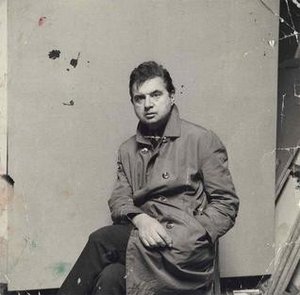
Francis Bacon
1909 - 1992 , Ireland
Quick Facts
- Artistic Movement Or Style: Expressionism, Cubism, Surrealism
- Artists Or Movements Influenced By This Artist: ['Post-War Expressionism']
- Artists Who Influenced This Artist:
- Pablo Picasso
- Egon Schiele
- Diego Velázquez
- Sergei Eisenstein
- Full Name: Francis Bacon
- Nationality: Irish/British
- Notable Artworks:
- Three Studies for Figures at the Base of a Crucifixion
- Study After Velázquez’s Portrait of Pope Innocent X
- Place Of Birth: Dublin, Ireland
- Date Of Birth: 1909
- Date Of Death: 1992