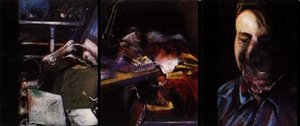
1972. Acrylic On Canvas.

§ 1Catalogue data


This Artwork Is Under Copyright Protection
The artwork displayed on this page is protected by copyright law, which means we cannot legally create or sell an identical reproduction. This protection is enforced under international agreements such as the Berne Convention and by national laws, including those outlined by the U.S. Copyright Law - Title 17.
As a respectful and legal alternative, we offer custom, hand-painted artworks inspired by the original. Our skilled and professional artists carefully study the original's style, mood, and artistic essence to create a new, unique piece that evokes the same feeling - while remaining an original creation in its own right.
This method fully complies with copyright regulations because it does not involve copying or duplicating the protected artwork. Instead, it is a creative reinterpretation - a new painting that is influenced by the original but not identical to it.
 Read more
§ 2Abstract
Collectible Description
Explore Francis Bacon's poignant 'Triptych August 1972,' commemorating Dyer’s suicide with unsettling depictions of vulnerability and existential despair—a masterpiece reflecting trauma and loss.
Artist Biography
Bacon used disturbing realism in Three Studies for Figures at the Base of a Crucifixion. Discover his visceral and powerful paintings now.
§ 3Commentary
A Descent Into Darkness: Exploring Francis Bacon’s ‘Triptych August 1972’
Francis Bacon's 'Triptych August 1972', painted in 1972, stands as a haunting testament to grief and existential despair—a visceral exploration of trauma rendered with unparalleled artistic mastery. More than just a depiction of George Dyer, Bacon’s lover who tragically succumbed to suicide on October 24th, 1971, the triptych embodies the artist's profound preoccupation with mortality and the inescapable burden of memory during a period marked by immense personal upheaval. It is a work that compels viewers to confront uncomfortable truths about human vulnerability and the relentless march of time.- Subject Matter: The central panel portrays Dyer in repose on a chair, his head bowed downwards—a posture conveying profound sorrow and defeat. Alongside him are two wing panels featuring photographs of Dyer taken by John Deakin, capturing him in similar poses, albeit imbued with an unsettling dynamism. These images serve as anchors to the emotional core of the piece.
- Style & Technique: Bacon’s signature style—characterized by distorted figures and grotesque forms—is powerfully evident here. Employing oil paint mixed with sand on three canvases, he achieves a textured surface that amplifies the painting's unsettling atmosphere. The monochromatic black background dominates each panel, intensifying the sense of isolation and amplifying the psychological impact of Dyer’s presence.
- Historical Context: Painted shortly after Dyer’s death, ‘Triptych August 1972’ reflects Bacon’s deeply personal response to loss—a reaction fueled by his own tumultuous life marked by failed relationships and recurring anxieties about death. It aligns with the broader artistic landscape of the postwar era, where artists wrestled with themes of trauma and disillusionment amidst the ruins of optimism.
- Symbolism: The black paint itself symbolizes darkness, grief, and oblivion—a deliberate choice mirroring Bacon’s internal state at the time of creation. Dyer's posture embodies vulnerability and surrender to fate, while the photographs serve as reminders of a vanished intimacy. The overall composition evokes a sense of inescapable confinement and underscores the futility of resisting mortality.
- Emotional Impact: Viewing ‘Triptych August 1972’ is an emotionally challenging experience. Bacon's masterful manipulation of form and color generates a palpable feeling of unease—a confrontation with the darkest recesses of human emotion. The painting lingers in the mind long after viewing, prompting contemplation on themes of loss, remembrance, and the inescapable realities of existence.
Further Exploration & Artistic Influence
As documented in Tate Britain’s exhibition catalogue, ‘Triptych August 1972’ exemplifies Bacon's commitment to confronting uncomfortable truths about human experience—a cornerstone of his artistic legacy. Influenced by Surrealism and Expressionism, Bacon pushed the boundaries of figurative painting, rejecting idealized representations in favor of visceral depictions that capture psychological torment with unflinching honesty. The triptych stands as a pivotal work within Bacon’s oeuvre, solidifying his reputation as one of the most significant artists of the 20th century. Its enduring power resides in its ability to provoke profound emotional responses and inspire ongoing dialogue about art's capacity to grapple with existential anxieties.Reproductions & Decorative Considerations
High-quality reproductions of ‘Triptych August 1972’ offer an opportunity to experience Bacon’s artistic vision within the context of contemporary interior design. Consider framing options that complement the painting's somber palette—matte black frames can enhance its dramatic effect, creating a sophisticated and contemplative space. When selecting a reproduction, prioritize archival quality prints using pigment inks to preserve color accuracy and ensure longevity. This artwork is best appreciated in environments where it can serve as a focal point for reflection and contemplation – spaces designed to foster introspection and evoke the profound emotional resonance of Bacon’s masterpiece.Questions & Answers
Does "Triptych August 1972" show strong light-dark contrasts?
The light-dark contrast of "Triptych August 1972" is recorded as statement. Contrast describes how strongly light and dark areas differ.
What subjects appear in "Triptych August 1972" by Francis Bacon?
The themes present in "Triptych August 1972" by Francis Bacon include memory, suicide, portraiture, existentialism, pain, isolation, black paint. Together they summarize the artwork's subject matter.
Who created "Triptych August 1972"?
"Triptych August 1972" is attributed to Francis Bacon.



 Switch to Print


 For artworks or reproductions larger than 105 cm (approximately 41 inches) on any side, the frame will be shipped as a kit, disassembled. This method ensures safe delivery and prevents damage during transport.