

Static set 1
.

§ 1Catalogue data

This Artwork Is Under Copyright Protection
The artwork displayed on this page is protected by copyright law, which means we cannot legally create or sell an identical reproduction. This protection is enforced under international agreements such as the Berne Convention and by national laws, including those outlined by the U.S. Copyright Law - Title 17.
As a respectful and legal alternative, we offer custom, hand-painted artworks inspired by the original. Our skilled and professional artists carefully study the original's style, mood, and artistic essence to create a new, unique piece that evokes the same feeling - while remaining an original creation in its own right.
This method fully complies with copyright regulations because it does not involve copying or duplicating the protected artwork. Instead, it is a creative reinterpretation - a new painting that is influenced by the original but not identical to it.
 Read more
§ 2Abstract
Collectible Description
Discover 'Static Set 1' by František Kupka – a pivotal abstract work from 1911. Explore Orphic Cubism & non-figurative painting. A stunning hand-painted reproduction for art collectors.
Artist Biography
Explore František Kupka's pioneering abstract art! A Czech painter known for Orphic Cubism & innovative use of color, shaping modern art’s foundations.
§ 3Commentary
§ 4The artist
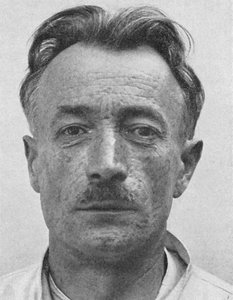
František Kupka
1871 - 1957, Czech Republic
Quick Facts
- Full Name: František Kupka
- Nationality: Czech
- Date Of Birth: 1871
- Date Of Death: 1957
- Place Of Birth: Opava, Czech Republic
- Notable Artworks:
- The Colored One
- Around a Point
- Artistic Movement Or Style: Abstract art, Orphic Cubism
- Artists Or Movements Influenced By This Artist: ['Orphism']
Artist Biography
A Pioneer of Abstraction: The Life and Art of František Kupka
František Kupka, a name resonating with the dawn of abstract art, was born in 1871 in Opočno, Bohemia—a landscape that would subtly inform his later explorations of form and color. His journey from academic training to radical abstraction wasn’t a swift leap but rather a gradual unfolding, deeply influenced by spiritual currents and a relentless pursuit of visual truth. Initially steeped in historical and patriotic themes during his studies at the Academy of Fine Arts in Prague and then Vienna, Kupka's early work demonstrated technical skill yet lacked the distinctive voice that would soon define him. It was his move to Paris in 1894 that proved pivotal, immersing him in a vibrant artistic milieu where he briefly attended the Académie Julian and later studied with Jean-Pierre Laurens at the École des Beaux-Arts. However, it wasn’t merely formal training but the intellectual ferment of fin-de-siècle Paris—the burgeoning interest in symbolism, Neo-Impressionism, and Fauvism—that truly ignited his artistic evolution.The Path to Pure Abstraction: Influences and Innovations
Kupka’s artistic trajectory wasn't solely driven by aesthetic considerations; it was profoundly shaped by philosophical and spiritual inquiries. His engagement with Theosophy, a mystical system blending Eastern religions and Western esotericism, proved particularly influential. This belief system posited an underlying unity to all things and sought to reveal hidden realities beyond the visible world—a concept that resonated deeply with Kupka’s artistic aspirations. He began to believe that art could transcend mere representation and access these deeper truths through the manipulation of color, form, and line. This conviction led him away from depicting recognizable objects and towards a more subjective, internal exploration of visual experience. His early experiments involved blurring the boundaries between figuration and abstraction, as seen in works like *The Beginning of Life*, where symbolic imagery intertwined with emerging abstract elements. He wasn’t alone in this quest; Kupka engaged with contemporary scientific theories regarding color and light, seeking to understand their psychological effects on the viewer. This fusion of spiritual inquiry and scientific observation became a hallmark of his approach. He began to see color not as a descriptive element but as an independent force capable of evoking emotion and conveying meaning directly.Orphic Cubism and Beyond: A Unique Visual Language
By the early 1910s, Kupka had embarked on a path that would lead him to become one of the pioneers of abstract art. His paintings from this period, such as *Amorpha: Fugue in Two Colors* (1912), were among the first truly non-representational works exhibited publicly, challenging conventional notions of artistic representation. He wasn’t interested in simply dismantling form—as some Cubists were doing—but rather in creating a new visual language based on pure abstraction. This led to his association with Orphic Cubism (also known as Orphism), a movement spearheaded by Robert Delaunay that emphasized the dynamic interplay of color and light. However, Kupka’s approach differed from Delaunay's; while both explored abstract forms, Kupka often retained a sense of underlying structure and rhythm, evoking musical compositions in his paintings—hence the frequent use of terms like “fugue” and “disks.” His *Disks of Newton* series exemplifies this exploration, depicting circular forms that seem to vibrate with energy and suggest the forces governing the universe. He wasn’t merely creating aesthetically pleasing arrangements; he was attempting to visualize underlying cosmic principles.Legacy and Lasting Influence
František Kupka's contributions extended beyond his individual paintings. As a founding member of Abstraction-Création in 1931, an international group dedicated to promoting abstract art, he played a vital role in shaping the course of modernism. His work was recognized internationally, featured in landmark exhibitions like “Cubism and Abstract Art” at the Museum of Modern Art in New York in 1936. Though often overshadowed by more prominent figures like Kandinsky or Mondrian, Kupka’s pioneering spirit and unique visual language have secured his place as a crucial figure in the history of abstract art. His legacy continues to inspire artists today, reminding us that abstraction isn't merely about eliminating representation but about unlocking new possibilities for expression and revealing hidden dimensions of reality. He sought not to depict what he saw, but what he felt—and in doing so, he opened up a universe of visual experience. His dedication to exploring the fundamental elements of art – color, form, line – remains profoundly relevant, demonstrating that true innovation lies in questioning established norms and embracing the power of pure abstraction.Museums Featuring Kupka’s Work
- Solomon R. Guggenheim Museum (New York, United States)
- The Paris Museum of Modern Art (Paris, France)
- Galerie Manés (Prague, Czech Republic)
§ 5Comparanda
Related Artworks


§ 6Questions
§ 7Further reading
Related Articles

Cubism Explained: A Professional Guide to Geometric Abstraction for Modern Interior Design
Master the impact of Cubism in modern design. Our expert guide explores geometric abstraction, Picasso's legacy, and professional solutions for sourcing high-quality Cubist reproductions for hotels, corporate spaces, and luxury interiors.
Cite this entry
AllPaintingsStore.com, “František Kupka, Static set 1”, https://allpaintingsstore.com/en/art/frantisek-kupka-static-set-1-8LHUP2-en/ArtistReproduction/ (accessed 1 October 2026).
§ 8The reproduction
Hand Made Oil Reproduction
Hand-painted oil on canvas in your size and frame, made to order by our artists. ( Switch to Print Switch to Digital Image)
It is specified on the order sheet in the margin; the present state of that sheet reads as follows.

Static set 1
Reproduction Medium
Reproduction Size
-

Elite Senior Artist
More detail, finesse, and extra production time
-

Reproduction Frame
-
-
For artworks or reproductions larger than 105 cm (approximately 41 inches) on any side, the frame will be shipped as a kit, disassembled. This method ensures safe delivery and prevents damage during transport.
Professional assembly required - this is not a DIY product.
The kit must be assembled and the canvas stretched by an experienced professional framer, using wood glue (not supplied), a canvas stretching plier and clamps to hold the bars square while the glue dries. Incorrect assembly or uneven canvas tension can permanently damage the artwork and is not covered by our warranty.
 For artworks or reproductions larger than 105 cm (approximately 41 inches) on any side, the frame will be shipped as a kit, disassembled. This method ensures safe delivery and prevents damage during transport.
All solid wood bars are included, precisely cut to size.
Assembled with the screws provided, plus wood glue for the corner joints, which is not supplied and must be sourced by your framer.
Professional tools are required and not included: a canvas stretching plier (tensioner) and clamps to hold the bars square while the glue dries.
Important:
The corner joints require wood glue, the bars must be held with clamps until the glue is fully dry, and tightening the canvas on the assembled frame requires a canvas stretching plier. None of these are included in the kit. Please arrange an experienced professional framer before ordering this size.

Nameplate
-
-

Protective Varnish
Glossy Varnish (enhances colors, protects against light/moisture)
-

Customize My Artwork
Examples of what can be changed: Replace face with customer photo; Add pet (e.g., replace cat with dog); Include hidden message in background; Change background landscape or elements.
-

Urgent
Worldwide Delivery () in 3/4 weeks instead of standard 5 weeks. (29 October). No compromise on quality.
-
Express Shipping
Worldwide Delivery () in 5 weeks. (5 November).
Included
Total Price
$ 258
Included with every order
- Free Worldwide Express Shipping
- High-Quality Linen Canvas
- Full Shipping Insurance
- Customs Tax Refund Guarantee
- True Color Matching Guarantee
- 100-Day Return Policy (Defects Only)
- 100% Money-Back Guarantee
- Bulk Discount Offer


