Preview
 Send
Send Share
Share
 Details
 Guide
Guide

 Download
 Similars
 X-Ray
X-Ray Diaporama
 Stats
StatsPainting with violin
 Acrylic On Canvas
- WallArt
- Other
 1973
1973 58.0 x 39.0 cm
 Bauhaus Dessau Foundation
 Read More
The artwork displayed on this page is protected by copyright law, which means we cannot legally create or sell an identical reproduction. This protection is enforced under international agreements such as the Berne Convention and by national laws, including those outlined by the U.S. Copyright Law - Title 17.
This method fully complies with copyright regulations because it does not involve copying or duplicating the protected artwork. Instead, it is a creative reinterpretation - a new painting that is influenced by the original but not identical to it.
Giclée / Art Print
Museum-quality giclée or canvas print with fast production and flexible finish options. ( Buy Hand Made Painting Switch to Digital Image)




P118B $10

P118H $10

P118W $10

P438Z $10

P508JH $12

P508YH $12

P805H $10

P805Z $10

P919BZ $10

P919G $10

P919XJ $10

P959ZH $10

P968JZ $12

W106C $8

W218G $10

W218JH $8

W218Y $10

W307PJ $10

W316G $10

W316PJ $8

W316Y $10

W398PJ $8

W4111J $10

W500HY $15

W500JH $15

W692G $12

W849H $8

W940BG $15

W953PJ $8




Pick from our preset sizes that match the artwork's original proportions.

Type the width and the height you need, to fit your frame or your wall. A print can only be cut, never made bigger than the picture, so a size with a different shape loses a part of the image. We send you a digital mockup to approve before we print anything. The picture shown on this page does not show the real cut — only the mockup does.
Worldwide Delivery () in 2 weeks instead of standard 4/5 weeks. (24 October)

Free Worldwide Express Shipping

High-Quality Linen Canvas

Full Shipping Insurance

Customs Tax Refund Guarantee

True Color Matching Guarantee

100-Day Return Policy (Defects Only)

100% Money-Back Guarantee

Bulk Discount Offer
 Glass option is only available in size under 110 CM

Painting with violin
Giclée / Art Print
Reproduction Size
-


Total Price
$ 65
Painting with Violin – An Exploration of Geometric Abstraction
The artwork presented here—a watercolor on paper depiction titled “Painting with Violin”—offers a glimpse into the artistic sensibilities of Franz Ehrlich, born in 1907 and deeply rooted in the Bauhaus movement. Measuring 58 x 39 cm, this piece exemplifies the stylistic concerns prevalent during its creation in 1973, aligning itself squarely within the broader context of Constructivist aesthetics—a testament to Ehrlich’s engagement with avant-garde ideas of his time.- Composition & Structure: The artwork's visual dynamism stems from a meticulously crafted grid framework formed by intersecting straight lines. These lines aren’t merely delineating boundaries; they actively contribute to the overall sense of order and control characteristic of Constructivist principles. Curved forms, subtly echoing the contours of a violin—the subject matter itself—are interwoven into this geometric matrix, creating an intriguing interplay between rigidity and fluidity.
- Color Palette & Texture: Dominated by shades of yellowish-beige, accented with muted orange and pink hues, the color palette evokes a feeling of understated warmth. Watercolor technique lends a delicate texture to the surface, allowing glimpses of the paper’s materiality to peek through—a deliberate choice that underscores the artist's commitment to capturing subtle nuances of form and tone.
- Technique & Materials: Ehrlich skillfully employs watercolor paint on paper, applying thin, translucent layers that maximize transparency and highlighting the inherent qualities of the medium. Graphite and pencil are used in conjunction with watercolor to create a layered effect, adding depth and complexity to the composition.
- Historical Context – Bauhaus Influence: Ehrlich’s formative years at the Bauhaus school in Dessau profoundly shaped his artistic vision. The Bauhaus ethos—characterized by functionalism, geometric abstraction, and an unwavering belief in the transformative power of art—directly informs “Painting with Violin.” This influence is palpable in the artwork's simplified forms and its rejection of representational illusionism.
- Symbolic Resonance & Emotional Impact: While ostensibly depicting a violin, the piece transcends mere visual representation. The geometric abstraction invites contemplation on concepts of reduction, simplification, and the deconstruction of form—themes central to Constructivist thought. Ultimately, “Painting with Violin” communicates a quiet serenity, perhaps hinting at nostalgia for a bygone era – an emotional resonance achieved through masterful execution and careful consideration of artistic principles.
Questions & Answers
How does the style of "Painting with violin" relate to its creator's era?
"Painting with violin" belongs to the Other movement, and its creator worked in the Modern era.
Which artist and which style stand behind "Painting with violin"?
Franz Ehrlich created "Painting with violin" within the Other movement.
Which color stands out most in "Painting with violin"?
celadon (#c0c1bb) is the leading color of "Painting with violin" by Franz Ehrlich.
Related Artworks


Artist Biography
early life and education
franz ehrlich, a renowned german architect, calligrapher, and graphic designer, was born in 1907. his formative years were marked by an innate inclination towards the arts, which led him to enroll at the bauhaus in dessau from 1927 to 1930. this prestigious institution played a pivotal role in shaping ehrlich's artistic perspective, introducing him to the avant-garde movements of the time.artistic career and communist affiliation
ehrlich's affiliation with the communist party had a profound impact on his life and career. in 1935, he was arrested and imprisoned by the nazi regime, an event that significantly altered the trajectory of his artistic pursuits. despite these challenges, ehrlich continued to contribute to the world of art, leaving behind a legacy that is both inspiring and thought-provoking.notable works
some of ehrlich's most notable works include:- 800 yrs. das buch [the book]. ground plan and views (exhibit display racks, leipzig trade fair), a testament to his innovative approach to design and architecture.
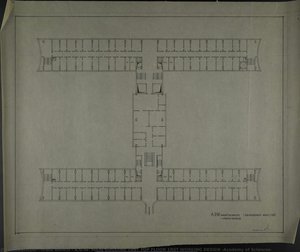
- prof. dr. baumann house execution (foundation plan), showcasing his expertise in architectural planning.
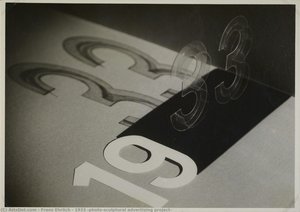
- 1933 (photo-sculptural advertising project), a unique blend of photography and sculpture, highlighting his experimental nature.
museums and collections featuring ehrlich's work
AllPaintingsStore.com features an extensive collection of ehrlich's works, including those mentioned above. the bauhaus dessau foundation (dessau-roßlau, germany) is also a significant repository of his artistic endeavors.legacy and impact
franz ehrlich's contributions to the world of art are multifaceted, reflecting his broad range of interests and talents. his experiences, both creatively and personally, offer valuable insights into the intersection of art and politics during a pivotal moment in german history.- view more of ehrlich's works at https://AllPaintingsStore.com/@/franz-ehrlich
- explore the bauhaus dessau foundation and its collection at bauhaus dessau foundation (dessau-roßlau, germany)

Franz Ehrlich
1907 - 1984 , Germany
Quick Facts
- Artistic Movement Or Style: Bauhaus, Expressionism
- Artists Or Movements Influenced By This Artist:
- Bauhaus
- Young Communist League
- Artists Who Influenced This Artist:
- Walter Gropius
- Moholy-Nagy
- Klee
- Joost Schmidt
- Date Of Birth: 1907
- Date Of Death: 1984
- Full Name: Franz Ehrlich
- Nationality: German
- Notable Artworks:
- 800 YRS. FRAMEWORK WALL 3
- Untitled (HKB I or II)
- Painting with Violin
- Place Of Birth: Reuth, Germany
Related Articles

Watercolor Art Guide: Mastering Transparency and Light for Professional Hospitality Decor
Elevate hospitality interiors with our professional guide to watercolor art. Discover how transparency and light enhance hotel decor through expert selection of high-quality, custom reproductions and large-scale murals tailored for designers and procurement managers.