- Home

- Oil Painting Reproduction
- Franz Ehrlich
- ARMREST CHAIR (with tubular steel frame)

 Buy print
 Send
Send Share
Share
 Details

 Download
 Similars
 X-Ray
X-Ray Diaporama
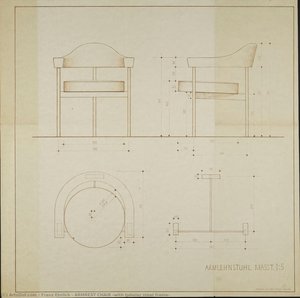
ARMREST CHAIR (with tubular steel frame)
 Oil On Canvas
- WallArt
- Bauhaus Dessau Style
 1970
1970- Renaissance
 49.0 x 49.0 cm
 Bauhaus Dessau Foundation
 Read More
Hand Made Oil Reproduction
Hand-painted oil on canvas in your size and frame, made to order by our artists.




P118B $10

P118H $10

P118W $10

P438Z $10

P508JH $12

P508YH $12

P805H $10

P805Z $10

P919BZ $10

P919G $10

P919XJ $10

P959ZH $10

P968JZ $12

W106C $8

W218G $10

W218JH $8

W218Y $10

W307PJ $10

W316G $10

W316PJ $8

W316Y $10

W398PJ $8

W4111J $10

W500HY $15

W500JH $15

W692G $12

W849H $8

W940BG $15

W953PJ $8




Pick from our preset sizes that match the artwork's original proportions.

You may enter your own dimensions to fit a specific frame or space. If your selected size does not match the original image's proportions, we will either crop the artwork or extend the painting with additional hand-painted elements. A digital mockup will be sent for your approval before production begins.
Please note that the on-screen preview does not reflect the actual cropping or extension. Only the mockup will accurately show the final composition.
While custom sizes are available, we recommend selecting a dimension from the predefined list to preserve the original proportions.
After order, AllPaintingsStore.com team will email client for instructions and provide a mockup preview
Worldwide Delivery () in 3/4 weeks instead of standard 5 weeks. (16 July). No compromise on quality.

Free Worldwide Express Shipping

High-Quality Linen Canvas

Full Shipping Insurance

Customs Tax Refund Guarantee

True Color Matching Guarantee

60-Day Return Policy (Defects Only)

100% Money-Back Guarantee

Bulk Discount Offer
 Glass option is only available in size under 110 CM

ARMREST CHAIR (with tubular steel frame)
Reproduction Medium
Reproduction Size
-


Total Price
-
Artwork Description
Franz Ehrlich’s “ARMREST CHAIR (with tubular steel frame)” – A Study in Modern Form and Bauhaus Principles
Franz Ehrlich's 1970 drawing, "ARMREST CHAIR (with tubular steel frame)," isn’t merely a schematic of a chair; it’s a distilled essence of mid-century modern design philosophy. Created during a period of intense experimentation within the Bauhaus movement and its subsequent influence on European furniture design, this piece embodies a commitment to functionality, geometric clarity, and an understated elegance that continues to resonate today. Ehrlich, a German architect, calligrapher, and graphic designer deeply rooted in the principles of the Bauhaus, meticulously rendered every detail – from the robust tubular steel frame to the subtly contoured armrests – reflecting a belief in the power of design to improve everyday life.
The drawing itself is deceptively simple. A precise line drawing, executed with remarkable attention to proportion and perspective, lays out the chair’s construction. The labeling—armrest, legs, backrest, seat—is integrated seamlessly into the diagram, suggesting a desire not just to illustrate but to educate on the mechanics of design. Ehrlich's background in calligraphy is evident in the clean, almost geometric lettering used for each component, lending an air of intellectual rigor to the piece. The choice of a monochrome drawing – likely graphite or charcoal – further emphasizes the focus on form and structure, stripping away any potential distraction from the chair’s inherent beauty.
The Bauhaus Legacy: Form Follows Function
Understanding “ARMREST CHAIR” requires acknowledging its context within the Bauhaus movement. Founded in 1919 in Weimar, Germany, the Bauhaus sought to unify art, craft, and technology, rejecting traditional artistic hierarchies and advocating for a new approach to design based on functionality and mass production. Ehrlich’s association with this influential school profoundly shaped his aesthetic sensibilities. The Bauhaus championed “form follows function,” meaning that the shape of an object should be dictated by its intended purpose. This principle is strikingly evident in the chair's design – every element, from the straight lines to the sturdy frame, serves a clear and practical role.
The use of tubular steel, a material popularized during this period due to its strength-to-weight ratio and affordability, was central to Bauhaus furniture design. It allowed for clean lines and a sense of lightness, contributing significantly to the movement’s minimalist aesthetic. Ehrlich's drawing highlights this key element, demonstrating an understanding of industrial materials and their potential within a design context. The chair represents a deliberate departure from ornate, historically-inspired furniture, embracing instead a streamlined, modern approach.
Symbolism and Emotional Impact
While seemingly straightforward, “ARMREST CHAIR” carries subtle symbolic weight. It’s not simply about providing seating; it's about creating an experience of comfort, stability, and order. The chair’s geometric form evokes a sense of rationality and control – qualities highly valued within the Bauhaus philosophy. The clean lines suggest efficiency and practicality, while the robust frame conveys strength and durability.
Furthermore, the drawing itself can be interpreted as a visual manifesto for modern design. It represents a shift away from elaborate decoration and towards a focus on essential form. The meticulous detail suggests a belief in the importance of craftsmanship and precision, even within industrial production. The piece invites contemplation not just about the chair’s physical construction but also about the broader principles that underpin good design – functionality, simplicity, and an appreciation for the beauty of geometric forms.
A Reproduction Worthy of Display
Reproductions of “ARMREST CHAIR (with tubular steel frame)” offer a valuable opportunity to bring this iconic piece of mid-century modern design into contemporary interiors. AllPaintingsStore’s faithful reproduction captures the drawing's original clarity and precision, allowing viewers to appreciate Ehrlich’s meticulous attention to detail. The artwork’s understated elegance complements a wide range of styles, from minimalist spaces to more eclectic settings. Its timeless appeal ensures that it will remain a cherished addition to any collection for years to come.
Related Artworks


Artist Biography
early life and education
franz ehrlich, a renowned german architect, calligrapher, and graphic designer, was born in 1907. his formative years were marked by an innate inclination towards the arts, which led him to enroll at the bauhaus in dessau from 1927 to 1930. this prestigious institution played a pivotal role in shaping ehrlich's artistic perspective, introducing him to the avant-garde movements of the time.artistic career and communist affiliation
ehrlich's affiliation with the communist party had a profound impact on his life and career. in 1935, he was arrested and imprisoned by the nazi regime, an event that significantly altered the trajectory of his artistic pursuits. despite these challenges, ehrlich continued to contribute to the world of art, leaving behind a legacy that is both inspiring and thought-provoking.notable works
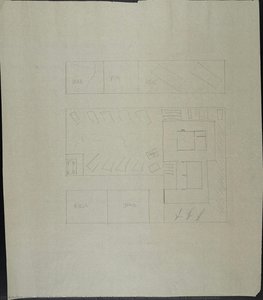
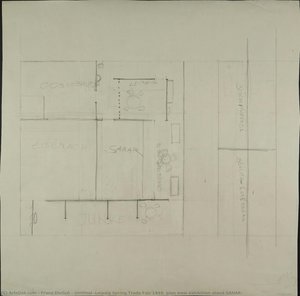
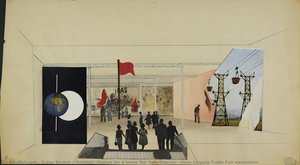
some of ehrlich's most notable works include:- 800 yrs. das buch [the book]. ground plan and views (exhibit display racks, leipzig trade fair), a testament to his innovative approach to design and architecture.
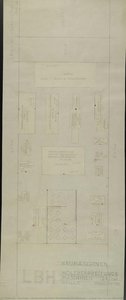
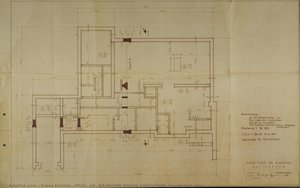
- prof. dr. baumann house execution (foundation plan), showcasing his expertise in architectural planning.
- 1933 (photo-sculptural advertising project), a unique blend of photography and sculpture, highlighting his experimental nature.
museums and collections featuring ehrlich's work
AllPaintingsStore.com features an extensive collection of ehrlich's works, including those mentioned above. the bauhaus dessau foundation (dessau-roßlau, germany) is also a significant repository of his artistic endeavors.legacy and impact
franz ehrlich's contributions to the world of art are multifaceted, reflecting his broad range of interests and talents. his experiences, both creatively and personally, offer valuable insights into the intersection of art and politics during a pivotal moment in german history.- view more of ehrlich's works at https://AllPaintingsStore.com/@/franz-ehrlich
- explore the bauhaus dessau foundation and its collection at bauhaus dessau foundation (dessau-roßlau, germany)

Franz Ehrlich
1907 - 1984 , Germany
Quick Facts
- Artistic Movement Or Style: Bauhaus, Expressionism
- Artists Or Movements Influenced By This Artist:
- Bauhaus
- Young Communist League
- Artists Who Influenced This Artist:
- Walter Gropius
- Moholy-Nagy
- Klee
- Joost Schmidt
- Date Of Birth: 1907
- Date Of Death: 1984
- Full Name: Franz Ehrlich
- Nationality: German
- Notable Artworks:
- 800 YRS. FRAMEWORK WALL 3
- Untitled (HKB I or II)
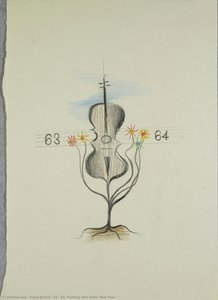
- Painting with Violin
- Place Of Birth: Reuth, Germany
Related Articles

The Subtleties of Shade: Exploring Black, White & Gray Abstraction in Modern Interior Design
Explore the power of black, white & gray abstraction in modern interior design. Discover how minimalist art impacts spatial perception & creates sophisticated hotel spaces. Expert insights for designers.
Abstract Harmony: Achieving Interior Cohesion Through Textural Resonance Between Art, Furniture, and Material Palettes
Discover how to create harmonious interiors with expert art curation tips! Learn to balance abstract art, furniture & textures for a cohesive, emotionally resonant space. Elevate your home's aesthetic today.
Fragmented Perspectives, Unified Spaces: Integrating Cubist-Inspired Art into Modern Villa Design – A Guide to Aesthetic Innovation and Legal Considerations
Discover how to integrate Cubist art into modern villa design with expert guidance from AllPaintingsStore. Explore color palettes, curation tips & museum-quality reproductions for a sophisticated space.
The Dynamic Dialogue: How Abstract Art Enhances Modern Interior Spaces
Discover how abstract art elevates modern interiors. Expert guidance for designers & homeowners. Explore styles, placement, & custom reproductions with .

Harmonizing Contrasts: Integrating Abstract Art into Classic Interiors for Timeless Modernity
Elevate your classic home with abstract art! Discover expert tips for seamlessly blending modern pieces into timeless interiors. Find the perfect artwork & design advice at AllPaintingsStore.