- Home

- Oil Painting Reproduction
- Franz Ehrlich
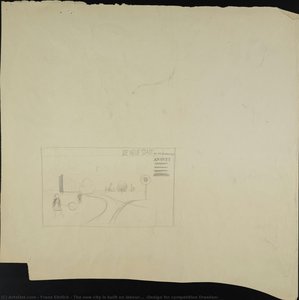
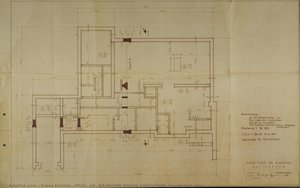
- The new city is built on labour... (Design for competition Dresden)

 Buy print
 Send
Send Share
Share
 Details

 Download
 Similars
 X-Ray
X-Ray Diaporama
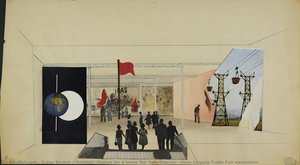
The new city is built on labour... (Design for competition Dresden)
 Acrylic
- WallArt
- German Expressionism
 1952
1952- Modern
 46.0 x 47.0 cm
 Bauhaus Dessau Foundation
 Read More
Hand Made Oil Reproduction
Hand-painted oil on canvas in your size and frame, made to order by our artists.




P118B $10

P118H $10

P118W $10

P438Z $10

P508JH $12

P508YH $12

P805H $10

P805Z $10

P919BZ $10

P919G $10

P919XJ $10

P959ZH $10

P968JZ $12

W106C $8

W218G $10

W218JH $8

W218Y $10

W307PJ $10

W316G $10

W316PJ $8

W316Y $10

W398PJ $8

W4111J $10

W500HY $15

W500JH $15

W692G $12

W849H $8

W940BG $15

W953PJ $8




Pick from our preset sizes that match the artwork's original proportions.

You may enter your own dimensions to fit a specific frame or space. If your selected size does not match the original image's proportions, we will either crop the artwork or extend the painting with additional hand-painted elements. A digital mockup will be sent for your approval before production begins.
Please note that the on-screen preview does not reflect the actual cropping or extension. Only the mockup will accurately show the final composition.
While custom sizes are available, we recommend selecting a dimension from the predefined list to preserve the original proportions.
After order, AllPaintingsStore.com team will email client for instructions and provide a mockup preview
Worldwide Delivery () in 3/4 weeks instead of standard 5 weeks. (16 July). No compromise on quality.

Free Worldwide Express Shipping

High-Quality Linen Canvas

Full Shipping Insurance

Customs Tax Refund Guarantee

True Color Matching Guarantee

60-Day Return Policy (Defects Only)

100% Money-Back Guarantee

Bulk Discount Offer
 Glass option is only available in size under 110 CM

The new city is built on labour... (Design for competition Dresden)
Reproduction Medium
Reproduction Size
-


Total Price
-
Artwork Description
A Vision Forged in Labor: Franz Ehrlich’s “The New City is Built on Labour…”
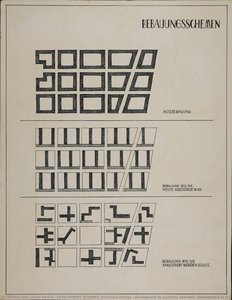
Franz Ehrlich's 1952 sketch, "The New City is Built on Labour...", isn’t merely a design proposal for a competition in Dresden; it’s a poignant testament to post-war reconstruction and the enduring spirit of a city striving to rebuild itself. Captured with a restrained graphite palette against aged paper, the image possesses an immediate intimacy – as if we've stumbled upon a forgotten blueprint, imbued with the hopes and anxieties of a nation grappling with its past. The drawing depicts a meticulously planned urban landscape, dominated by a central train station flanked by buildings rising towards a clear sky, all anchored by a network of roads and pathways. A prominent locomotive suggests progress and connectivity, while figures – rendered subtly within the composition – hint at the human effort underpinning this ambitious vision.
Ehrlich’s work is deeply rooted in the Bauhaus movement, yet transcends its formal tenets. The influence of geometric precision is evident in the simplified forms of the buildings, reminiscent of Walter Gropius' designs. However, there’s a distinct emotionality present, a sense of melancholy and quiet determination that speaks to the challenges faced by Germany following World War II. The muted tones – primarily shades of grey, accented with hints of brown and ochre – evoke the somber atmosphere of a city scarred by conflict, while simultaneously conveying a profound respect for the materials and the process of construction.
A Master’s Hand: Technique and Materials
Examining the drawing closely reveals Ehrlich's masterful technique. He employs a sophisticated range of hatching and cross-hatching to build up tonal values and create a remarkable sense of depth and texture. The varying line weights – from delicate, almost imperceptible strokes defining fine details to bolder lines delineating larger forms – contribute significantly to the image’s dynamism. The paper itself bears witness to the artist's hand; subtle creases and discoloration suggest years spent in careful consideration and execution. It’s a tangible connection to the creative process, reminding us that art is not simply about finished products but also about the journey of creation.
The choice of graphite as the medium is particularly significant. Graphite offers a remarkable degree of control, allowing Ehrlich to capture both the sharp edges of architectural forms and the softer nuances of human figures. Its ability to create subtle gradations of tone lends itself perfectly to conveying mood and atmosphere – essential elements in this evocative composition. The drawing’s scale—46 x 47 cm— invites close scrutiny, encouraging viewers to appreciate the intricate details and the artist's deliberate choices.
Historical Context: Reconstruction and Remembrance
To fully understand “The New City is Built on Labour…”, it’s crucial to consider its historical context. Created in 1952, shortly after World War II, the drawing reflects Dresden’s arduous process of rebuilding. The city had been almost entirely destroyed by Allied bombing raids, leaving behind a devastated landscape and a shattered population. Ehrlich's design wasn’t just about creating a new urban space; it was about symbolizing hope and renewal – a deliberate act of defiance against the destruction that had ravaged his homeland.
The title itself is profoundly symbolic, underscoring the central role of labor in this reconstruction effort. It speaks to the countless hours spent by workers rebuilding homes, infrastructure, and lives. Furthermore, the inclusion of a train station highlights Dresden’s reconnection with the wider world – a vital step towards economic recovery and cultural exchange. The drawing serves as a powerful reminder of the resilience of the human spirit in the face of adversity.
A Legacy of Vision: Symbolism and Emotional Resonance
Beyond its technical merits, “The New City is Built on Labour…” resonates deeply with viewers due to its inherent symbolism. The train station represents progress and connection, while the figures within the composition embody the collective effort required for rebuilding. The overall mood is one of quiet determination – a sense that despite the devastation, Dresden was determined to forge a new future.
Ehrlich’s work transcends mere architectural design; it's a visual meditation on memory, loss, and hope. It invites us to contemplate the challenges faced by communities rebuilding after conflict and to appreciate the enduring power of human creativity in shaping our world. Reproductions of this compelling sketch offer a valuable window into a pivotal moment in German history, allowing us to connect with the past while celebrating the spirit of innovation and resilience that continues to define Dresden today.
Related Artworks


Artist Biography
early life and education
franz ehrlich, a renowned german architect, calligrapher, and graphic designer, was born in 1907. his formative years were marked by an innate inclination towards the arts, which led him to enroll at the bauhaus in dessau from 1927 to 1930. this prestigious institution played a pivotal role in shaping ehrlich's artistic perspective, introducing him to the avant-garde movements of the time.artistic career and communist affiliation
ehrlich's affiliation with the communist party had a profound impact on his life and career. in 1935, he was arrested and imprisoned by the nazi regime, an event that significantly altered the trajectory of his artistic pursuits. despite these challenges, ehrlich continued to contribute to the world of art, leaving behind a legacy that is both inspiring and thought-provoking.notable works
some of ehrlich's most notable works include:- 800 yrs. das buch [the book]. ground plan and views (exhibit display racks, leipzig trade fair), a testament to his innovative approach to design and architecture.
- prof. dr. baumann house execution (foundation plan), showcasing his expertise in architectural planning.
- 1933 (photo-sculptural advertising project), a unique blend of photography and sculpture, highlighting his experimental nature.
museums and collections featuring ehrlich's work
AllPaintingsStore.com features an extensive collection of ehrlich's works, including those mentioned above. the bauhaus dessau foundation (dessau-roßlau, germany) is also a significant repository of his artistic endeavors.legacy and impact
franz ehrlich's contributions to the world of art are multifaceted, reflecting his broad range of interests and talents. his experiences, both creatively and personally, offer valuable insights into the intersection of art and politics during a pivotal moment in german history.- view more of ehrlich's works at https://AllPaintingsStore.com/@/franz-ehrlich
- explore the bauhaus dessau foundation and its collection at bauhaus dessau foundation (dessau-roßlau, germany)

Franz Ehrlich
1907 - 1984 , Germany
Quick Facts
- Artistic Movement Or Style: Bauhaus, Expressionism
- Artists Or Movements Influenced By This Artist:
- Bauhaus
- Young Communist League
- Artists Who Influenced This Artist:
- Walter Gropius
- Moholy-Nagy
- Klee
- Joost Schmidt
- Date Of Birth: 1907
- Date Of Death: 1984
- Full Name: Franz Ehrlich
- Nationality: German
- Notable Artworks:
- 800 YRS. FRAMEWORK WALL 3
- Untitled (HKB I or II)
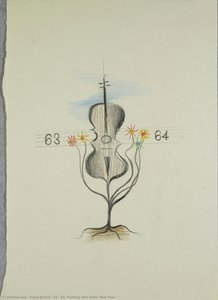
- Painting with Violin
- Place Of Birth: Reuth, Germany
Related Articles

Franz Ehrlich: Bridging Expressionism, Bauhaus & the Shadows of History
Explore the life of Franz Ehrlich, a pivotal Bauhaus architect whose career spanned Expressionism, resistance during Nazi Germany, and GDR reconstruction. Discover his complex legacy & view museum-quality reproductions at AllPaintingsStore.

The Inevitable Canvas: Bespoke Art Design as Architectural Integration for Harmonious Interiors
Elevate your luxury home with bespoke art seamlessly integrated into architectural design. Expert consultation, custom commissions & museum-quality reproductions by AllPaintingsStore.

The Resonance of Place: Harmonizing Art with Interior Architecture for Emotional Wellbeing
Transform your home with art that resonates. Expert guidance on emotional design, biophilic principles & custom artwork for luxury interiors. Discover the power of curated spaces with AllPaintingsStore.

Beyond Decoration: Architectural Resonance of Fine Art Reproductions in Interior Design
Elevate hotel interiors with fine art reproductions that resonate architecturally. Discover how custom artwork & expert curation create unforgettable guest experiences. Explore Renaissance-inspired design solutions.

Nameplate Solutions for Hotels: Bronze, Acrylic & Design Considerations
Elevate your hotel's brand with the perfect nameplate solution. Compare bronze, acrylic & design options for lasting elegance & clarity. Expert guidance for hospitality projects.