- Home

- Oil Painting Reproduction
- Franz Ehrlich
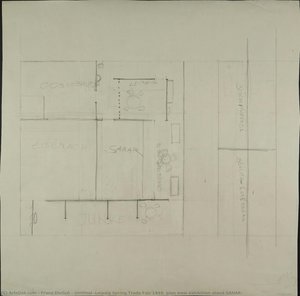
- Untitled (Leipzig Spring Trade Fair 1949, plan view exhibition stand SANAR)

 Buy print
 Send
Send Share
Share
 Details

 Download
 Similars
 X-Ray
X-Ray Diaporama
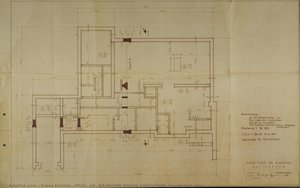
Untitled (Leipzig Spring Trade Fair 1949, plan view exhibition stand SANAR)
 Graphite Pencil
- Other
- Bauhaus
 1949
1949 51.0 x 51.0 cm
 Bauhaus Dessau Foundation
 Read More
Hand Made Oil Reproduction
Hand-painted oil on canvas in your size and frame, made to order by our artists.




































Pick from our preset sizes that match the artwork's original proportions.

You may enter your own dimensions to fit a specific frame or space. If your selected size does not match the original image's proportions, we will either crop the artwork or extend the painting with additional hand-painted elements. A digital mockup will be sent for your approval before production begins.
Please note that the on-screen preview does not reflect the actual cropping or extension. Only the mockup will accurately show the final composition.
While custom sizes are available, we recommend selecting a dimension from the predefined list to preserve the original proportions.
After order, AllPaintingsStore.com team will email client for instructions and provide a mockup preview
Worldwide Delivery () in 3/4 weeks instead of standard 5 weeks. (16 July). No compromise on quality.

Free Worldwide Express Shipping

High-Quality Linen Canvas

Full Shipping Insurance

Customs Tax Refund Guarantee

True Color Matching Guarantee

60-Day Return Policy (Defects Only)

100% Money-Back Guarantee

Bulk Discount Offer
 Glass option is only available in size under 110 CM

Untitled (Leipzig Spring Trade Fair 1949, plan view exhibition stand SANAR)
Reproduction Medium
Reproduction Size
-


Total Price
-
Artwork Description
The Echoes of Commerce: A Post-War Blueprint
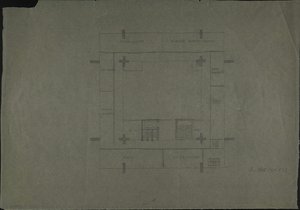
To gaze upon this piece is not merely to look at an old drawing; it is to step directly into the meticulous, hopeful atmosphere of post-war reconstruction. This architectural plan, documenting the exhibition stand for SANAR at the Leipzig Spring Trade Fair in 1949, transcends its function as a mere technical diagram. It captures a moment of profound societal yearning—the desire to rebuild, to trade, and to establish normalcy after unimaginable upheaval. The monochromatic palette, rendered in graphite on aged paper, immediately imbues the work with the patina of history, inviting the viewer into a dialogue with the past.
Technique and Form: The Language of Line
The genius here lies in its restraint. Franz Ehrlich’s hand has translated complex spatial relationships into an elegant vocabulary of straight lines and precise geometry. The technique is pure draughtsmanship; every wall, every suggested placement for a table or chair, is defined by the unwavering authority of the pencil stroke. There is no flourish meant purely for beauty, yet the cumulative effect is deeply aesthetic. The plan view forces us to contemplate space from above, stripping away the distractions of depth and focusing instead on pure organization—a testament to human ingenuity imposing order upon a chaotic world.
Historical Resonance and Symbolism
The year 1949 anchors this piece firmly in the narrative of German recovery. These lines are not just for defining booth boundaries; they symbolize the re-establishment of commerce, culture, and community. The labels—'Cossebaude,' 'Eisenach'—are whispers of industry and connection across regional borders. For the collector or designer, this work speaks to a powerful underlying theme: resilience. It suggests that even from the most fragmented state, structure, planning, and human enterprise can reassert themselves.
A Study in Understated Elegance for Modern Interiors
While its origins are deeply rooted in industrial documentation, this piece possesses an undeniable graphic sophistication that makes it a remarkable accent for contemporary living spaces. Its stark black-and-white contrast and geometric purity harmonize beautifully with minimalist design aesthetics. Imagine it mounted above a console table or within a gallery wall dedicated to travel or industry; it adds intellectual weight without overwhelming the room. It is art that requires contemplation, rewarding the viewer with layers of historical context alongside its immediate visual appeal.
Related Artworks






Artist Biography
early life and education
franz ehrlich, a renowned german architect, calligrapher, and graphic designer, was born in 1907. his formative years were marked by an innate inclination towards the arts, which led him to enroll at the bauhaus in dessau from 1927 to 1930. this prestigious institution played a pivotal role in shaping ehrlich's artistic perspective, introducing him to the avant-garde movements of the time.artistic career and communist affiliation
ehrlich's affiliation with the communist party had a profound impact on his life and career. in 1935, he was arrested and imprisoned by the nazi regime, an event that significantly altered the trajectory of his artistic pursuits. despite these challenges, ehrlich continued to contribute to the world of art, leaving behind a legacy that is both inspiring and thought-provoking.notable works
some of ehrlich's most notable works include:- 800 yrs. das buch [the book]. ground plan and views (exhibit display racks, leipzig trade fair), a testament to his innovative approach to design and architecture.
- prof. dr. baumann house execution (foundation plan), showcasing his expertise in architectural planning.
- 1933 (photo-sculptural advertising project), a unique blend of photography and sculpture, highlighting his experimental nature.
museums and collections featuring ehrlich's work
AllPaintingsStore.com features an extensive collection of ehrlich's works, including those mentioned above. the bauhaus dessau foundation (dessau-roßlau, germany) is also a significant repository of his artistic endeavors.legacy and impact
franz ehrlich's contributions to the world of art are multifaceted, reflecting his broad range of interests and talents. his experiences, both creatively and personally, offer valuable insights into the intersection of art and politics during a pivotal moment in german history.- view more of ehrlich's works at https://AllPaintingsStore.com/@/franz-ehrlich
- explore the bauhaus dessau foundation and its collection at bauhaus dessau foundation (dessau-roßlau, germany)

Franz Ehrlich
1907 - 1984 , Germany
Quick Facts
- Artistic Movement Or Style: Bauhaus, Expressionism
- Artists Or Movements Influenced By This Artist:
- Bauhaus
- Young Communist League
- Artists Who Influenced This Artist:
- Walter Gropius
- Moholy-Nagy
- Klee
- Joost Schmidt
- Date Of Birth: 1907
- Date Of Death: 1984
- Full Name: Franz Ehrlich
- Nationality: German
- Notable Artworks:
- 800 YRS. FRAMEWORK WALL 3
- Untitled (HKB I or II)
- Painting with Violin
- Place Of Birth: Reuth, Germany
Related Articles

Art as Architecture: Custom Paintings and the Spatial Identity of Interior Environments
Discover how custom paintings transform interior spaces. Expert art curation & site-specific commissions for luxury homes & commercial projects. Elevate your design with AllPaintingsStore.

The Inevitable Canvas: Bespoke Art Design as Architectural Integration for Harmonious Interiors
Elevate your luxury home with bespoke art seamlessly integrated into architectural design. Expert consultation, custom commissions & museum-quality reproductions by AllPaintingsStore.

Transforming Hotel Spaces with Timeless Art: A Designer's Guide to Reproduction Fidelity & Customization at AllPaintingsStore.com
Elevate your hotel design with AllPaintingsStore.com’s bespoke art solutions. Access museum-quality reproductions, custom paintings & expert consultation for stunning interiors. Streamlined procurement & exclusive trade discounts.

Beyond Decoration: Architectural Resonance of Fine Art Reproductions in Interior Design
Elevate hotel interiors with fine art reproductions that resonate architecturally. Discover how custom artwork & expert curation create unforgettable guest experiences. Explore Renaissance-inspired design solutions.

Transforming Spatial Visions: A Concierge Approach to Art Integration for Interior Design and Architectural Projects
Elevate your design projects with our expert art concierge services. We source exclusive artwork, manage commissions & ensure seamless integration for lasting impact. Trust us to curate exceptional collections and maximize artistic value.