


 Preview
 Send
Send Share
Share
 Details
 Guide
Guide

 Download
 Similars
 X-Ray
X-Ray Diaporama
 Stats
StatsHaymaking
 Oil On Canvas
- WallArt
- Neoclassical/Romantic
 1785
1785 89.0 x 132.0 cm
 Tate Gallery
 Read More
Giclée / Art Print
Museum-quality giclée or canvas print with fast production and flexible finish options. ( Buy Hand Made Painting Switch to Digital Image)




P118B $10

P118H $10

P118W $10

P438Z $10

P508JH $12

P508YH $12

P805H $10

P805Z $10

P919BZ $10

P919G $10

P919XJ $10

P959ZH $10

P968JZ $12

W106C $8

W218G $10

W218JH $8

W218Y $10

W307PJ $10

W316G $10

W316PJ $8

W316Y $10

W398PJ $8

W4111J $10

W500HY $15

W500JH $15

W692G $12

W849H $8

W940BG $15

W953PJ $8




Pick from our preset sizes that match the artwork's original proportions.

Type the width and the height you need, to fit your frame or your wall. A print can only be cut, never made bigger than the picture, so a size with a different shape loses a part of the image. We send you a digital mockup to approve before we print anything. The picture shown on this page does not show the real cut — only the mockup does.
Worldwide Delivery () in 2 weeks instead of standard 4/5 weeks. (24 October)

Free Worldwide Express Shipping

High-Quality Linen Canvas

Full Shipping Insurance

Customs Tax Refund Guarantee

True Color Matching Guarantee

100-Day Return Policy (Defects Only)

100% Money-Back Guarantee

Bulk Discount Offer
 Glass option is only available in size under 110 CM

Haymaking
Giclée / Art Print
Reproduction Size
-


Total Price
$ 65
George Stubbs’ “Haymaking”: A Symphony of Rural Life and Anatomical Precision
George Stubbs' "Haymaking," painted in 1785, isn’t merely a landscape; it’s a meticulously crafted tableau vivant—a snapshot of communal labor rendered with an almost unsettling level of detail and imbued with a quiet, profound beauty. Housed within the Tate Gallery in London, this oil on canvas offers a rare glimpse into the rhythms of 18th-century rural England, capturing not just the physical act of haymaking but also the social dynamics and inherent dignity of those involved.
The scene unfolds with remarkable clarity. A group of figures – men and women alike – are engaged in the arduous task of gathering hay beneath a vast, open sky. Stubbs’s genius lies not just in his ability to depict the physical exertion of the work—the straining muscles, the rhythmic movements—but also in his masterful understanding of human anatomy. Each individual is rendered with an almost scientific precision, reflecting Stubbs' lifelong fascination with animal and human form. The figures are not idealized; they possess a palpable physicality, their bodies conveying both strength and fatigue. This anatomical rigor elevates the painting beyond a simple depiction of rural life, transforming it into a study of the human condition.
Composition and Technique: A Dialogue Between Nature and Art
Stubbs’s composition is carefully balanced, drawing the eye towards the central group while simultaneously establishing a sense of depth through the use of atmospheric perspective. The vast expanse of the field stretches out behind the workers, receding into a hazy distance punctuated by a solitary tree – a detail that subtly anchors the scene within its natural context. The artist’s brushwork is remarkably controlled, creating a smooth, almost polished surface that contrasts with the rough texture of the haystacks and the weathered clothing of the laborers. The use of light and shadow is particularly noteworthy, casting dramatic highlights on the figures and enhancing the sense of three-dimensionality.
The painting’s palette is dominated by earthy tones—ochres, browns, and greens—reflecting the colors of the field and the hay itself. However, Stubbs introduces subtle splashes of color through the clothing worn by the workers, adding visual interest and highlighting their individuality. The overall effect is one of understated elegance and quiet observation.
Symbolism and Social Commentary
“Haymaking” transcends a simple depiction of agricultural labor; it carries layers of symbolic meaning. The communal nature of the work suggests a strong sense of community and shared purpose. The inclusion of both men and women working together underscores the importance of gender equality in rural society, a relatively rare subject for artists of the time. Furthermore, the figures’ direct gaze towards the viewer creates a powerful connection, inviting us to contemplate our own relationship with nature and labor.
Interestingly, Stubbs's choice to depict these laborers with such dignity—their bodies presented with anatomical accuracy and a sense of quiet strength—can be interpreted as a subtle critique of social hierarchies. By elevating the status of the working class, he challenges the prevailing attitudes of his time, suggesting that all individuals deserve respect and recognition.
A Legacy of Anatomical Mastery and Romantic Vision
“Haymaking” stands as a testament to George Stubbs’s extraordinary artistic talent and his unique approach to depicting both animals and humans. It is a painting that rewards careful observation, inviting viewers to delve into its layers of meaning and appreciate the artist's meticulous attention to detail. Reproductions of this iconic work capture the essence of Stubbs’s vision, allowing art lovers to experience the beauty and power of this remarkable masterpiece in their own homes. The painting exemplifies a pivotal moment in British art—a synthesis of scientific observation, anatomical precision, and Romantic sensibility that continues to resonate with audiences today.
Questions & Answers
How strong are the colors of "Haymaking"?
"Haymaking" by George Stubbs is recorded with a muted saturation and a monochromatic intensity.
What are the medium and date of "Haymaking" by George Stubbs?
The medium of "Haymaking" by George Stubbs is oil on canvas, and the work is dated 1785.
What atmosphere would a reproduction of "Haymaking" by George Stubbs bring to a room?
The romantic atmosphere of "Haymaking" by George Stubbs matches its recommended space: a living room.
Related Artworks


Artist Biography
early life and training
george stubbs, a renowned english painter, was born on august 25, 1724, in liverpool, united kingdom. his early life was marked by a sparse record of his activities until the age of 35, with most information sourced from ozias humphry's memoirs, based on conversations with stubbs in 1794. stubbs began his artistic journey at the age of 15, initially working under his father, a currier or leather-dresser. he later approached hamlet winstanley, a lancashire painter and engraver, for a brief apprenticeship. this short stint allowed him to study the collection at knowsley hall.artistic development and notable works
stubbs's passion for anatomy led him to move to york in 1744, where he studied under surgeon charles atkinson at york county hospital. one of his earliest surviving works is a set of illustrations for john burton's textbook on midwifery, published in 1751. in 1756, stubbs rented a farmhouse in lincolnshire and spent 18 months dissecting horses, assisted by his common-law wife, mary spencer. this led to the publication of the anatomy of the horse in 1766, with original drawings now housed at the royal academy. stubbs's work was soon recognized by leading aristocratic patrons, including the 3rd duke of richmond, who commissioned three large pictures in 1759. this marked the beginning of his successful career, with works produced for several dukes and lords, culminating in the purchase of a house in marylebone, london.legacy and notable paintings
stubbs's most famous work, whistlejacket, a painting of a prancing horse commissioned by the 2nd marquess of rockingham, is now housed at the national gallery in london. this and two other paintings for rockingham break with convention, featuring plain backgrounds.- whistlejacket, a thoroughbred race horse rising on his hind legs, showcases stubbs's unparalleled skill in capturing the essence of horses.
- stubbs's series of paintings on a lion attacking a horse are early examples of the romantic movement, demonstrating his influence on 18th-century art.
- view stubbs's artwork at https://AllPaintingsStore.com/@/george_stubbs
- explore the national gallery in london's collection, featuring stubbs's notable works, at /en/art/show/art-8xyffg-en/
- learn more about stubbs's life and work on wikipedia at https://en.wikipedia.org/wiki/george_stubbs

George Stubbs
1724 - 1806 , United Kingdom
Quick Facts
- Full Name: George Stubbs
- Nationality: British
- Date Of Birth: 1724
- Date Of Death: 1806
- Place Of Birth: Liverpool, United Kingdom
- Notable Artworks:
- Whistlejacket
- Lion & Horse
- A Lion and Tiger
- Artistic Movement Or Style: Romanticism, Equine Art
- Artists Who Influenced This Artist: ['Hamlet Winstanley']
- Artists Or Movements Influenced By This Artist: ['Joshua Reynolds']
Related Articles
Georges Braque's Masterpieces: 25 Paintings That Defined Cubism & Modern Art | AllPaintingsStore
Explore 25 iconic Georges Braque paintings that revolutionized Cubism & modern art. Discover the stories behind his masterpieces, from Fauvism to Analytical Cubism. Find museum-quality reproductions & elevate your home decor with AllPaintingsStore.com.

George Barret the Elder: Pioneering British Pastoral Painting & Landscape's Rise
Explore the life & art of George Barret Sr., a pioneer of British pastoral painting. Discover his influence on Romantic landscape art, patronage, and collecting tips from AllPaintingsStore.

Evocations of Place: A Historical Journey Through Landscape Art
Explore the rich history of landscape art with AllPaintingsStore. Discover renowned artists, movements like Impressionism & Romanticism, and expert guidance for collecting timeless pieces. Find your perfect serene escape today!

Georges Seurat's Masterpieces: 25 Paintings That Defined Pointillism | AllPaintingsStore
Explore 25 iconic Georges Seurat paintings & discover the brilliance of Pointillism. From 'La Grande Jatte' to his harbor scenes, delve into art history with AllPaintingsStore.com. Find museum-quality reproductions for your home decor. Explore the full collection online!
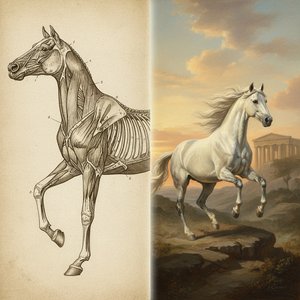
George Stubbs: Anatomical Precision & Romantic Vision in 18th-Century British Art
Explore the captivating world of George Stubbs, the 18th-century master renowned for his anatomical precision & Romantic animal paintings. Discover his legacy and investment potential.


