

Oil On Canvas.

§ 1Catalogue data

This Artwork Is Under Copyright Protection
The artwork displayed on this page is protected by copyright law, which means we cannot legally create or sell an identical reproduction. This protection is enforced under international agreements such as the Berne Convention and by national laws, including those outlined by the U.S. Copyright Law - Title 17.
As a respectful and legal alternative, we offer custom, hand-painted artworks inspired by the original. Our skilled and professional artists carefully study the original's style, mood, and artistic essence to create a new, unique piece that evokes the same feeling - while remaining an original creation in its own right.
This method fully complies with copyright regulations because it does not involve copying or duplicating the protected artwork. Instead, it is a creative reinterpretation - a new painting that is influenced by the original but not identical to it.
 Read more
§ 2Abstract
Collectible Description
Georges Braque’s "Birds 1" presents a fragmented Cubist vision of avian life through angular planes and monochromatic hues, embodying the artist's revolutionary approach to spatial representation and simultaneous perspective – discover this iconic artwork.
Artist Biography
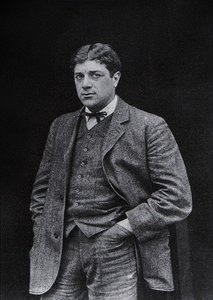
Discover Georges Braque (1882-1963): Cubism pioneer & Fauvism master. Explore his innovative art, from 'Houses at L'Estaque' to stunning collages.
§ 3Commentary
Georges Braque’s “Birds 1”: A Fragmented Vision of Cubist Harmony
“Birds 1,” painted circa 1909-10, stands as a quintessential example of Georges Braque's contribution to the burgeoning movement of Cubism. More than just an image of avian life—though undeniably present—the painting embodies the core tenets of this revolutionary artistic approach: geometric abstraction and simultaneous perspective.
- Style & Technique: Braque’s masterful manipulation of pigment and form aligns perfectly with the principles of Cubism, pioneered alongside Pablo Picasso. The canvas is dominated by angular planes—primarily shades of purple, black, and white—that dissect the bird’s silhouette into fragmented components. This deliberate fracturing rejects traditional representation, prioritizing spatial relationships over realistic depiction.
- Historical Context: Created during a period of intense artistic experimentation in Paris, “Birds 1” reflects the broader intellectual currents of its time. The influence of Cézanne's exploration of underlying structure is palpable, mirroring Braque’s desire to move beyond mere surface appearance and delve into the essence of visual perception.
- Composition & Symbolism: Despite its apparent simplicity—a monochromatic bird against a muted background—the painting possesses considerable depth. The careful balance achieved through geometric arrangement suggests an underlying harmony, hinting at Braque’s fascination with mathematical concepts and his belief in their ability to capture the fundamental order of nature.
- Material & Texture: Executed in oil on canvas, “Birds 1” showcases Braque's meticulous attention to detail. Visible brushstrokes contribute to a textured surface that conveys both physicality and artistic intention—a testament to his mastery of traditional painting techniques while simultaneously pushing boundaries.
Exploring Cézanne’s Influence: Structural Decomposition
Georges Braque's approach to Cubism owes considerable debt to Paul Cézanne, whose groundbreaking explorations into the underlying geometry of landscapes profoundly impacted artistic thinking. Cézanne famously stated, “I do not paint what I see but what I feel,” a sentiment that resonated deeply with Braque’s ambition to transcend superficial observation and capture the fundamental building blocks of visual experience.
- Cézanne's Vision: Cézanne’s canvases often depict seemingly unremarkable subjects—mountains, trees, still lifes—yet he transformed them into complex compositions characterized by interlocking planes and receding lines. This technique aimed to represent not just how things appear but also their underlying structure.
- Braque Adapts Cézanne's Method: Braque adopted Cézanne’s structural decomposition as a cornerstone of his Cubist style, applying it to subjects ranging from portraits to landscapes. He meticulously analyzed the contours and volumes of objects, breaking them down into geometric shapes that simultaneously convey spatial depth.
The Aesthetic Power of Monochromatic Harmony
Braque’s deliberate restriction to a monochromatic palette—primarily purple, black, and white—further enhances the painting's expressive qualities. This stylistic choice underscores the artist’s commitment to distilling visual sensation into its purest form, prioritizing tonal relationships over color vibrancy.
- Emotional Resonance: The subdued hues evoke a sense of quiet contemplation and understated beauty, inviting viewers to focus on the interplay of light and shadow—a technique central to Impressionism but reimagined within the Cubist framework.
- Emphasis on Form & Texture: By eliminating color distractions, Braque elevates the importance of form and texture. The visible brushstrokes become integral to conveying materiality and contributing to the overall visual impact of “Birds 1,” reinforcing its status as a masterpiece of modernist art.
A Legacy of Innovation
"Birds 1" exemplifies Braque’s unwavering dedication to artistic experimentation and his profound influence on subsequent generations of artists. Its fragmented composition, structural analysis, and monochromatic harmony stand as enduring symbols of Cubist innovation—a testament to Georges Braque's transformative vision of art history.
Questions & Answers
Can I order an oil reproduction of "Birds 1"?
Hand-painted copies of "Birds 1" by Georges Braque are sold on this website: a hand-painted oil reproduction on linen canvas, ordered from its Hand-Painted Reproduction page.
Which room is "Birds 1" by Georges Braque recommended for?
The recommended space for "Birds 1" by Georges Braque is a living room. The suggestion can of course be adapted to your interior.
What aliases or alternate names does Georges Braque have?
Georges Braque is also known as BRA(H)K.


 Switch to Print


 For artworks or reproductions larger than 105 cm (approximately 41 inches) on any side, the frame will be shipped as a kit, disassembled. This method ensures safe delivery and prevents damage during transport.


