


 Preview
 Send
Send Share
Share
 Details
 Guide
Guide

 Download
 Similars
 X-Ray
X-Ray Diaporama
 Q&A
Q&A Stats
StatsPitcher And Bird


 Read More
The artwork displayed on this page is protected by copyright law, which means we cannot legally create or sell an identical reproduction. This protection is enforced under international agreements such as the Berne Convention and by national laws, including those outlined by the U.S. Copyright Law - Title 17.
This method fully complies with copyright regulations because it does not involve copying or duplicating the protected artwork. Instead, it is a creative reinterpretation - a new painting that is influenced by the original but not identical to it.
Giclée / Art Print
Museum-quality giclée or canvas print with fast production and flexible finish options. ( Buy Hand Made Painting Switch to Digital Image)




P118B $10

P118H $10

P118W $10

P438Z $10

P508JH $12

P508YH $12

P805H $10

P805Z $10

P919BZ $10

P919G $10

P919XJ $10

P959ZH $10

P968JZ $12

W106C $8

W218G $10

W218JH $8

W218Y $10

W307PJ $10

W316G $10

W316PJ $8

W316Y $10

W398PJ $8

W4111J $10

W500HY $15

W500JH $15

W692G $12

W849H $8

W940BG $15

W953PJ $8




Pick from our preset sizes that match the artwork's original proportions.

Type the width and the height you need, to fit your frame or your wall. A print can only be cut, never made bigger than the picture, so a size with a different shape loses a part of the image. We send you a digital mockup to approve before we print anything. The picture shown on this page does not show the real cut — only the mockup does.
Worldwide Delivery () in 2 weeks instead of standard 4/5 weeks. (3 November)

Free Worldwide Express Shipping

High-Quality Linen Canvas

Full Shipping Insurance

Customs Tax Refund Guarantee

True Color Matching Guarantee

100-Day Return Policy (Defects Only)

100% Money-Back Guarantee

Bulk Discount Offer
 Glass option is only available in size under 110 CM

Pitcher And Bird
Giclée / Art Print
Reproduction Size
-


Total Price
$ 65
A Fragmented Reflection of Modernity
In the quiet, contemplative realm of Georges Braque’s “Pitcher And Bird,” we encounter more than a mere arrangement of objects; we enter a profound meditation on the very nature of perception. Produced around 1955, this masterful lithograph serves as a poignant window into the heart of Cubism, a movement that dismantled the traditional boundaries of art to reconstruct reality through a fractured lens. The composition centers upon a deceptively simple pairing—a pitcher and a bird—yet through Braque’s visionary hand, these familiar elements are transformed into a complex dance of geometric planes and overlapping shadows. It is an artwork that does not merely ask us to look, but to truly see the structural essence beneath the surface of the everyday.
The technique employed in this piece showcases Braque’s unparalleled ability to manipulate tonal range and texture. Utilizing the medium of lithography, the artist achieves a depth that feels almost sculptural, capturing the tactile soul of his original oil paintings. The color palette is a sophisticated study in restraint, dominated by muted browns, charcoal grays, deep blacks, and subtle whispers of beige. This somber, earthy scheme eschews the vibrant, emotive outbursts of the Fauvists, opting instead for an atmosphere of intellectual stillness. There is a rhythmic elegance in how the sharp, defining lines of the geometric shapes intersect with softer, more fluid curves that suggest the delicate movement of a wing, creating a tension between stability and motion.
The Architecture of Vision
To gaze upon “Pitcher And Bird” is to experience the revolutionary spirit of the Cubist revolution. Braque, working alongside his contemporary Pablo Picasso, sought to reject the deceptive illusion of linear perspective that had dominated Western art since the Renaissance. Instead, he embraces a flattened, multi-dimensional space where multiple viewpoints exist simultaneously. The composition is intentionally asymmetrical, challenging the viewer’s sense of balance and inviting the eye to wander through a labyrinth of intersecting triangles, rectangles, and circles. This rejection of traditional depth creates a dynamic energy, as if the objects are being viewed from several angles at once, capturing the fleeting essence of a moment frozen in time.
For the discerning collector or interior designer, this artwork offers a timeless sophistication that transcends fleeting trends. Its subdued tones and structural complexity make it an ideal centerpiece for spaces that value intellectual depth and understated luxury. Whether placed in a minimalist modern gallery or a richly textured classical study, the piece provides a focal point of quiet strength. It evokes themes of domesticity and nature, yet its abstract execution allows for endless personal interpretation. Owning a high-quality reproduction of such a seminal work is not merely an act of decoration; it is an invitation to surround oneself with the enduring legacy of one of the twentieth century's greatest architects of form.
Questions & Answers
What is "Pitcher And Bird" made with, and in which style?
"Pitcher And Bird" by Georges Braque combines the lithography technique with the Cubism style. Technique and movement describe the making and the style of the work.
How light is "Pitcher And Bird" overall?
In terms of perceived brightness, "Pitcher And Bird" by Georges Braque is bright.
How popular is "Pitcher And Bird" within Cubism?
Within the Cubism movement, "Pitcher And Bird" has an iconic popularity level.
Related Artworks


Artist Biography
Early Life and Artistic Foundations
Georges Braque, born in Argenteuil, France, in 1882, embarked on a path deeply intertwined with the evolving landscape of modern art. His upbringing within a family of house painters and decorators instilled in him not only a technical mastery of materials but also an early appreciation for form and structure. Though initially following in his father’s trade, Braque's inherent artistic inclinations soon led him to formal training at the École des Beaux-Arts in Le Havre, marking the beginning of his journey toward becoming one of the most influential painters of the 20th century. This foundation—a blend of practical craftsmanship and academic study—would prove crucial as he later deconstructed and reimagined traditional artistic conventions.
Moving to Paris in 1902, Braque continued his studies at the Académie Humbert, immersing himself in the vibrant artistic milieu of the city. It was here that he encountered artists like Marie Laurencin and Francis Picabia, forging connections that would shape his early development. His initial works reflected the prevailing influences of Impressionism and Post-Impressionism, but a pivotal encounter with the bold colors and expressive freedom of Fauvism in 1905 ignited a new direction in his artistic exploration.
The Embrace of Fauvism and the Dawn of Cubism
Braque’s adoption of Fauvist principles—characterized by intense, non-naturalistic color and emotional expression—is vividly exemplified in paintings like The Patience. This period saw him working alongside artists such as Henri Matisse and André Derain, experimenting with vibrant palettes and simplified forms. However, Braque's engagement with Fauvism was not merely imitative; he infused it with a unique sensibility, tempering the movement’s unrestrained exuberance with a more restrained and analytical approach.
A turning point arrived in 1907 with his exposure to the retrospective exhibition of Paul Cézanne's work. Cézanne’s emphasis on geometric forms and multiple perspectives profoundly impacted Braque, setting the stage for his groundbreaking collaboration with Pablo Picasso. Beginning in 1908, these two artistic titans embarked on a period of intense intellectual exchange that would give birth to Cubism—a revolutionary movement that shattered traditional notions of representation.
Together, Braque and Picasso developed Analytical Cubism, dissecting objects into fragmented geometric shapes and presenting multiple viewpoints simultaneously. Works like Houses at L'Estaque demonstrate this early phase, showcasing a radical departure from conventional perspective and a focus on the underlying structure of forms. Their palette became deliberately muted, emphasizing form over color, as they sought to represent the totality of an object’s presence rather than merely its appearance.
Innovation Through Fragmentation and Collage
The partnership between Braque and Picasso continued to push the boundaries of artistic expression, leading to the development of Synthetic Cubism around 1912. This phase saw the introduction of collage—the incorporation of real-world materials such as newspaper clippings, wallpaper, and fabric into paintings. This innovation challenged the traditional hierarchy between painting and sculpture, blurring the lines between art and life.
Braque’s pioneering use of *papier collé* (pasted paper) marked a significant turning point in his artistic evolution. By integrating fragments of everyday objects into his compositions, he disrupted the illusionistic space of traditional painting and introduced a new level of materiality and texture. This technique not only expanded the formal possibilities of art but also reflected a growing interest in the relationship between representation and reality.
The outbreak of World War I in 1914 brought an interruption to this intense collaboration, as Braque was called upon for military service. His wartime experiences profoundly affected his artistic vision, leading him to explore more personal and lyrical themes in his post-war work.
Later Years and Enduring Legacy
Following the war, Braque’s style evolved beyond the strict confines of Cubism, incorporating elements of classical composition and a renewed interest in still life. While retaining the geometric influences that had defined his earlier work, he developed a more nuanced and contemplative approach to painting. His later landscapes and interiors are characterized by their serene atmosphere and subtle harmonies of color.
Throughout his career, Braque remained committed to exploring the fundamental principles of form, space, and representation. He continued to experiment with different materials and techniques, pushing the boundaries of artistic expression until his death in 1963. His influence on subsequent generations of artists is immeasurable, shaping the course of modern art and inspiring countless painters, sculptors, and collagists.
Georges Braque’s legacy extends beyond his individual artworks; he fundamentally altered our understanding of how we perceive and represent the world around us. His collaborative spirit with Picasso, coupled with his own unique artistic vision, cemented his place as a true pioneer of modern art—a master who dared to challenge conventions and redefine the possibilities of painting.
Influences and Notable Works
- Influenced By: Henri Matisse, André Derain, Paul Cézanne
- Key Works: Houses at L'Estaque, The Patience, Violin and Palette, Mandola
- Impact on Art History: Revolutionized 20th-century art through Cubism; challenged traditional notions of perspective and representation.
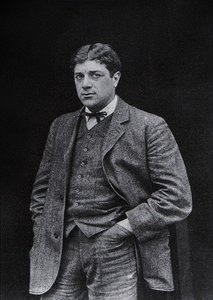
Georges Braque
1882 - 1963 , France
Quick Facts
- Artistic Movement Or Style:
- Fauvism
- Cubism
- Analytical Cubism
- Synthetic Cubism
- Artists Or Movements Influenced By This Artist: ['Modern art']
- Artists Who Influenced This Artist:
- Henri Matisse
- André Derain
- Paul Cézanne
- Full Name: Georges Braque
- Nationality: French
- Notable Artworks:
- Houses at L'Estaque
- The Patience
- Violin and Palette
- Mandola
- Place Of Birth: Argenteuil, France
- Date Of Birth: 1882
- Date Of Death: 1963
Related Articles

Synthetic Cubism Explained: A Professional Guide to Texture, Collage, and Geometric Abstraction for Modern Interior Design
Master the use of Synthetic Cubism in modern hospitality design. Our expert guide explores texture, collage, and geometric abstraction to help designers source premium, large-scale oil reproductions for hotels and corporate spaces with professional reliability.

Cubism Explained: A Professional Guide to Geometric Abstraction for Modern Interior Design
Master the impact of Cubism in modern design. Our expert guide explores geometric abstraction, Picasso's legacy, and professional solutions for sourcing high-quality Cubist reproductions for hotels, corporate spaces, and luxury interiors.


