

Acrylic On Canvas.

§ 1Catalogue data


This Artwork Is Under Copyright Protection
The artwork displayed on this page is protected by copyright law, which means we cannot legally create or sell an identical reproduction. This protection is enforced under international agreements such as the Berne Convention and by national laws, including those outlined by the U.S. Copyright Law - Title 17.
As a respectful and legal alternative, we offer custom, hand-painted artworks inspired by the original. Our skilled and professional artists carefully study the original's style, mood, and artistic essence to create a new, unique piece that evokes the same feeling - while remaining an original creation in its own right.
This method fully complies with copyright regulations because it does not involve copying or duplicating the protected artwork. Instead, it is a creative reinterpretation - a new painting that is influenced by the original but not identical to it.
 Read more
§ 2Abstract
Collectible Description
Explore 'Soda' by Georges Braque, a pivotal work of Cubism showcasing fragmented forms and innovative perspective. Discover the genius behind this early 20th-century masterpiece.
Artist Biography
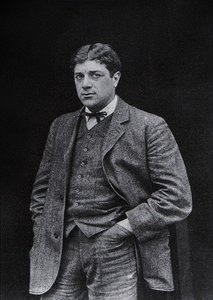
Discover Georges Braque (1882-1963): Cubism pioneer & Fauvism master. Explore his innovative art, from 'Houses at L'Estaque' to stunning collages.
§ 3Commentary
A Still Life Reimagined: Decoding Braque’s “Soda”
Georges Braque's “Soda,” painted in Paris around the spring of 1912, is not merely a depiction of everyday objects; it’s a pivotal statement within the burgeoning language of Cubism. The painting presents a fragmented view of a table setting – a soda bottle (the namesake of the piece), a cup, bowls, and a spoon – rendered with an analytical precision that dismantles traditional notions of form and perspective. Braque doesn't aim to replicate reality as it is seen, but rather to present how it is *known*, breaking down objects into their essential geometric components and reassembling them on the canvas in a dynamic interplay of planes and angles. The muted palette, dominated by ochres, browns, and grays, further emphasizes the intellectual rigor of the composition, shifting focus from vibrant color to structural analysis. This wasn’t about capturing light or emotion in the Impressionist manner; it was an exploration of how we perceive space and volume, a visual dissection of the world around us.The Genesis of Analytical Cubism
To understand “Soda,” one must consider its place within Braque's artistic evolution and his close collaboration with Pablo Picasso during this period. Having initially flirted with Fauvism – evident in earlier works characterized by bold colors and expressive brushwork – Braque, alongside Picasso, began to deconstruct the visual world inspired by Paul Cézanne’s late paintings. Cézanne’s emphasis on underlying geometric forms proved a crucial catalyst. “Soda” exemplifies what is known as Analytical Cubism, where objects are broken down into fragmented shapes and reassembled in an ambiguous space. Unlike later Synthetic Cubism which would incorporate collage elements and brighter colors, Analytical Cubism focused on dissecting form through monochromatic palettes and complex spatial arrangements. The painting isn’t about the *thing* itself – the soda bottle or the cup – but rather about the act of seeing, of analyzing, and reconstructing visual information. The overlapping planes and shifting perspectives challenge the viewer to actively participate in deciphering the composition, forcing a re-evaluation of how we perceive depth and form.Symbolism Within the Fragments
While “Soda” is primarily an exercise in formal experimentation, subtle symbolic readings can be gleaned from its arrangement. The everyday objects depicted – items commonly found in Parisian cafes – elevate the mundane to the level of artistic inquiry. The soda bottle itself, a relatively new consumer product at the time, could represent modernity and industrialization, themes increasingly present in early 20th-century art. The fragmented nature of the composition might also reflect the fractured experience of modern life, the sense of disorientation and alienation that accompanied rapid social change. However, it’s crucial to remember that Braque was less concerned with overt symbolism than with exploring the fundamental principles of visual representation. The objects serve as vehicles for his artistic investigation, rather than carrying a specific narrative weight.A Lasting Legacy: “Soda” in Context
“Soda” is now held in the esteemed collection of the Museum of Modern Art (MoMA) in New York City, a testament to its enduring significance within art history. It stands as a powerful example of Braque’s contribution to one of the most revolutionary movements in modern art. The painting continues to inspire artists and captivate viewers with its intellectual depth and visual complexity. For collectors and interior designers alike, a reproduction of “Soda” offers more than just aesthetic appeal; it provides a window into a pivotal moment in artistic innovation, a conversation starter that speaks to the power of abstraction and the enduring quest to understand how we perceive the world around us. Its subtle color palette lends itself well to modern interiors, adding a touch of sophisticated intellectualism without overwhelming the space.Questions & Answers
How does "Soda" fit into Georges Braque's themes and style?
"Soda" belongs to Georges Braque's Cubism work, whose recorded themes include cézanne inspiration, spatial perception, geometric exploration, formal analysis, cubist legacy.
What mood and emotion come together in "Soda"?
The recorded mood of "Soda" by Georges Braque is elegant, and its emotional tone is reflective.
Which reproduction size is suggested for "Soda" by Georges Braque?
"Soda" is recommended at a large print size. Other sizes are available with the same proportions.


 Switch to Print


 For artworks or reproductions larger than 105 cm (approximately 41 inches) on any side, the frame will be shipped as a kit, disassembled. This method ensures safe delivery and prevents damage during transport.


