

1954. Acrylic On Canvas.

§ 1Catalogue data


This Artwork Is Under Copyright Protection
The artwork displayed on this page is protected by copyright law, which means we cannot legally create or sell an identical reproduction. This protection is enforced under international agreements such as the Berne Convention and by national laws, including those outlined by the U.S. Copyright Law - Title 17.
As a respectful and legal alternative, we offer custom, hand-painted artworks inspired by the original. Our skilled and professional artists carefully study the original's style, mood, and artistic essence to create a new, unique piece that evokes the same feeling - while remaining an original creation in its own right.
This method fully complies with copyright regulations because it does not involve copying or duplicating the protected artwork. Instead, it is a creative reinterpretation - a new painting that is influenced by the original but not identical to it.
 Read more
§ 2Abstract
Collectible Description
Discover Georges Braque (1882-1963): Cubism pioneer & Fauvism master. Explore his innovative art, from 'Houses at L'Estaque' to stunning collages.
Artist Biography
Cubism pioneer Georges Braque co-founded the movement with Picasso. Explore his revolutionary works and innovative collages today.
§ 3Commentary
Georges Braque’s “The Echo”: A Still Life Rooted in Cubist Innovation
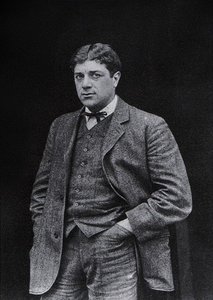
Georges Braque (1882-1963), a pivotal figure in the genesis of Cubism alongside Pablo Picasso, possessed an artistic vision that transcended mere representation. Born in Argenteuil, France, his formative years were steeped in the traditions of house painting and decoration—a grounding experience that instilled not only meticulous craftsmanship but also a profound understanding of visual structure. This early exposure would prove invaluable as he dismantled conventional artistic precepts, forging new paths toward expressive abstraction. His journey began with formal training at the École des Beaux-Arts in Le Havre, establishing him as a student of both form and technique—a duality that characterized his entire oeuvre. Moving to Paris in 1902, Braque continued his studies at the Académie Humbert, immersing himself within the burgeoning artistic fervor of the city. It was here that he encountered fellow innovators like Marie Laurencin and Francis Picabia, fostering a collaborative spirit that propelled them toward groundbreaking experimentation. This intellectual exchange fueled his exploration of geometric abstraction, particularly evident in his early works—pieces like “Houses at L’Estaque,” which captured the essence of Provençal landscapes with fragmented planes and muted hues. These explorations foreshadowed the revolutionary aesthetic he would champion during his Cubist period.The Genesis of Cubism: Fragmentation and Perception
Cubism emerged as a radical reaction against Impressionism's preoccupation with fleeting impressions of light and color. Braque, alongside Picasso, sought to depict objects from multiple viewpoints simultaneously—a concept that fundamentally challenged the accepted notion of visual perception. They achieved this feat by fracturing forms into geometric planes, often overlapping and intersecting, thereby presenting a composite image rather than a single perspective. This technique wasn’t merely stylistic; it represented a deliberate attempt to capture the underlying structure of reality itself—a core tenet of Cubist philosophy. The influence of Cézanne's sculptural approach to landscape was palpable, prompting Braque to consider how artists could represent three-dimensional space on a two-dimensional surface.“The Echo”: Composition and Symbolism
Braque’s “The Echo,” created around 1954, exemplifies this Cubist aesthetic with remarkable precision. The artwork depicts a vase—a recurring motif in Braque's oeuvre—positioned centrally against a backdrop of carefully arranged objects: a cup and bowl to the left, and two bottles above and below the vase on the right. These elements are rendered as fragmented planes, subtly shifting hues and textures to convey depth and dimensionality. The muted color palette contributes to an atmosphere of contemplative stillness, inviting viewers to engage with the interplay of form and light. The inclusion of newspapers—a deliberate choice by Braque—adds a layer of symbolic significance. Newspapers represent communication, information, and the complexities of modern life—themes that resonated deeply within Braque’s artistic consciousness. They serve as visual anchors, grounding the geometric abstraction in a tangible reality while simultaneously prompting reflection on societal concerns. The overall composition echoes the principles of Cubism: simultaneous viewpoints, flattened perspective, and an emphasis on structural elements rather than decorative embellishments.A Legacy of Innovation
Georges Braque’s contribution to modern art is undeniable. He wasn't merely adapting existing styles; he was actively reshaping artistic conventions—a feat accomplished through tireless experimentation and unwavering dedication to his vision. “The Echo,” like countless other works produced during his prolific career, stands as a testament to his enduring influence on subsequent generations of artists. Its meticulous execution and evocative symbolism continue to inspire admiration and provoke contemplation, securing its place as an iconic masterpiece within the canon of 20th-century art.Questions & Answers
Toward which tone does "The Echo" lean?
A golden yellow range hue runs through "The Echo" by Georges Braque.
In which year and which movement was "The Echo" made?
"The Echo" was created in 1954 as a work of the Cubist Still Life movement. Date and movement anchor the artwork in art history.
What feeling is "The Echo" associated with?
The emotional tone recorded for "The Echo" by Georges Braque is reflective. It summarizes the feeling the work expresses.


 Switch to Print


 For artworks or reproductions larger than 105 cm (approximately 41 inches) on any side, the frame will be shipped as a kit, disassembled. This method ensures safe delivery and prevents damage during transport.


