Money-Back Guarantee · 100 days Free Worldwide Delivery
449,587artworks 30,613artists 4,660museums 32languages
Catalogue entry

untitled (2944)

Etching.

Fig. 1. Georges Braque, untitled (2944). Shown as the reproduction you are specifying: , .

§ 1Catalogue data

§ 2Abstract

Collectible Description

Georges Braque’s untitled (2944) captures a dynamic scene featuring a man playing guitar amidst bottles and figures—a hallmark of Cubism's fractured perspective and exploration of form, cementing Braque’s legacy in modernist art. Explore this captivating artwork and bring its timeless beauty into your home.

Artist Biography

Discover Georges Braque (1882-1963): Cubism pioneer & Fauvism master. Explore his innovative art, from 'Houses at L'Estaque' to stunning collages.

§ 3Commentary

A Fragment of Parisian Modernity

In the quiet, monochrome depths of Georges Braque’s Untitled (2944), we find more than just a collection of shapes; we encounter a whispered memory of a transformative era in Paris. The scene unfolds with an intimate, almost voyeuristic grace, presenting a man cradling a guitar amidst a gathering of figures. Some companions linger close to the central subject, while others drift into the background, creating a sense of depth that feels both structured and ethereal. Scattered throughout this tableau are the humble artifacts of café life—bottles and a solitary cup—rendered with such precision that they become architectural elements within the composition. This is not merely a depiction of a social moment, but a profound exploration of how we perceive the world around us through the lens of Analytical Cubism.

Braque’s mastery is most evident in his radical departure from traditional representation. Eschewing the fleeting light and vibrant palettes of the Impressionists, he turned inward to find truth in geometry. Through a meticulous, reductive process, the artist distills complex human forms and everyday objects into fundamental planes and intersecting lines. Executed in a striking black and white palette, the technique emphasizes the structural rhythm of the piece. The use of etching-like precision allows for a play of light and shadow that feels simultaneously sharp and subtly ambiguous, inviting the viewer to reconstruct the scene within their own mind. It is a dance of monochrome tones where every edge and contour serves to challenge our singular perspective.

The Soul of the Avant-Garde

To understand this work is to understand the intellectual fervor of early 20th-century France. Braque, alongside his legendary collaborator Pablo Picasso, spearheaded a revolution that dismantled the mirror of art. This piece reflects a time when artists were grappling with new scientific and mathematical understandings of space and perception. The guitar, a recurring motif in Cubist repertoire, serves as a powerful symbol of musical creativity and the harmonious expression of the human spirit. Meanwhile, the geometric rendering of the bottles and cup strips away the superficiality of the objects, revealing their essential, structural essence.

For the discerning collector or interior designer, Untitled (2944) offers a sophisticated presence that transcends mere decoration. It possesses an emotional gravity—a quiet, intellectual intensity that commands attention without overwhelming its surroundings. Whether placed in a contemporary gallery setting or a classic study, this reproduction brings with it the legacy of the avant-garde. It is an invitation to contemplate the beauty found in fragmentation and the profound elegance of simplicity, making it a timeless centerpiece for any curated space.

Questions & Answers

Does "untitled (2944)" by Georges Braque use strong contrasts or soft harmonies?

In "untitled (2944)", a statement contrast is paired with a strong color unity harmony.

What color leads the composition of "untitled (2944)" by Georges Braque?

The color that stands out most in "untitled (2944)" is sap green (#616d3e). The dominant color is useful when matching an artwork to an interior.

Is "untitled (2944)" one of Georges Braque's most popular works?

"untitled (2944)" is classified as iconic.
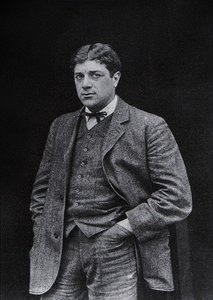
§ 4The artist

Georges Braque

Georges Braque

1882 - 1963, France

Quick facts about Georges Braque

  • Artistic Movement Or Style:
    • Fauvism
    • Cubism
    • Analytical Cubism
    • Synthetic Cubism
  • Artists Or Movements Influenced By This Artist: ['Modern art']
  • Artists Who Influenced This Artist:
    • Henri Matisse
    • André Derain
    • Paul Cézanne
  • Full Name: Georges Braque
  • Nationality: French
  • Notable Artworks:
    • Houses at L'Estaque
    • The Patience
    • Violin and Palette
    • Mandola
  • Place Of Birth: Argenteuil, France
  • Date Of Birth: 1882
  • Date Of Death: 1963

Artist Biography

Early Life and Artistic Foundations

Georges Braque, born in Argenteuil, France, in 1882, embarked on a path deeply intertwined with the evolving landscape of modern art. His upbringing within a family of house painters and decorators instilled in him not only a technical mastery of materials but also an early appreciation for form and structure. Though initially following in his father’s trade, Braque's inherent artistic inclinations soon led him to formal training at the École des Beaux-Arts in Le Havre, marking the beginning of his journey toward becoming one of the most influential painters of the 20th century. This foundation—a blend of practical craftsmanship and academic study—would prove crucial as he later deconstructed and reimagined traditional artistic conventions.

Moving to Paris in 1902, Braque continued his studies at the Académie Humbert, immersing himself in the vibrant artistic milieu of the city. It was here that he encountered artists like Marie Laurencin and Francis Picabia, forging connections that would shape his early development. His initial works reflected the prevailing influences of Impressionism and Post-Impressionism, but a pivotal encounter with the bold colors and expressive freedom of Fauvism in 1905 ignited a new direction in his artistic exploration.

The Embrace of Fauvism and the Dawn of Cubism

Braque’s adoption of Fauvist principles—characterized by intense, non-naturalistic color and emotional expression—is vividly exemplified in paintings like The Patience. This period saw him working alongside artists such as Henri Matisse and André Derain, experimenting with vibrant palettes and simplified forms. However, Braque's engagement with Fauvism was not merely imitative; he infused it with a unique sensibility, tempering the movement’s unrestrained exuberance with a more restrained and analytical approach.

A turning point arrived in 1907 with his exposure to the retrospective exhibition of Paul Cézanne's work. Cézanne’s emphasis on geometric forms and multiple perspectives profoundly impacted Braque, setting the stage for his groundbreaking collaboration with Pablo Picasso. Beginning in 1908, these two artistic titans embarked on a period of intense intellectual exchange that would give birth to Cubism—a revolutionary movement that shattered traditional notions of representation.

Together, Braque and Picasso developed Analytical Cubism, dissecting objects into fragmented geometric shapes and presenting multiple viewpoints simultaneously. Works like Houses at L'Estaque demonstrate this early phase, showcasing a radical departure from conventional perspective and a focus on the underlying structure of forms. Their palette became deliberately muted, emphasizing form over color, as they sought to represent the totality of an object’s presence rather than merely its appearance.

Innovation Through Fragmentation and Collage

The partnership between Braque and Picasso continued to push the boundaries of artistic expression, leading to the development of Synthetic Cubism around 1912. This phase saw the introduction of collage—the incorporation of real-world materials such as newspaper clippings, wallpaper, and fabric into paintings. This innovation challenged the traditional hierarchy between painting and sculpture, blurring the lines between art and life.

Braque’s pioneering use of *papier collé* (pasted paper) marked a significant turning point in his artistic evolution. By integrating fragments of everyday objects into his compositions, he disrupted the illusionistic space of traditional painting and introduced a new level of materiality and texture. This technique not only expanded the formal possibilities of art but also reflected a growing interest in the relationship between representation and reality.

The outbreak of World War I in 1914 brought an interruption to this intense collaboration, as Braque was called upon for military service. His wartime experiences profoundly affected his artistic vision, leading him to explore more personal and lyrical themes in his post-war work.

Later Years and Enduring Legacy

Following the war, Braque’s style evolved beyond the strict confines of Cubism, incorporating elements of classical composition and a renewed interest in still life. While retaining the geometric influences that had defined his earlier work, he developed a more nuanced and contemplative approach to painting. His later landscapes and interiors are characterized by their serene atmosphere and subtle harmonies of color.

Throughout his career, Braque remained committed to exploring the fundamental principles of form, space, and representation. He continued to experiment with different materials and techniques, pushing the boundaries of artistic expression until his death in 1963. His influence on subsequent generations of artists is immeasurable, shaping the course of modern art and inspiring countless painters, sculptors, and collagists.

Georges Braque’s legacy extends beyond his individual artworks; he fundamentally altered our understanding of how we perceive and represent the world around us. His collaborative spirit with Picasso, coupled with his own unique artistic vision, cemented his place as a true pioneer of modern art—a master who dared to challenge conventions and redefine the possibilities of painting.

Influences and Notable Works

  • Influenced By: Henri Matisse, André Derain, Paul Cézanne
  • Key Works: Houses at L'Estaque, The Patience, Violin and Palette, Mandola
  • Impact on Art History: Revolutionized 20th-century art through Cubism; challenged traditional notions of perspective and representation.

§ 5Comparanda

§ 6Questions

Quick Facts

  • Artistic style: Analytical Cubism
  • Title: untitled (2944)
  • Artist: Georges Braque
  • Subject or theme: Portrait

§ 7Cite this entry

AllPaintingsStore.com, “Georges Braque, untitled (2944)”, https://allpaintingsstore.com/en/art/georges-braque-untitled-2944-9GEVR3-en/ArtistReproduction/ (accessed 4 October 2026).

§ 8The reproduction

Hand Made Oil Reproduction

Hand-painted oil on canvas in your size and frame, made to order by our artists. ( Switch to Print Switch to Digital Image)

It is specified on the order sheet in the margin; the present state of that sheet reads as follows.

untitled (2944)

Reproduction Medium

Reproduction Size

-

Elite Senior Artist

More detail, finesse, and extra production time

-

Reproduction Frame

-

-

For artworks or reproductions larger than 105 cm (approximately 41 inches) on any side, the frame will be shipped as a kit, disassembled. This method ensures safe delivery and prevents damage during transport.

Professional assembly required - this is not a DIY product.
The kit must be assembled and the canvas stretched by an experienced professional framer, using wood glue (not supplied), a canvas stretching plier and clamps to hold the bars square while the glue dries. Incorrect assembly or uneven canvas tension can permanently damage the artwork and is not covered by our warranty.

  • All solid wood bars are included, precisely cut to size.

  • Assembled with the screws provided, plus wood glue for the corner joints, which is not supplied and must be sourced by your framer.

  • Professional tools are required and not included: a canvas stretching plier (tensioner) and clamps to hold the bars square while the glue dries.

Important:
The corner joints require wood glue, the bars must be held with clamps until the glue is fully dry, and tightening the canvas on the assembled frame requires a canvas stretching plier. None of these are included in the kit. Please arrange an experienced professional framer before ordering this size.

Nameplate

-

-

Protective Varnish

Glossy Varnish (enhances colors, protects against light/moisture)

-

Customize My Artwork

Examples of what can be changed: Replace face with customer photo; Add pet (e.g., replace cat with dog); Include hidden message in background; Change background landscape or elements.

-

Urgent

Worldwide Delivery () in 3/4 weeks instead of standard 5 weeks. (1 November). No compromise on quality.

-

Express Shipping

Worldwide Delivery () in 5 weeks. (8 November).

Included

Total Price

$ 258

Included with every order

  • Free Worldwide Express Shipping
  • High-Quality Linen Canvas
  • Full Shipping Insurance
  • Customs Tax Refund Guarantee
  • True Color Matching Guarantee
  • 100-Day Return Policy (Defects Only)
  • 100% Money-Back Guarantee
  • Bulk Discount Offer
Order sheet