- Home

- Oil Painting Reproduction
- Gerhard Richter
- Star Picture

 Buy print
 Send
Send Share
Share
 Details

 Download
 Similars
 X-Ray
X-Ray Diaporama
Star Picture
 Acrylic On Canvas
- WallArt
- Abstract Expressionism
 1969
1969- Contemporary
 70.0 x 70.0 cm
 Read More
Hand Made Oil Reproduction
Hand-painted oil on canvas in your size and frame, made to order by our artists.




P118B $10

P118H $10

P118W $10

P438Z $10

P508JH $12

P508YH $12

P805H $10

P805Z $10

P919BZ $10

P919G $10

P919XJ $10

P959ZH $10

P968JZ $12

W106C $8

W218G $10

W218JH $8

W218Y $10

W307PJ $10

W316G $10

W316PJ $8

W316Y $10

W398PJ $8

W4111J $10

W500HY $15

W500JH $15

W692G $12

W849H $8

W940BG $15

W953PJ $8




Pick from our preset sizes that match the artwork's original proportions.

You may enter your own dimensions to fit a specific frame or space. If your selected size does not match the original image's proportions, we will either crop the artwork or extend the painting with additional hand-painted elements. A digital mockup will be sent for your approval before production begins.
Please note that the on-screen preview does not reflect the actual cropping or extension. Only the mockup will accurately show the final composition.
While custom sizes are available, we recommend selecting a dimension from the predefined list to preserve the original proportions.
After order, AllPaintingsStore.com team will email client for instructions and provide a mockup preview
Worldwide Delivery () in 3/4 weeks instead of standard 5 weeks. (16 July). No compromise on quality.

Free Worldwide Express Shipping

High-Quality Linen Canvas

Full Shipping Insurance

Customs Tax Refund Guarantee

True Color Matching Guarantee

60-Day Return Policy (Defects Only)

100% Money-Back Guarantee

Bulk Discount Offer
 Glass option is only available in size under 110 CM

Star Picture
Reproduction Medium
Reproduction Size
-


Total Price
-
Artwork Description
A Universe Contained: Exploring Gerhard Richter’s ‘Star Picture’
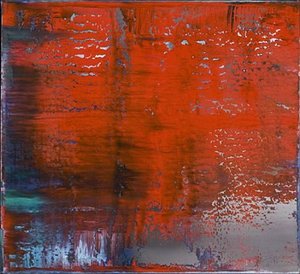
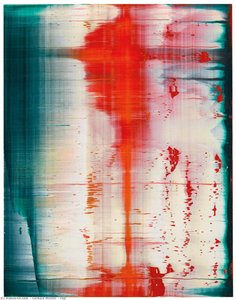
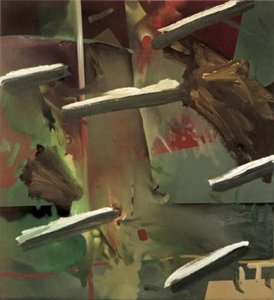
Gerhard Richter's ‘Star Picture,’ created in 1969, is not an invitation to gaze upon the cosmos with romantic wonder, but rather a profound meditation on perception, representation, and the very nature of painting itself. Emerging from a period defined by both technological advancement – the year humanity first walked on the moon – and lingering post-war anxieties, this work embodies Richter’s characteristic blurring of boundaries between abstraction and reality. It isn't a depiction *of* stars, but an exploration of how we see, remember, and translate images into the language of paint. The canvas, measuring 70 x 70 cm, feels surprisingly intimate despite its vast implied subject matter; it’s as if Richter has contained a universe within a manageable frame.
The Alchemy of Abstraction and Chance
Richter's technique in ‘Star Picture’ is central to understanding its impact. He doesn’t meticulously plan or sketch, but rather embraces chance and gesture. Layers of oil paint are applied, scraped, and blurred, often utilizing a squeegee-like tool to create flattened areas and dynamic streaks. This process isn’t about achieving a precise representation; it's about revealing the inherent qualities of the medium itself – its texture, viscosity, and capacity for both control and accident. The limited palette—predominantly black, grey, and subtle gradations in between—further emphasizes this focus on materiality. These somber tones aren’t depressing, but rather create a sense of quiet contemplation, inviting the viewer to lose themselves within the painting's surface. The absence of distinct forms or focal points encourages a wandering eye, discovering new details with each viewing. It is an artwork that resists easy categorization, existing somewhere between abstract expressionism and photorealism – a hallmark of Richter’s diverse oeuvre.
Echoes of History and the Search for Meaning
Born in Dresden in 1932, Gerhard Richter's life was deeply shaped by the tumultuous history of 20th-century Germany. Growing up through war and division instilled a skepticism towards grand narratives and idealized representations. This distrust is palpable in ‘Star Picture.’ While seemingly abstract, the work can be seen as a response to the era’s fascination with space exploration, subtly questioning the utopian promises associated with technological progress. The blurred, indistinct stars might symbolize the elusiveness of truth or the limitations of human perception. Richter's artistic journey was also influenced by movements like Zero, which sought a fresh start after the devastation of war, embracing abstraction and experimentation as pathways to renewal. However, unlike the optimistic fervor of some Zero artists, Richter maintains a critical distance, refusing to offer easy answers or embrace simplistic ideologies.
A Timeless Resonance for Contemporary Spaces
‘Star Picture’ possesses an enduring quality that transcends its historical context. Its monochromatic palette and abstract composition make it remarkably versatile in contemporary interiors. The painting's subtle textures and dynamic energy can add depth and sophistication to a minimalist space, while its contemplative mood complements more traditional settings. A reproduction of this work isn’t merely a decorative element; it’s an invitation to engage with complex ideas about art, perception, and the human condition. It speaks to those who appreciate intellectual rigor alongside aesthetic beauty—a piece that rewards sustained contemplation and offers new discoveries with each encounter. The artwork's power lies in its ability to evoke emotion without relying on explicit imagery, making it a truly timeless addition to any collection.
Related Artworks



Artist Biography
A Life Shaped by Division: The Early Years and Artistic Formation of Gerhard Richter
Gerhard Richter’s story is inextricably linked to the fractured history of 20th-century Germany. Born in Dresden in 1932, his childhood unfolded under the shadow of a rising National Socialist regime. This formative period, marked by displacement – his family moved several times during the war years – instilled within him a profound sense of uncertainty and a questioning spirit that would permeate his artistic practice for decades to come. The idyllic landscapes of his early upbringing in Reichenau and Waltersdorf were soon disrupted by conflict, leaving an indelible mark on his psyche. His father, though not a fervent supporter of the Nazi party, navigated the complexities of life under authoritarian rule as a schoolteacher, while his mother fostered a love for literature and music within the family. This duality – a pragmatic acceptance of circumstance alongside a yearning for cultural expression – became a defining characteristic of Richter’s own artistic approach. He began formal training at the Dresden Academy of Fine Arts in 1951, initially immersed in the tradition of socialist realism demanded by the East German state. However, even within this constrained environment, a desire for artistic freedom simmered beneath the surface, fueled by a growing dissatisfaction with ideological constraints and a longing to explore more expansive creative possibilities.Escaping Constraints: Düsseldorf and the Exploration of Style
The year 1961 proved pivotal. Richter, along with his wife Marianne Eufinger, made the daring decision to flee East Germany, seeking refuge in the burgeoning art scene of Düsseldorf. This move marked a radical shift in his artistic trajectory. The West German landscape offered a liberating environment where experimentation and innovation were not only permitted but actively encouraged. In Düsseldorf, he encountered a vibrant community of artists grappling with questions of identity, representation, and the legacy of history. He quickly began to dismantle the rigid stylistic conventions of socialist realism, embarking on a period of intense exploration that would define his early mature work. This era saw him oscillate between seemingly disparate approaches – from photorealism, meticulously recreating photographic images with astonishing precision, to abstract compositions characterized by bold colors and dynamic brushstrokes. His collaboration with Sigmar Polke led to the coining of the term ‘Capitalist Realism,’ a deliberately ambiguous label that reflected their shared skepticism towards established artistic norms and their appropriation of imagery from advertising and mass media. This period wasn’t about finding *a* style, but rather questioning the very notion of stylistic coherence, embracing contradiction as a fundamental principle.Blurring Boundaries: Photorealism, Abstraction, and the Power of Chance
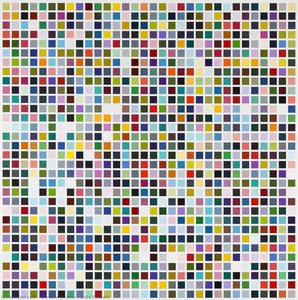
Richter's artistic vocabulary expanded throughout the 1960s and beyond, encompassing a remarkable range of techniques and themes. His photorealistic paintings, often based on family photographs or newspaper images, are not merely copies of reality but rather investigations into the nature of perception and representation. By meticulously rendering these images with an almost clinical detachment, he forces viewers to confront the inherent ambiguity of photographic truth. Simultaneously, Richter delved deeper into abstraction, creating canvases layered with vibrant colors and gestural marks. These abstract works are often created using a unique technique involving squeegees – tools typically used for cleaning windows – which he drags across the surface of the canvas, manipulating the paint in unpredictable ways. This embrace of chance and spontaneity is central to his artistic philosophy, allowing him to relinquish control and invite unexpected outcomes. His ‘Color Charts,’ systematic arrangements of colored squares, further challenge traditional notions of artistic expression, questioning the very definition of painting itself. These works are not about individual aesthetic preferences but rather about exploring the inherent properties of color and its organizational possibilities.Legacy and Influence: A Master of Contemporary Art
Gerhard Richter’s impact on contemporary art is undeniable. His willingness to challenge conventions, his relentless experimentation with technique, and his profound engagement with historical and political themes have established him as one of the most important artists of our time. He has consistently resisted easy categorization, defying attempts to pigeonhole his work into a single stylistic framework. This refusal to be defined, coupled with his technical virtuosity and intellectual rigor, has earned him widespread critical acclaim and commercial success – his paintings regularly fetch record prices at auction. Beyond the market value, however, lies a deeper significance. Richter’s art speaks to the complexities of modern existence, grappling with issues of memory, identity, and the search for meaning in a fragmented world. He doesn't offer answers but rather poses questions, prompting viewers to confront their own preconceptions and engage in critical dialogue. His influence can be seen in the work of countless artists who have followed in his footsteps, drawn to his innovative techniques and his unwavering commitment to artistic exploration. Richter’s legacy is not simply about creating beautiful objects; it's about expanding the possibilities of painting itself. He remains a vital force in contemporary art, continuing to inspire and provoke audiences with his challenging and deeply resonant work.
Gerhard Richter
1932 - , Germany
Quick Facts
- Artistic Movement Or Style:
- Photorealism
- Abstraction
- Capitalist Realism
- Artists Or Movements Influenced By This Artist: Contemporary painters
- Artists Who Influenced This Artist:
- Pablo Picasso
- Jean Arp
- Date Of Birth: February 9, 1932
- Full Name: Gerhard Richter
- Nationality: German
- Notable Artworks:
- Abstract Painting 610-1
- Gilbert
- S. with Child
- October 18, 1977
- Place Of Birth: Dresden, Germany
Related Articles
Ephemeral Dimensions: The Impact of Illumination on Perceptual Shifts in Contemporary Abstract Painting
Explore the profound impact of illumination on contemporary abstract painting. Expert insights into perceptual psychology, key artists & collecting valuable art. AllPaintingsStore.
Beatrice Parsons: A Study in Abstract Expressionism & the Poetics of Color Field Painting
Explore the captivating world of Beatrice Parsons, a pioneering British abstract expressionist. Discover her journey from garden watercolors to evocative color field paintings and learn about her place within art history.

Jacob Kainen: A Pioneer of American Color Field Painting & Abstract Expressionism
Explore the life & work of Jacob Kainen, a pivotal figure in American Abstract Expressionism and Color Field painting. Discover his journey from Social Realism to vibrant abstraction and lasting influence on 20th-century art.

Beyond Sight: Exploring Tactile Dimensions and Illumination in Abstract Painting
Explore the captivating world of tactile abstraction! Discover impasto techniques, influential artists like Richter & Hoyland, and expert insights for collecting textured art. Elevate your space with museum-quality pieces.
Ivory Black Masters: 10 Paintings That Define Dramatic Art |
Delve into the power of 'Ivory Black' with 10 iconic paintings by masters like Rembrandt & Caravaggio. Explore dramatic chiaroscuro, gothic moods & timeless art history. Find museum-quality reproductions and elevate your home decor at