Money-Back Guarantee · 100 days Free Worldwide Delivery
449,564artworks 30,613artists 4,658museums 32languages
Catalogue entry

Conversation

1927. Acrylic On Canvas, 130.0 x 97.0 cm.

Fig. 1. Giorgio de Chirico, Conversation, 1927. Shown as the reproduction you are specifying: , .

§ 1Catalogue data

Dimensions
130.0 x 97.0 cm

§ 2Abstract

Collectible Description

Giorgio de Chirico’s ‘Conversation,’ a haunting metaphysical masterpiece from 1927, depicts two figures in classical attire amidst an unsettling dreamscape. Explore this iconic work and bring its enigmatic beauty into your space.

Artist Biography

Explore the surreal world of Giorgio de Chirico (1888-1978), founder of Metaphysical art. Discover dreamlike cityscapes, philosophical themes & iconic mannequins. Influential to Surrealism.

§ 3Commentary

A Frozen Moment of Existential Inquiry: De Chirico’s *Conversation*

Giorgio de Chirico's 1927 painting, *Conversation*, is more than just a depiction of two figures engaged in dialogue; it’s a meticulously crafted evocation of the unsettling anxieties and philosophical questions that defined the burgeoning Metaphysical art movement. Executed during a period of profound intellectual and social upheaval – marked by the rise of Nietzschean thought and a growing sense of alienation within European cities – the painting captures a moment suspended between reality and dream, logic and irrationality. The scene unfolds within a classically rendered room, imbued with an almost theatrical stillness that amplifies the inherent tension of the interaction.

  • Subject Matter: The central focus is undeniably the interaction between the man and woman. Their formal attire – the man’s tie, the woman's bun – speaks to a bygone era, yet their faces remain deliberately obscured, fostering an immediate sense of detachment and anonymity.
  • Composition & Technique: De Chirico masterfully employs his signature technique of juxtaposing familiar objects in unexpected ways, creating a disconcerting effect. The dining table, the vase, and the two framed pictures contribute to this unsettling atmosphere, drawing the viewer into a space that feels both recognizable and profoundly strange. The use of sharp angles, receding planes, and a limited color palette – dominated by muted browns, grays, and ochres – further enhances the painting’s sense of depth and isolation.

The Roots of Metaphysical Art

De Chirico's *Conversation* is a cornerstone of the Metaphysical art movement, which emerged in Italy during the 1920s. This style sought to depict not what was seen, but what *could be seen*, tapping into subconscious anxieties and exploring themes of loneliness, alienation, and the illusory nature of reality. Influenced heavily by philosophers like Schopenhauer and Nietzsche, De Chirico aimed to capture the subjective experience of existence – a world perceived through fragmented memories and unsettling juxtapositions. The painting’s atmosphere mirrors the intellectual climate of the time, reflecting a growing disillusionment with traditional values and a fascination with the irrational.

  • Historical Context: Created in 1927, *Conversation* reflects the anxieties of a Europe grappling with rapid industrialization, social change, and the rise of totalitarian ideologies.
  • Philosophical Influences: The painting’s themes resonate directly with the existentialist philosophies gaining traction at the time, particularly concerning the isolation of the individual within a seemingly meaningless world.

Symbolism and Emotional Resonance

*Conversation* is rich in symbolic potential, though De Chirico deliberately avoids explicit interpretations. The obscured faces invite viewers to project their own anxieties and uncertainties onto the scene. The classical setting, combined with the unsettling composition, creates a sense of timelessness – as if these figures are trapped within an eternal loop of unspoken dialogue. The painting’s emotional impact is profoundly melancholic, evoking a feeling of unease and prompting contemplation about the nature of communication, identity, and the human condition. It's a visual meditation on the profound loneliness that can exist even in the midst of interaction.

Specifications

Title: Conversation

Artist: Giorgio de Chirico

Year: 1927

Size: 130 x 97 cm

Style: Metaphysical Art

Medium: Oil on Canvas

Questions & Answers

What does "Conversation" share with the rest of Giorgio de Chirico's output?

"Conversation" belongs to Giorgio de Chirico's Metaphysical Surrealism work, whose recorded themes include nietzsche, schopenhauer, weininger, alienation, existentialism, doubt, classical symbolism, illusion.

How strong are the colors of "Conversation"?

The color of "Conversation" is balanced soft in saturation and vivid in intensity.

Where can I download "Conversation" by Giorgio de Chirico?

A download is available for "Conversation": the artwork's Download page offers a high-resolution digital image download.
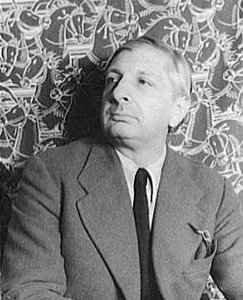
§ 4The artist

Giorgio de Chirico

Giorgio de Chirico

1888 - 1978, Greece

Quick facts about Giorgio de Chirico

  • Full Name: Giorgio de Chirico
  • Nationality: Italian
  • Date Of Birth: 1888
  • Date Of Death: 1978
  • Place Of Birth: Volos, Greece
  • Notable Artworks:
    • The Vexations of the Thinker
    • The Enigma of an Autumn Afternoon
    • The Song of Love
  • Artistic Movement Or Style: Metaphysical art
  • Artists Who Influenced This Artist:
    • Arnold Böcklin
    • Max Klinger
    • Friedrich Nietzsche
  • Artists Or Movements Influenced By This Artist:
    • Surrealism
    • René Magritte
    • Salvador Dalí

Artist Biography

A Dreamscape of the Mind: The Life and Art of Giorgio de Chirico

Born in 1888 in Volos, Greece, to Italian parents—a Genoese mother and a Sicilian father—Giorgio de Chirico’s artistic journey was one steeped in both classical heritage and a burgeoning sense of modern alienation. His early education at the Athens Polytechnic laid a foundation in traditional techniques, but it was his subsequent studies in Munich that truly ignited his creative spirit. There, amidst the intellectual ferment of pre-war Europe, he encountered the works of Arnold Böcklin and Max Klinger, artists whose symbolic landscapes and haunting imagery would deeply resonate with his own developing aesthetic. Equally influential were the philosophical currents of the time—the writings of Friedrich Nietzsche, Arthur Schopenhauer, and Otto Weininger—which explored themes of existentialism, the irrationality of human desire, and the subjective nature of reality. These ideas would become central to de Chirico’s groundbreaking artistic vision.

The Birth of Metaphysical Painting

Around 1909, a unique style began to emerge from de Chirico's explorations—a style that he himself termed “Metaphysical” art. This wasn’t merely a stylistic innovation; it was a profound attempt to capture the hidden realities beneath the surface of everyday life, to reveal the unsettling poetry lurking within familiar spaces. A pivotal moment occurred during a visit to Florence and an experience in Piazza Santa Croce, which sparked his iconic ‘Metaphysical Town Square’ series. These paintings are characterized by their eerie stillness, long dramatic shadows, illogical perspectives, and the presence of classical architecture juxtaposed with unsettling elements like faceless mannequins and looming statues. The effect is deeply disquieting, evoking a sense of nostalgia, isolation, and an almost unbearable longing for something lost or unattainable. De Chirico founded the Scuola Metafisica, profoundly impacting Surrealism, though he would later distance himself from its interpretations of his work. His paintings weren’t intended as illustrations of dreams, but rather as attempts to depict a reality beyond the visible world—a realm where time and space are fluid, and the boundaries between consciousness and unconsciousness blur. Notable works like *The Vexations of the Thinker*, *The Enigma of an Autumn Afternoon*, and *The Song of Love* exemplify this haunting aesthetic, inviting viewers to contemplate the mysteries of existence and the fragility of human perception.

A Shift in Style and a Lasting Legacy

Following World War I, around 1919, de Chirico’s artistic path took an unexpected turn. He rejected his earlier metaphysical approach, embracing instead a more traditional neoclassical or neo-baroque style. This shift was met with considerable controversy; many critics lamented the perceived decline in quality and accused him of abandoning the innovative spirit that had defined his early work. However, de Chirico remained steadfast in his artistic choices, revisiting themes from his past but rendering them with a different aesthetic sensibility. He continued to paint and exhibit prolifically throughout his life, exploring various styles and subjects while maintaining a consistent commitment to craftsmanship and technical skill. Despite the criticism, his influence on subsequent generations of artists cannot be overstated. His innovative use of space, perspective, and symbolism challenged conventional artistic norms and paved the way for new forms of expression.

Influences and Enduring Impact

De Chirico’s work stands as a crucial bridge between the late 19th-century Symbolist movement and the rise of Surrealism in the early 20th century. He was directly influenced by artists like Arnold Böcklin and Max Klinger, whose evocative imagery resonated with his own fascination with mythology and the subconscious mind. Philosophers such as Nietzsche and Schopenhauer provided him with a framework for exploring themes of existential angst, alienation, and the search for meaning in a seemingly meaningless world. However, de Chirico’s influence extended far beyond Surrealism. Artists like René Magritte and Salvador Dalí were deeply inspired by his metaphysical paintings, adopting his techniques of juxtaposition, illogical perspective, and symbolic imagery to create their own dreamlike worlds. His work also impacted later movements such as Magic Realism, which sought to depict everyday reality with a heightened sense of mystery and psychological depth. Today, de Chirico’s paintings are exhibited in major museums worldwide, including the Museum dedicated to his work near the Spanish Steps in Rome, ensuring that his legacy as one of the most important figures in 20th-century art remains secure. He left behind not just a body of artwork but a new way of seeing—a way of perceiving the world as a place of hidden meanings, unsettling beauty, and enduring mystery.

Key Influences & Artistic Lineage

  • Influenced By: Arnold Böcklin, Max Klinger, Friedrich Nietzsche, Arthur Schopenhauer.
  • Influenced: Surrealism, particularly artists like René Magritte and Salvador Dalí. His work also impacted later movements such as Magic Realism.

§ 5Comparanda

§ 6Questions

Quick Facts

  • Medium: Oil on canvas
  • Artistic style: Surrealism
  • Notable elements: Classical attire
  • Year: 1927
  • Title: Conversation

§ 7Cite this entry

AllPaintingsStore.com, “Giorgio de Chirico, Conversation (1927)”, https://allpaintingsstore.com/en/art/giorgio-de-chirico-conversation-8XY4SD-en/ArtistReproduction/ (accessed 11 October 2026).

§ 8The reproduction

Hand Made Oil Reproduction

Hand-painted oil on canvas in your size and frame, made to order by our artists. ( Switch to Print Switch to Digital Image)

It is specified on the order sheet in the margin; the present state of that sheet reads as follows.

Conversation

Reproduction Medium

Reproduction Size

-

Elite Senior Artist

More detail, finesse, and extra production time

-

Reproduction Frame

-

-

For artworks or reproductions larger than 105 cm (approximately 41 inches) on any side, the frame will be shipped as a kit, disassembled. This method ensures safe delivery and prevents damage during transport.

Professional assembly required - this is not a DIY product.
The kit must be assembled and the canvas stretched by an experienced professional framer, using wood glue (not supplied), a canvas stretching plier and clamps to hold the bars square while the glue dries. Incorrect assembly or uneven canvas tension can permanently damage the artwork and is not covered by our warranty.

  • All solid wood bars are included, precisely cut to size.

  • Assembled with the screws provided, plus wood glue for the corner joints, which is not supplied and must be sourced by your framer.

  • Professional tools are required and not included: a canvas stretching plier (tensioner) and clamps to hold the bars square while the glue dries.

Important:
The corner joints require wood glue, the bars must be held with clamps until the glue is fully dry, and tightening the canvas on the assembled frame requires a canvas stretching plier. None of these are included in the kit. Please arrange an experienced professional framer before ordering this size.

Nameplate

-

-

Protective Varnish

Glossy Varnish (enhances colors, protects against light/moisture)

-

Customize My Artwork

Examples of what can be changed: Replace face with customer photo; Add pet (e.g., replace cat with dog); Include hidden message in background; Change background landscape or elements.

-

Urgent

Worldwide Delivery () in 3/4 weeks instead of standard 5 weeks. (8 November). No compromise on quality.

-

Express Shipping

Worldwide Delivery () in 5 weeks. (15 November).

Included

Total Price

$ 258

Included with every order

  • Free Worldwide Express Shipping
  • High-Quality Linen Canvas
  • Full Shipping Insurance
  • Customs Tax Refund Guarantee
  • True Color Matching Guarantee
  • 100-Day Return Policy (Defects Only)
  • 100% Money-Back Guarantee
  • Bulk Discount Offer
Order sheet