Money-Back Guarantee · 100 days Free Worldwide Delivery
449,564artworks 30,613artists 4,660museums 32languages
Catalogue entry

Inconstancy

1306. , 120.0 x 55.0 cm.

Fig. 1. Giotto di Bondone, Inconstancy, 1306. Shown as the reproduction you are specifying: , .

§ 1Catalogue data

Dimensions
120.0 x 55.0 cm

§ 2Abstract

Collectible Description

Giotto's 'Inconstancy' (1306) captures a woman reaching towards an uncertain future, embodying the vice of fickleness with striking realism and emotional depth – a pivotal work of Proto-Renaissance art.

Artist Biography

Giotto pioneered naturalism with the Scrovegni Chapel frescoes. Discover the father of Renaissance art today.

§ 3Commentary

The Weight of Transient Beauty: Giotto’s “Inconstancy”

Giotto di Bondone's "Inconstancy," painted in 1306, isn’t merely a depiction of a woman reaching towards the heavens; it’s a profound meditation on the fleeting nature of earthly desires and the inherent instability of human emotion. This fresco, housed within the evocative Scrovegni Chapel in Padua, Italy – a space itself steeped in religious significance – represents a pivotal moment in art history: Giotto's decisive break from the rigid conventions of Byzantine painting and his courageous step toward a more naturalistic and emotionally resonant style. The work’s power lies not just in its technical brilliance but also in its ability to resonate with viewers across centuries, prompting reflection on our own experiences of longing and loss.

The central figure, draped in flowing white garments that seem to ripple with an unseen current, embodies this very concept of “Inconstancy.” Her arms are outstretched, not in supplication or triumph, but in a gesture of desperate yearning – as if she’s grasping for something just beyond her reach. The red background, a bold and dramatic choice for the time, serves to heighten the sense of urgency and instability. It's a color often associated with passion, danger, and even sacrifice, mirroring the volatile emotions at play within the scene. Notice how Giotto masterfully uses chiaroscuro – the interplay of light and shadow – to sculpt the figure’s form, lending her an almost ethereal quality while simultaneously emphasizing her vulnerability.

Proto-Renaissance Realism and Emotional Depth

Giotto's genius lay in his ability to infuse his figures with a palpable sense of humanity. Unlike the stylized, flattened forms characteristic of Byzantine art, Giotto’s figures possess volume, weight, and a remarkable degree of realism. He achieves this through careful observation of anatomy, subtle shifts in pose, and an innovative use of perspective – techniques that would become hallmarks of the Renaissance. “Inconstancy” is a prime example of this shift; the woman's posture isn’t rigidly posed but conveys a sense of movement, struggle, and profound emotional intensity.

The surrounding figures—a man on the left and two others to the right—add layers of complexity to the scene. They aren’t presented as active participants but rather as witnesses to this woman's yearning, their expressions hinting at a shared understanding of the ephemeral nature of desire. This compositional choice suggests that inconstancy isn’t an isolated experience but a universal human condition, one that touches us all.

Symbolism and Allegory

The fresco is deeply allegorical, representing not just the vice of “Inconstancy” but also broader themes of love, loss, and the passage of time. The outstretched arms symbolize the reaching for unattainable ideals – a common motif in medieval art reflecting the tension between earthly desires and spiritual aspirations. The very act of reaching implies a failure, a recognition that fulfillment is often elusive. Some scholars interpret the red background as representing the blood shed in pursuit of these fleeting passions, further emphasizing the cost associated with such pursuits.

Giotto’s deliberate use of color and composition reinforces this symbolic message. The white of the woman's clothing represents purity and innocence, while the red backdrop symbolizes passion and its potential for destruction. The overall effect is a powerful visual metaphor that invites viewers to contemplate the complexities of human emotion and the bittersweet nature of existence.

A Timeless Masterpiece – Reproduced with Care

AllPaintingsStore offers meticulously crafted hand-painted reproductions of Giotto’s “Inconstancy,” capturing the essence of this extraordinary work in stunning detail. We employ traditional fresco techniques, using archival-quality pigments and canvas to faithfully recreate Giotto's original vision. Each reproduction is a testament to our commitment to preserving artistic heritage while providing collectors with exquisite works of art for their homes or offices. The size 120 x 55 cm version offers an intimate scale, perfect for contemplation, while larger formats allow the full impact of Giotto’s masterful composition to be appreciated. Bring this poignant and timeless masterpiece into your space – a reminder of the beauty and fragility of human experience.

Questions & Answers

How do I download the image of "Inconstancy" by Giotto di Bondone?

The image of "Inconstancy" by Giotto di Bondone can be downloaded from the artwork's Download page: a high-resolution digital image download.

Can I watch "Inconstancy" as a full-screen slideshow?

"Inconstancy" by Giotto di Bondone can be viewed as a slideshow on the artwork's Diaporama page.

What is the dominant hue of "Inconstancy" by Giotto di Bondone?

The dominant hue of "Inconstancy" by Giotto di Bondone is ochre to sepia. The hue is the underlying tone of the palette.
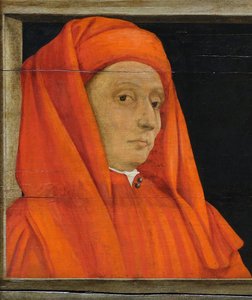
§ 4The artist

Giotto di Bondone

Giotto di Bondone

1267 - 1337, Italy

Artist Biography

The Shepherd Boy of Florence: Giotto’s Revolutionary Vision

Born around 1267 in the rolling hills near Florence, Italy, Giotto di Bondone emerged from humble beginnings to become arguably the most pivotal figure in the transition from medieval artistic conventions toward the Renaissance. His early life is steeped in legend – a shepherd boy discovered sketching remarkably lifelike sheep on rocks, catching the discerning eye of the Florentine master Cimabue. Whether fact or folklore, this tale encapsulates the essence of Giotto’s genius: an innate ability to capture the natural world with unprecedented realism and emotional depth. Taken as an apprentice by Cimabue, Giotto quickly surpassed his teacher, absorbing technical skills but forging a path distinctly his own. The Byzantine style, dominant at the time, favored stylized figures, flattened perspectives, and lavish gold backgrounds – symbols of spiritual transcendence rather than earthly representation. Giotto, however, yearned to depict humanity not as ethereal icons, but as individuals imbued with feeling, existing within tangible space.

Breaking from Byzantium: A New Naturalism

Giotto’s artistic revolution wasn't a sudden upheaval, but a gradual evolution. His early works already hinted at the shift to come, demonstrating a growing emphasis on volume, weight, and believable anatomy. He began to observe light and shadow not merely as decorative elements, but as tools to sculpt form and create depth. This nascent naturalism is evident in his contributions to the frescoes in the Upper Basilica of Saint Francis of Assisi – though authorship remains debated, many scholars recognize Giotto’s hand in scenes that display a marked departure from prevailing Byzantine aesthetics. He wasn't simply rejecting tradition; he was building upon it, infusing established forms with a newfound sense of humanity and emotional resonance. He understood the power of narrative, crafting compositions that told stories not through rigid symbolism, but through expressive gestures, believable interactions, and carefully constructed settings.

The Scrovegni Chapel: A Masterpiece of Storytelling

Giotto’s masterpiece, and arguably one of the most important works in Western art history, is the fresco cycle adorning the Scrovegni Chapel (also known as the Arena Chapel) in Padua. Completed around 1305, this breathtaking series depicts the life of Christ and the Virgin Mary with a revolutionary level of realism and emotional intensity. Each scene unfolds like a carefully staged drama, populated by figures who are not merely representations of religious archetypes, but fully realized human beings experiencing joy, sorrow, fear, and hope. The *Last Judgment*, dominating one entire wall, is a powerful testament to Giotto’s skill in conveying both divine majesty and the raw vulnerability of humanity facing its ultimate reckoning. The use of perspective, though not mathematically precise by later Renaissance standards, creates a convincing illusion of depth, drawing the viewer into the narrative. The figures are grounded, their bodies possessing weight and volume, and their expressions convey a range of emotions that were previously unseen in religious art.

Beyond Frescoes: Architecture and Lasting Legacy

Giotto’s talents extended beyond painting; he was also a respected architect. In 1334, he was commissioned to design the Campanile – the bell tower – of Florence Cathedral, a project that showcased his innovative approach to architectural form. Though he died before its completion, his designs laid the foundation for this iconic Florentine landmark. His influence on subsequent generations of artists is immeasurable. He bridged the gap between the medieval and Renaissance worlds, paving the way for masters like Masaccio, Leonardo da Vinci, and Michelangelo. Vasari, in his seminal *Lives of the Artists*, credited Giotto with “giving to painting the great art of doing things from life,” a testament to his profound impact on the course of Western art. Giotto didn’t merely depict the world; he sought to understand it, to capture its essence, and to convey that understanding through the power of visual storytelling. His legacy continues to inspire awe and admiration centuries after his death, solidifying his place as one of history's greatest artistic innovators.

Key Achievements & Lasting Influence

  • Revolutionized Painting: Moved away from Byzantine stylization towards naturalism and emotional realism.
  • Pioneered Perspective: Introduced techniques to create depth and spatial awareness in paintings.
  • Masterful Storytelling: Created compelling narratives through fresco cycles, like the Scrovegni Chapel.
  • Architectural Contributions: Designed the Campanile of Florence Cathedral, demonstrating architectural skill.
  • Foundation for Renaissance Art: His work laid the groundwork for the artistic achievements of the Renaissance period.

§ 5Comparanda

§ 6Questions

Quick Facts

  • Title: Inconstancy
  • Subject or theme: Inconstancy (Vice)
  • Dimensions: 120 x 55 cm
  • Artistic style: Naturalism, Emotional depth
  • Location: Arena Chapel, Padua
  • Notable elements: Allegorical figure

Art Quiz

There is only one correct answer for each question.

Question 1:
What is the primary subject depicted in Giotto’s ‘Inconstancy’?
Question 2:
The red background in ‘Inconstancy’ is most likely intended to:
Question 3:
Giotto’s ‘Inconstancy’ is considered a key work in the transition from which artistic style to the Renaissance?
Question 4:
Approximately when was Giotto’s ‘Inconstancy’ painted?

§ 7Cite this entry

AllPaintingsStore.com, “Giotto di Bondone, Inconstancy (1306)”, https://allpaintingsstore.com/en/art/giotto-di-bondone-inconstancy-8XY4WG-en/ArtistReproduction/ (accessed 7 October 2026).

§ 8The reproduction

Hand Made Oil Reproduction

Hand-painted oil on canvas in your size and frame, made to order by our artists. ( Switch to Print Switch to Digital Image)

It is specified on the order sheet in the margin; the present state of that sheet reads as follows.

Inconstancy

Reproduction Medium

Reproduction Size

-

Elite Senior Artist

More detail, finesse, and extra production time

-

Reproduction Frame

-

-

For artworks or reproductions larger than 105 cm (approximately 41 inches) on any side, the frame will be shipped as a kit, disassembled. This method ensures safe delivery and prevents damage during transport.

Professional assembly required - this is not a DIY product.
The kit must be assembled and the canvas stretched by an experienced professional framer, using wood glue (not supplied), a canvas stretching plier and clamps to hold the bars square while the glue dries. Incorrect assembly or uneven canvas tension can permanently damage the artwork and is not covered by our warranty.

  • All solid wood bars are included, precisely cut to size.

  • Assembled with the screws provided, plus wood glue for the corner joints, which is not supplied and must be sourced by your framer.

  • Professional tools are required and not included: a canvas stretching plier (tensioner) and clamps to hold the bars square while the glue dries.

Important:
The corner joints require wood glue, the bars must be held with clamps until the glue is fully dry, and tightening the canvas on the assembled frame requires a canvas stretching plier. None of these are included in the kit. Please arrange an experienced professional framer before ordering this size.

Nameplate

-

-

Protective Varnish

Glossy Varnish (enhances colors, protects against light/moisture)

-

Customize My Artwork

Examples of what can be changed: Replace face with customer photo; Add pet (e.g., replace cat with dog); Include hidden message in background; Change background landscape or elements.

-

Urgent

Worldwide Delivery () in 3/4 weeks instead of standard 5 weeks. (5 November). No compromise on quality.

-

Express Shipping

Worldwide Delivery () in 5 weeks. (12 November).

Included

Total Price

$ 258

Included with every order

  • Free Worldwide Express Shipping
  • High-Quality Linen Canvas
  • Full Shipping Insurance
  • Customs Tax Refund Guarantee
  • True Color Matching Guarantee
  • 100-Day Return Policy (Defects Only)
  • 100% Money-Back Guarantee
  • Bulk Discount Offer
Order sheet