Jacob van Loo: The Master of Conversational Groupings
Born in Sluis, a bustling port town in the Dutch Republic in 1614, Jacob van Loo’s life was one inextricably linked to the vibrant artistic currents of his time. His early years were shaped by his father, Jan van Loo, a painter who instilled in him a foundational understanding of technique and artistry. While details surrounding his formative years remain somewhat obscured due to wartime destruction of city archives, it's clear that Van Loo’s artistic journey began within the rich tapestry of the Dutch Golden Age – an era renowned for its innovative painting styles and prolific artists. His family history is significant; his father was a painter, and this lineage would ultimately establish a dynasty of painters, forever impacting European art.
Amsterdam quickly became Van Loo’s adopted home in 1635, immersing him within a dynamic artistic circle that included luminaries like Rembrandt, Frans Hals, and Bartholomeus van der Helst. This environment fostered intense competition and collaboration, pushing the boundaries of artistic expression. The city's bustling atmosphere undoubtedly fueled his creativity, providing a constant stream of inspiration and challenging him to refine his skills. He married Anna Lengele in 1642, a union that brought stability and contributed to the family’s growing influence within the art world. Their household flourished with six children, including talented painters Jean-Baptiste van Loo and Louis-Abraham van Loo – establishing a legacy that would extend far beyond his own lifetime.
A Revolutionary Approach to Composition
Van Loo distinguished himself through his masterful command of ‘conversational groupings,’ a technique that revolutionized the history painting genre. Unlike earlier depictions, which often presented mythological or biblical scenes as static and formal events, Van Loo populated his canvases with lively, engaging figures caught in moments of interaction – dialogues, gestures, and expressions that breathed life into the narrative. This approach wasn’t merely decorative; it imbued the paintings with a sense of immediacy and realism, drawing viewers directly into the scene.
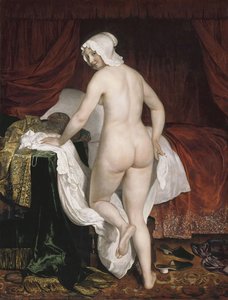
His skill extended particularly to his depictions of nudes, a subject often considered daring for its time. While Rembrandt's female figures were celebrated for their psychological depth and emotional resonance, Van Loo’s nudes gained considerable popularity among audiences. Some contemporary critics even suggested that his female forms were more favored than those of his Amsterdam rival. This preference speaks to the public’s appreciation for his technical virtuosity and the idealized beauty he captured on canvas. Notably, during his lifetime, his female figures were considered superior and more popular than those of Rembrandt.
Influences and Artistic Development
Van Loo's artistic development was undoubtedly shaped by several key influences. Early connections with Thomas de Keyser and Jacob Adriaensz Backer provided him with a solid foundation in classical techniques and composition. These encounters exposed him to the principles of Renaissance art, which he skillfully integrated into his own style. The Baroque movement, originating in Rome, also exerted a significant impact, contributing to the dramatic lighting, rich colors, and dynamic poses characteristic of his work.
His time in Paris proved pivotal, marking a shift towards greater elegance and refinement. He was accepted into the Académie royale de peinture et de sculpture in 1663, solidifying his position within the French artistic establishment. This move signaled not only a professional advancement but also a deepening of his engagement with the evolving tastes and conventions of the Parisian art world.
Legacy and Dynasty
Jacob van Loo’s influence extended far beyond his own lifetime. His success established the ‘Van Loo family of painters,’ a dynasty that profoundly impacted European painting for centuries. His son, Jean-Baptiste van Loo, continued the family tradition, producing works of exceptional quality and establishing a distinct artistic style. His grandson, Charles-André van Loo, further expanded the family’s legacy, becoming one of the most celebrated French painters of the 18th century.
The Van Loo dynasty's influence can be seen in the works of subsequent generations, demonstrating a continuous evolution and adaptation of their father’s innovative techniques. Jacob van Loo’s pioneering approach to composition, his masterful handling of nudes, and his establishment of a lasting artistic lineage cemented his place as a pivotal figure in Dutch and French art history. His paintings continue to be studied and admired for their beauty, dynamism, and enduring appeal.
Notable Works
- Diana and Her Nymphs (1648): A prime example of Van Loo’s conversational groupings, showcasing his ability to capture a lively scene with engaging figures. View Artwork
- Self Portrait, circa 1660: A striking depiction of the artist himself, revealing his refined style and confident demeanor. View Artwork
- Group Portrait of the Meebeeck Cruywagen Family at the Gate of their Country Home on the Uitweg near Amsterdam (attributed to): Demonstrates his ability to capture a social scene with detail and realism. View Artwork
Further information about Jacob van Loo can be found on the Artists Database and a detailed Wikipedia entry: Wikipedia.


 Read More




 Switch to Print


 For artworks or reproductions larger than 105 cm (approximately 41 inches) on any side, the frame will be shipped as a kit, disassembled. This method ensures safe delivery and prevents damage during transport.


