Money-Back Guarantee · 100 days Free Worldwide Delivery
449,587artworks 30,613artists 4,660museums 32languages
Currency
    Language
      Atelier · Est. 2015 · Paris, France
      AllPaintingsStore
      allpaintingsstore.com
      Catalogue entry

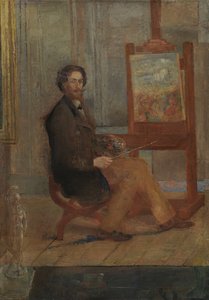
      Nos deux portraits

      Acrylic On Canvas.

      Fig. 1. James Ensor, Nos deux portraits. Shown as the reproduction you are specifying: , .

      § 1Catalogue data

      § 2Abstract

      Collectible Description

      Explore James Ensor's 'Nos Deux Portraits,' a haunting double portrait revealing psychological distance and masked intimacy. A masterpiece of Expressionism, now available as a stunning hand-painted reproduction.

      Artist Biography

      Discover James Ensor (1860-1949), a Belgian painter who pioneered Expressionism & Surrealism. Explore his unsettling scenes of masks, carnivals & skeletons.

      § 3Commentary

      A Double Portrait of Shadows and Secrets

      James Ensor’s “Nos deux portraits” (1905) isn't merely a depiction of two women; it’s an immersion into the artist’s uniquely unsettling world – a realm populated by masks, anxieties, and veiled emotions. Painted during a period of intense introspection for Ensor, this work offers a glimpse into his complex relationships and his masterful ability to distill psychological depth onto canvas. The scene unfolds within a modestly furnished room, bathed in an ambiguous light that seems to both invite and repel the viewer. Two women occupy the space, their postures subtly suggesting conversation or perhaps a shared, unspoken understanding. One wears a flamboyant hat adorned with flowers – a vibrant burst of color against the muted tones of the background – while the other sports a more restrained style, hinting at a quiet reserve. The inclusion of a third figure in the periphery, partially obscured by a mirror, adds an element of mystery and suggests a hidden observer, further amplifying the painting’s sense of contained drama.

      The Artist's Intimate Circle: Augusta Boogaerts

      “Nos deux portraits” is inextricably linked to James Ensor’s lifelong friendship with Augusta Boogaerts, a woman who profoundly shaped his artistic trajectory and remained a constant presence in his life for over sixty years. Boogaerts, depicted here in elegant attire – gloves, a fur stole, and a large flowered hat – embodies a certain sophistication and composure. However, Ensor’s masterful use of perspective—her head turned away from the viewer, her body angled opposite to that of the other woman—creates a subtle distance, hinting at an underlying complexity within their relationship. Diane Lesko, in *James Ensor, the creative years*, notes this intriguing dynamic: “There is a sense of light intrigue here, of cladestine moments stolen by unmarried lovers.” The inclusion of flowers at her feet – seemingly fallen from a vase – reinforces this notion of delicate beauty and fleeting intimacy. Boogaerts’ role extended beyond companionship; she managed Ensor's sales and contributed significantly to his artistic output, particularly in the still-life paintings featuring seashells and trinkets that characterized much of his later work.

      Expressionist Techniques: Masks, Distortion, and Emotional Resonance

      Ensor’s distinctive style is immediately recognizable in “Nos deux portraits.” He employs a palette dominated by muted browns, greens, and blues, creating an atmosphere of subdued intensity. The figures are rendered with a degree of distortion – their features subtly exaggerated, their gazes averted—reflecting the emotional undercurrents at play. This deliberate manipulation of form is characteristic of Expressionism, a movement Ensor helped pioneer. The use of loose brushstrokes and fragmented forms contributes to the painting’s sense of unease and psychological depth. Notice how he utilizes light and shadow not just to define shapes but also to create an unsettling interplay of textures and tones. The background itself feels deliberately ambiguous, almost claustrophobic, further intensifying the feeling of contained drama. The artist's signature, “Ensor,” is placed discreetly in the lower left corner, a quiet assertion of authorship within this intensely personal work.

      Symbolism and Social Commentary: A Window into Ensor’s Mind

      Beyond its immediate depiction of two women, "Nos deux portraits" resonates with broader symbolic meanings rooted in Ensor's artistic preoccupations. The masks, so prevalent in his oeuvre, represent the concealment of identity and the performance of social roles. The mirror reflects not just a physical image but also an emotional distance—a sense that both women are observing each other through a veil of reserve. Some art historians interpret the painting as a meditation on loneliness and isolation, despite the apparent intimacy of the scene. Ensor’s work frequently engaged with themes of social critique and the anxieties of modern life, often expressed through grotesque imagery and unsettling juxtapositions. “Nos deux portraits” serves as a powerful example of this approach, inviting viewers to contemplate the hidden complexities beneath the surface of human interaction. Reproductions of this evocative piece offer a unique opportunity to experience Ensor’s distinctive vision and delve into the depths of his artistic imagination.

      Questions & Answers

      What saturation and intensity does "Nos deux portraits" by James Ensor show?

      "Nos deux portraits" by James Ensor is recorded with a subtle color saturation and a balanced intensity.

      Where can I buy a hand-painted reproduction of "Nos deux portraits" by James Ensor?

      You can order a hand-painted reproduction of "Nos deux portraits" by James Ensor directly on its Hand-Painted Reproduction page: a hand-painted oil reproduction on linen canvas, made to order.

      What does "Nos deux portraits" share with the rest of James Ensor's output?

      "Nos deux portraits" shares with James Ensor's other works its Expressionism & Surrealism style and the recorded themes: masks, disguise, psychological depth, carnival, social commentary critique, belgian identity, cultural satire, friendship.
      § 4The artist

      James Ensor

      James Ensor

      1860 - 1949, Belgium

      Quick facts about James Ensor

      • Artistic Movement Or Style:
        • Symbolism
        • Expressionism
        • Surrealism
      • Artists Or Movements Influenced By This Artist:
        • Expressionism
        • Surrealism
      • Artists Who Influenced This Artist:
        • Pieter Bruegel the Elder
        • Francisco Goya
        • James Abbott McNeill Whistler
      • Full Name: James Sidney Edouard Ensor
      • Nationality: Belgian
      • Notable Artworks:
        • Christ's Entry into Brussels
        • The Man of Sorrows
        • The Oyster Eater
        • Skeletons Fighting over a Hanged Man
      • Place Of Birth: Ostend, Belgium
      • Date Of Birth: 1860
      • Date Of Death: 1949

      Artist Biography

      A Life Immersed in Masks and Shadows: The World of James Ensor

      Born in Ostend, Belgium, in 1860, James Sidney Edouard Ensor emerged from a fascinating confluence of cultures—his father English, his mother Belgian. This duality perhaps foreshadowed the artist’s lifelong fascination with masks and disguise, themes that would come to dominate his unsettling yet captivating oeuvre. Growing up amidst the bustling energy of a seaside resort town, young James was deeply affected by the atmosphere of carnivals and curiosities. His parents operated a souvenir shop brimming with shells, carnival masks, and peculiar objects—a veritable cabinet of wonders that ignited his imagination and provided a rich visual vocabulary for his future art. Though initially hesitant to embrace traditional academic pursuits, Ensor eventually enrolled at the Académie Royale des Beaux-Arts in Brussels, but found its rigid structure stifling to his burgeoning artistic vision. He quickly realized he needed to forge his own path, one that would lead him far beyond conventional boundaries.

      From Somber Realism to Grotesque Visions

      Ensor’s early paintings reflected a more traditional approach, depicting scenes of everyday life rendered in somber tones. Works like *Russian Music* (1881) and *The Drunkards* (1883) reveal a nascent talent grappling with realism, but even within these early pieces, hints of the unsettling imagery to come are present. A pivotal shift occurred as Ensor’s palette brightened and his subject matter grew increasingly bizarre. He began to populate his canvases with carnivals, skeletons, puppets, and allegorical figures—a world steeped in fantasy and often bordering on the grotesque. This wasn't merely a stylistic change; it was a deliberate exploration of the darker aspects of human existence, a rejection of societal norms, and an embrace of the irrational. His style became instantly recognizable for its bold brushwork, vibrant colors, and theatrical quality—a visual language uniquely his own. The influence of his childhood surroundings is undeniable: those carnival masks weren’t simply decorative elements; they were symbols of hidden identities, social critique, and the fragility of appearances.

      Masterpieces of Disquiet: Key Works and Recurring Themes

      Throughout his career, Ensor produced a series of works that continue to shock and fascinate audiences today. *The Scandalized Masks* (1883) stands as an early testament to his fascination with the power of disguise and its ability to reveal hidden emotions. Perhaps his most controversial work, *Christ's Entry into Brussels* (1888-1889), remains a powerful satire of religious hypocrisy and societal indifference—a painting initially met with harsh criticism but now celebrated as a masterpiece. The unsettling image of Christ entering a city teeming with grotesque masked figures is a potent commentary on the disconnect between spiritual ideals and human behavior. *Skeletons Fighting over a Hanged Man* (1891) offers a stark meditation on mortality, decay, and the absurdity of life, while *Tribulations of Saint Anthony* (1887) delves into complex allegorical themes of temptation, sin, and spiritual struggle. Recurring throughout his work are explorations of death, social critique, religious satire, and the boundless power of imagination—themes that resonate with a timeless relevance.

      A Pioneer of Modernism: Influences and Legacy

      While Ensor resisted easy categorization, his artistic lineage is complex and fascinating. He acknowledged influences from masters like Pieter Bruegel the Elder, whose crowded scenes and moralizing narratives resonated with his own vision, as well as Francisco Goya, whose dark humor and unflinching depictions of human suffering left a lasting impression. James Abbott McNeill Whistler’s emphasis on aestheticism also played a role in shaping Ensor's artistic sensibilities. However, Ensor was not merely an imitator; he synthesized these influences into something entirely new and original. He is now widely recognized as a pivotal figure in the transition from 19th-century Symbolism to early 20th-century Expressionism and Surrealism—a true pioneer of modern art. His fearless exploration of the subconscious, his embrace of grotesque imagery, and his rejection of academic conventions paved the way for future generations of artists who dared to challenge artistic norms. Despite facing initial resistance, Ensor eventually gained recognition in his later years, being named a Baron by King Albert I in 1929 and awarded the Légion d'honneur in 1933. He died in Ostend in 1949, leaving behind a body of work that continues to captivate, disturb, and inspire. His legacy endures as a testament to the power of art to confront uncomfortable truths and explore the depths of the human condition.

      § 5Comparanda

      § 6Questions

      Quick Facts

      • Dimensions: 16 1/2 x 14 7/8 in (42 x 38 cm)
      • Artist: James Ensor
      • Movement: Expressionism
      • Notable elements: Masks, figures, reflection
      • Influences:
        • Carnival masks
        • Victorian era

      Art Quiz

      There is only one correct answer for each question.

      Question 1:
      What is the primary subject depicted in James Ensor’s ‘Nos deux portraits’?
      Question 2:
      The hats worn by the two women in ‘Nos deux portraits’ are most likely representative of which historical period?
      Question 3:
      James Ensor is often associated with which artistic movements?
      Question 4:
      Based on the image description, what is visible in the background of ‘Nos deux portraits’?
      Question 5:
      James Ensor frequently used masks and disguises in his artwork. What does this thematic element likely represent in his work?

      § 7Cite this entry

      AllPaintingsStore.com, “James Ensor, Nos deux portraits”, https://allpaintingsstore.com/en/art/james-ensor-nos-deux-portraits-8BWRTC-en/ArtistReproduction/ (accessed 2 October 2026).

      § 8The reproduction

      Hand Made Oil Reproduction

      Hand-painted oil on canvas in your size and frame, made to order by our artists. ( Switch to Print Switch to Digital Image)

      It is specified on the order sheet in the margin; the present state of that sheet reads as follows.

      Nos deux portraits

      Reproduction Medium

      Reproduction Size

      -

      Elite Senior Artist

      More detail, finesse, and extra production time

      -

      Reproduction Frame

      -

      -

      For artworks or reproductions larger than 105 cm (approximately 41 inches) on any side, the frame will be shipped as a kit, disassembled. This method ensures safe delivery and prevents damage during transport.

      Professional assembly required - this is not a DIY product.
      The kit must be assembled and the canvas stretched by an experienced professional framer, using wood glue (not supplied), a canvas stretching plier and clamps to hold the bars square while the glue dries. Incorrect assembly or uneven canvas tension can permanently damage the artwork and is not covered by our warranty.

      • All solid wood bars are included, precisely cut to size.

      • Assembled with the screws provided, plus wood glue for the corner joints, which is not supplied and must be sourced by your framer.

      • Professional tools are required and not included: a canvas stretching plier (tensioner) and clamps to hold the bars square while the glue dries.

      Important:
      The corner joints require wood glue, the bars must be held with clamps until the glue is fully dry, and tightening the canvas on the assembled frame requires a canvas stretching plier. None of these are included in the kit. Please arrange an experienced professional framer before ordering this size.

      Nameplate

      -

      -

      Protective Varnish

      Glossy Varnish (enhances colors, protects against light/moisture)

      -

      Customize My Artwork

      Examples of what can be changed: Replace face with customer photo; Add pet (e.g., replace cat with dog); Include hidden message in background; Change background landscape or elements.

      -

      Urgent

      Worldwide Delivery () in 3/4 weeks instead of standard 5 weeks. (30 October). No compromise on quality.

      -

      Express Shipping

      Worldwide Delivery () in 5 weeks. (6 November).

      Included

      Total Price

      $ 258

      Included with every order

      • Free Worldwide Express Shipping
      • High-Quality Linen Canvas
      • Full Shipping Insurance
      • Customs Tax Refund Guarantee
      • True Color Matching Guarantee
      • 100-Day Return Policy (Defects Only)
      • 100% Money-Back Guarantee
      • Bulk Discount Offer
      Order sheet