- Home

- Oil Painting Reproduction
- Jan Asselijn
- Hangout in Italy

 Buy print
 Send
Send Share
Share
 Details

 Download
 Similars
 X-Ray
X-Ray Diaporama
Hangout in Italy


 Read More
Hand Made Oil Reproduction
Hand-painted oil on canvas in your size and frame, made to order by our artists.




































Pick from our preset sizes that match the artwork's original proportions.

You may enter your own dimensions to fit a specific frame or space. If your selected size does not match the original image's proportions, we will either crop the artwork or extend the painting with additional hand-painted elements. A digital mockup will be sent for your approval before production begins.
Please note that the on-screen preview does not reflect the actual cropping or extension. Only the mockup will accurately show the final composition.
While custom sizes are available, we recommend selecting a dimension from the predefined list to preserve the original proportions.
After order, AllPaintingsStore.com team will email client for instructions and provide a mockup preview
Worldwide Delivery () in 3/4 weeks instead of standard 5 weeks. (16 July). No compromise on quality.

Free Worldwide Express Shipping

High-Quality Linen Canvas

Full Shipping Insurance

Customs Tax Refund Guarantee

True Color Matching Guarantee

60-Day Return Policy (Defects Only)

100% Money-Back Guarantee

Bulk Discount Offer
 Glass option is only available in size under 110 CM

Hangout in Italy
Reproduction Medium
Reproduction Size
-


Total Price
-
Artwork Description
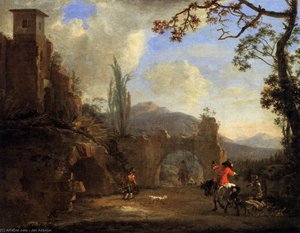
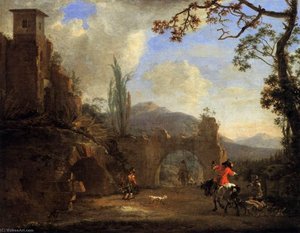
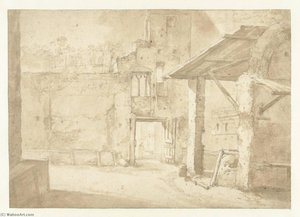
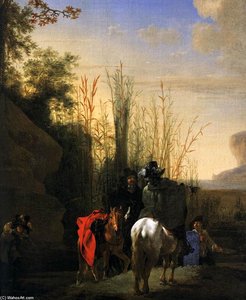
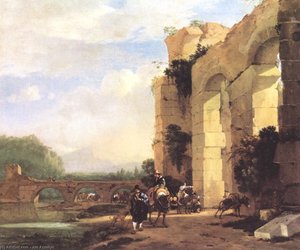
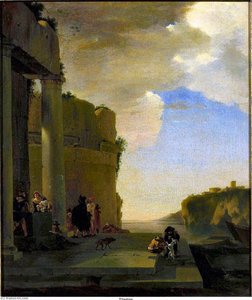
A Glimpse of Italian Tranquility: Jan Asselijn’s “Hangout in Italy”
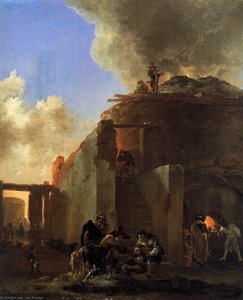
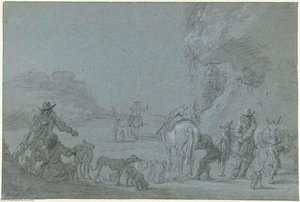
Jan Asselijn's "Hangout in Italy," painted around 1620, isn’t merely a depiction of a picturesque scene; it’s an invitation. An invitation to step into a moment of quiet contemplation amidst the burgeoning beauty of the Italianate landscape – a style that would profoundly influence generations of Dutch artists. This paper drawing, now housed in the Rijksmuseum Amsterdam, offers a remarkably intimate view, capturing not just the visual splendor but also a palpable sense of serenity and rustic charm. The work’s enduring appeal lies in its ability to transport us back to a time when art sought to emulate the sublime qualities of nature, mirroring the ideals of the Renaissance masters while imbuing them with a distinctly Dutch sensibility.
Asselijn, trained initially under Esaias van de Velde and deeply influenced by the Italianate painters like Bamboccio, skillfully employs a technique that balances meticulous detail with atmospheric softness. The composition is anchored by a weathered wooden structure – likely a small building or perhaps even a rustic pavilion – its timbers hinting at age and history. Around this central element unfolds a carefully arranged tableau of chairs, a bench, and a solitary figure, suggesting an impromptu gathering, a moment of respite from the journey. Notice how Asselijn masterfully utilizes *chiaroscuro*, the dramatic interplay of light and shadow, to sculpt form and create depth. The warm glow illuminating the building contrasts sharply with the cooler tones of the surrounding landscape, drawing our eye to the focal point while simultaneously establishing a sense of volume and texture within the scene.
The Italianate Influence: Echoes of Claude Lorraine
“Hangout in Italy” is a quintessential example of the Dutch fascination with the Italian landscape during the 17th century. Inspired by artists like Claude Lorrain, who painted idealized scenes of Arcadia and rural life, Dutch painters sought to capture the same sense of harmony between humanity and nature. However, Asselijn’s work departs from a purely imitative approach. He doesn't simply replicate Italian scenery; instead, he imbues it with a distinctly Dutch sensibility – a subtle melancholy, an appreciation for the weathered beauty of time, and a focus on capturing the *feeling* of a place rather than its precise topographical details. The slightly muted palette, the emphasis on atmospheric perspective, and the inclusion of everyday objects like chairs and benches all contribute to this nuanced interpretation.
The choice of paper as the medium is also significant. Paper drawings were favored by artists during this period for their portability and ability to capture delicate details. It allowed for a more immediate and spontaneous approach to painting, fostering a sense of intimacy between artist and subject. The drawing’s slightly aged appearance further enhances its appeal, suggesting that it has been cherished and viewed over time – adding to its historical weight and artistic value.
Symbolism and the Pursuit of Tranquility
Beyond its aesthetic qualities, “Hangout in Italy” invites contemplation about the human condition. The solitary figure, positioned centrally within the scene, suggests a moment of introspection or perhaps simply an appreciation for the beauty surrounding him. The arrangement of chairs and benches hints at social interaction, yet the overall atmosphere remains remarkably peaceful and contemplative. It’s a scene that speaks to the desire for escape – a longing for respite from the pressures of daily life and a connection with nature's restorative power.
Interestingly, historical research reveals connections to the Bentvueghels, a group of Dutch artists and engravers who specialized in producing illustrations of exotic locales. The painting’s subject matter – an Italian courtyard – would have been highly sought after by collectors eager to acquire representations of this fashionable destination. The inclusion of the figure further reinforces this sense of travel and discovery, inviting us to imagine ourselves joining him on his journey.
A Timeless Masterpiece: Reproduction and Beyond
“Hangout in Italy” remains a captivating work of art, offering a glimpse into a bygone era while simultaneously resonating with contemporary viewers. High-quality reproductions capture the painting’s delicate details and atmospheric qualities, allowing us to appreciate Asselijn's skill and vision from afar. Whether displayed as a statement piece in a grand salon or incorporated into a more intimate interior space, this timeless masterpiece continues to evoke a sense of tranquility, beauty, and the enduring allure of the Italian landscape.

Artist Biography
A Life Forged in Landscape: The World of Jan Asselijn
Born Jean Asselin in the French port city of Dieppe around 1610, Jan Asselijn’s journey was one shaped by religious upheaval and artistic exploration. His family, Huguenots fleeing persecution, relocated to Amsterdam in 1621, a vibrant hub of commerce and burgeoning artistic talent during the Dutch Golden Age. This relocation proved pivotal, immersing young Jean into a world where landscape painting was rapidly evolving beyond traditional depictions toward more atmospheric and emotionally resonant scenes. He initially trained with Jan Martszen the Younger, honing his skills in battle pieces before discovering his true calling – capturing the beauty and drama of both natural landscapes and animal life. Asselijn’s early exposure to the Dutch light and expansive skies would become a defining characteristic of his work, though it was a sojourn to Italy that truly solidified his artistic vision.The Italianate Embrace & The Bentvueghels
Like many ambitious Northern European painters of the era, Asselijn sought refinement in Italy, likely arriving sometime after 1635. It was there he fully embraced the *Italianate* style – a genre characterized by sun-drenched vistas, classical ruins, and pastoral scenes imbued with a sense of romanticism. He joined the ranks of the *Bentvueghels*, a colorful society of Dutch and Flemish artists working in Rome. These “Birds of a Feather” were known for their unconventional behavior, satirical nicknames, and dedication to painting directly from life – rejecting the constraints of studio work. Within this boisterous community, Asselijn earned the moniker "Krabbetje" (little crab) due to a physical disability affecting his hand, yet he thrived creatively. He absorbed the influence of artists like Pieter van Laer (Bamboccio), whose depictions of Roman peasant life and landscapes resonated deeply with Asselijn’s own developing style. This period was crucial in shaping his ability to convey atmosphere, light, and a sense of narrative within his compositions.Mastering Light & Symbolism: Key Works
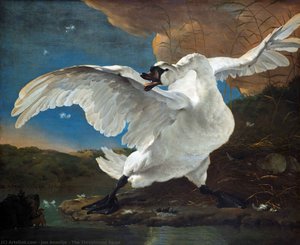
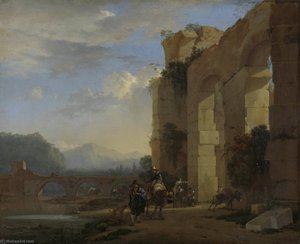
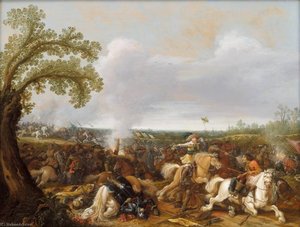
Asselijn returned to Amsterdam with a refined technique and a distinctive voice. His paintings are characterized by a clarity of execution and a masterful handling of light – qualities that quickly gained him recognition. While he produced historical and battle scenes, it was his landscapes and animal paintings that truly set him apart. The Threatened Swan, painted in the 1640s, remains his most celebrated work. More than just a depiction of avian defense, this painting became a powerful symbol of Dutch national resistance against external threats. The fiercely protective swan, aggressively warding off intruders near its nest, resonated with contemporary anxieties and was even interpreted as an allegory for Johan de Witt, a prominent Dutch statesman. Intriguingly, later owners added symbolic inscriptions to the canvas – “Holland” on one of the eggs and “Enemy of the state” beside the menacing dog – further cementing its political undertones. Other notable works include Cavalry Attack at Sunset, showcasing his earlier training in battle scenes with dramatic flair, and depictions of rural life like Drovers with Cattle under an Arch of the Colosseum in Rome, which beautifully blend Italianate landscapes with animal studies. The Breach of the Saint Anthony’s Dike near Amsterdam demonstrates his ability to capture a moment of national crisis, reflecting the ever-present threat of water and the ingenuity required for Dutch land reclamation.Influence & Legacy: A Lasting Impression
Jan Asselijn's impact extended beyond his own prolific output. He was admired by contemporaries like Rembrandt, who even created etchings of the artist at work – though notably, these etchings obscure Asselijn’s hands, perhaps a sensitive acknowledgement of his physical challenge. He also served as a mentor to Frederik de Moucheron, another prominent Dutch landscape painter who further popularized the Italianate style. Asselijn's innovative approach to light and atmosphere influenced a generation of artists, paving the way for greater naturalism and emotional depth in landscape painting. His works are now held in prestigious collections such as the Rijksmuseum in Amsterdam, ensuring his legacy endures as a significant figure within the Dutch Golden Age. He died relatively young, in 1652, but left behind a body of work that continues to captivate viewers with its beauty, drama, and subtle layers of meaning.
Jan Asselijn
1610 - 1652 , France
Quick Facts
- Artistic Movement Or Style: Italianate landscape
- Artists Or Movements Influenced By This Artist: ['Frederick de Moucheron']
- Artists Who Influenced This Artist:
- Esaias van de Velde
- Bamboccio
- Rembrandt
- Date Of Birth: 1610
- Date Of Death: 1652
- Full Name: Jan Asselijn
- Nationality: Dutch
- Notable Artworks:
- The Threatened Swan
- Hangout in Italy
- Cavalry Charge at Sunset
- Place Of Birth: Dieppe, France
Related Articles
Dutch Masters: 10 Golden Age Paintings That Still Inspire |
Journey into the Dutch Golden Age! Explore 10 iconic paintings by Rembrandt, Vermeer & Hals. Discover the stories behind these Baroque masterpieces and find museum-quality art reproductions to elevate your home decor on .
Jan Steen: A Master of Dutch Genre Painting & the Golden Age
Explore the life & art of Jan Steen, a leading Dutch Golden Age painter renowned for his humorous genre scenes & insightful social commentary. Discover his techniques, legacy, and collecting tips.
Golden Age Reflections: Dutch Baroque Painting & Cultural Innovation
Explore the Dutch Golden Age of painting! Discover key artists like Vermeer & ter Borch, their innovative techniques, and the rich cultural context behind these Baroque masterpieces. Learn about collecting & appreciating this iconic art period.

Genre Painting: A Window into Daily Life & Societal Values of the Dutch Golden Age
Explore the captivating world of Dutch Golden Age genre painting! Discover realistic depictions of daily life, masterful artists like Ostade & Metsu, and hidden symbolism. Learn about this influential art movement with AllPaintingsStore.

Aelbert Cuyp: Illuminating the Dutch Golden Age with Light & Landscape
Explore the luminous landscapes of Aelbert Cuyp, a master of the Dutch Golden Age. Discover his unique light, serene riverside scenes & lasting influence on art history. Learn more at AllPaintingsStore.