Money-Back Guarantee · 100 days Free Worldwide Delivery
449,564artworks 30,613artists 4,658museums 32languages
Catalogue entry

Painting

1927. Oil On Canvas, 73.0 x 92.0 cm. Metropolitan Museum of Art.

Fig. 1. Joan Miró, Painting, 1927. Shown as the reproduction you are specifying: , .

§ 1Catalogue data

Dimensions
73.0 x 92.0 cm

§ 2Abstract

Collectible Description

Joan Miró’s 1927 abstract painting: a vibrant, chaotic composition of geometric shapes & bold colors. Explore this Surrealist masterpiece's unique style and evocative energy.

Artist Biography

A Surrealist master known for The Farm. Discover his vibrant world of symbolic forms and poetic abstraction today.

§ 3Commentary

A Glimpse into Miró’s Subconscious: An Exploration of Form and Feeling (1927)

This captivating painting by Joan Miró, created in 1927, offers a compelling entry point into the artist's unique visual language – a world where playful abstraction meets profound emotional resonance. Measuring 73 x 92 cm, this work exemplifies Miró’s pivotal role in bridging Surrealism and abstract art.

Deconstructing the Composition

The canvas is dominated by expansive fields of white, applied with a loose, gestural freedom that suggests spontaneity and movement. These aren't simply areas of color; they are energetic brushstrokes that seem to breathe life into the composition. Scattered across this backdrop are carefully considered yet seemingly random geometric shapes – a triangle, star, circle, and a slender black line – punctuated by small accents of red and yellow. The deliberate imbalance in the arrangement contributes to a dynamic tension, preventing the eye from settling on any single point.

Technique & Materials

Miró’s technique is immediately apparent: direct application of oil paint with visible brushstrokes and occasional drips. This isn't about meticulous detail; it’s about capturing a feeling, an impulse. The layering of paint creates texture and depth, inviting the viewer to explore the surface beyond its initial appearance. The use of oil paints allows for rich color saturation and expressive blending, qualities Miró expertly utilizes.

Historical Context: A Pioneer of Abstraction

Created during a period of intense artistic experimentation, this painting reflects Miró’s growing departure from representational art. Having moved between Barcelona and Paris, he was deeply influenced by the burgeoning Surrealist movement while simultaneously forging his own distinct path. 1927 was a crucial year for Miró as he continued to refine his symbolic vocabulary and explore the possibilities of non-objective painting. He sought to dismantle traditional artistic conventions, believing they stifled genuine expression.

Symbolism & Interpretation

While Miró resisted definitive interpretations of his work, preferring viewers to engage with it on a personal level, certain elements hint at deeper meanings. The geometric shapes could be seen as archetypal symbols – the triangle representing stability, the star signifying aspiration, and the circle embodying wholeness. However, these are not rigid signifiers; their ambiguity is intentional. The painting’s overall effect evokes a sense of childlike wonder, tapping into subconscious realms and dreamlike states.

Emotional Impact & Interior Design

This artwork possesses a unique ability to evoke a range of emotions – from playful curiosity to quiet contemplation. Its abstract nature makes it incredibly versatile for interior design.
  • It would serve as a striking focal point in a modern living room, adding a touch of sophistication and artistic flair.
  • Its neutral color palette (browns, whites, with pops of red & yellow) complements various décor styles, from minimalist to eclectic.
  • The painting’s energetic composition can invigorate a study or home office, fostering creativity and inspiration.
Ultimately, this Miró painting is more than just an aesthetic object; it's a window into the artist’s inner world – a testament to the power of abstraction to convey complex emotions and ideas. It invites viewers to embark on their own journey of discovery, finding meaning within its captivating forms and textures.

Questions & Answers

What does "Painting" share with the rest of Joan Miró's output?

"Painting" belongs to Joan Miró's Surrealism work, whose recorded themes include early abstract exploration, playful, childlike imagery, expression of inner world, fauvism, cubism, surrealism, van gogh.

What is the art-historical place of "Painting" by Joan Miró?

The art-historical classification of "Painting" by Joan Miró is Surrealism, in the Modern period.

What print size of "Painting" by Joan Miró fits the recommended room?

For a living room, the recommended print size of "Painting" by Joan Miró is large.
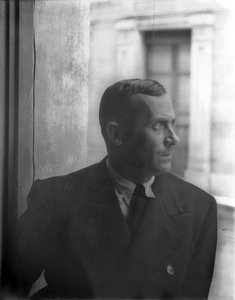
§ 4The artist

Joan Miró

Joan Miró

1893 - 1983, Spain

Quick facts about Joan Miró

  • Artistic Movement Or Style:
    • Surrealism
    • Fauvism
    • Expressionism
  • Artists Or Movements Influenced By This Artist: ['Abstract expressionism']
  • Artists Who Influenced This Artist:
    • Antoni Gaudí
    • Pablo Picasso
  • Full Name: Joan Miró i Ferrà
  • Nationality: Spanish
  • Notable Artworks:
    • The Farm
    • The Tilled Field
    • The Birth of the World
    • Painting
  • Place Of Birth: Barcelona, Spain
  • Date Of Birth: 1893
  • Date Of Death: 1983

Artist Biography

The Life and Art of Joan Miró

Barcelona, April 20, 1893. Joan Miró i Ferrà enters a world of precision and gears, born into a family of watchmakers. This early environment provides a backdrop of meticulous craftsmanship that persists through his evolution as a painter, sculptor, and ceramicist. He moves through the decades not by following a set path, but by constantly shifting his focus, eventually becoming a central figure in the development of Surrealism and Abstract Art.

His creative output resists easy categorization. While many attempt to pin him to a single movement, Miró remains fiercely independent, often expressing a desire to overturn established aesthetic hierarchies. He works with a restless energy, experimenting across various media to capture the subconscious. His practice is a constant tension between the organic and the geometric, the dreamlike and the tangible. By the time he passes away on December 25, 1983, he has left behind a visual language that challenges the very definition of artistic expression.

Early Life, Family and Training

Barcelona, 1893. The foundations of Joan Miró’s visual language begin in the Catalan capital. His early years are marked by a dual existence. At fourteen, he enters business school, a pragmatic path that runs parallel to his burgeoning creative impulses. He does not choose between commerce and art; he pursues both. While studying business, he concurrently enrolls in art classes at the Escuela Superior de Artes Industriales y Bellas Artes.

The momentum builds. By 1911, Miró is already stepping into the public eye, exhibiting his first painting at the sixth Exposición Internacional de Arte in Barcelona. This early exposure marks a departure from the classroom and into the professional sphere. His formal training deepens between 1912 and 1915, as he studies under Francesc Galí at the Escola d’Art. These years of rigorous instruction provide the technical scaffolding for the radical departures that follow.

The Formative Years in Paris

Paris, 1920. The city pulls him in. Miró arrives in the French capital, a space where the tension between the currents of modernism and his own Catalan identity begins to pull at his creative core. He moves through these streets, encountering the presence of artists like Pablo Picasso. This is a period of intense friction and experimentation. He is not merely absorbing styles; he is navigating the space between the avant-garde and the roots of his own landscape.

The political climate shifts. The outbreak of the Spanish Civil War forces a change in his geography. He finds himself living in involuntary exile in France until mid-1940. This period of displacement marks a departure from his earlier, more settled explorations. Between 1937 and early 1938, the work undergoes a sudden, sharp transformation. He produces two paintings that are stylistically unique, breaking away from his established patterns to create something entirely different from his previous output.

Technique and Unique Artistic Style

Miró rejects the safety of established methods. He views conventional painting as a tool for bourgeois society, an approach he seeks to dismantle through a restless, iconoclastic practice. His work often defies easy classification, frequently interpreted as Surrealist but driven by a deeply personal style that resists any single "ism." He moves through media with a feverish energy, experimenting with painting, pastel, printmaking, sculpture, ceramics, collage, muralism, and tapestry. This versatility allows him to escape the constraints of traditional representation.

His biomorphic paintings emerge through rough shapes and objects that remain only marginally recognizable. There is a tension in these forms, a sense of the subconscious rendered through a unique pictorial idiom. He utilizes acrylic to build luminous, textured surfaces that give his compositions a physical presence. The shapes do not merely sit on the canvas; they exist in a state of flux, often appearing as glyphs or symbols that bridge the gap between the seen and the imagined.

Key Works and Major Masterpieces

The shift toward a personal, symbolic language finds its anchor in The Farm. This work marks a departure from his earlier training, acting as a cornerstone of his oeuvre by grounding his evolving abstraction in the reality of the Catalan landscape. By 1924, this connection to the earth intensified in The Tilled Field, where the boundaries between the physical world and the subconscious begin to blur. The imagery moves away from traditional representation toward a private, coded vocabulary.

In 1925, The Birth of the World emerges, signaling a move into a more fluid, primordial space. Here, the canvas becomes a site for spontaneous creation, where shapes seem to coalesce from nothingness. This experimentation with the origins of form continues through his later years. In 1967, The wing of the lark ... demonstrates a continued mastery of his unique visual language, maintaining a sense of movement and poetic suggestion even as his style matured.

His public presence also manifested in large-scale, monumental works. Dona i Ocell stands as a significant symbol of Catalan liberation, utilizing mosaic and irregular contours to claim space within the urban environment. This work bridges the gap between his intimate, dreamlike paintings and the public, architectural scale of his later vision.

  • The Farm
  • The Tilled Field (1924)
  • The Birth of the World (1925)
  • The wing of the lark ... (1967)
  • Dona i Ocell

Legacy and Enduring Influence

The passing of Miró at age 90 marks the end of an era; he was widely regarded as the last of the modernist stars. His restless, iconoclastic approach to the canvas did more than just challenge aesthetic hierarchies. By stripping forms to their essence, his work paved the way for abstract expressionism. His unique personages—those idiosyncratic, symbolic figures—left a mark on the trajectory of modern art, influencing later artists such as Robert Motherwell and Louise Bourgeois.

His commitment to the future of art took physical form through the institutions he established to foster experimentation. In 1975, he founded the Fundació Joan Miró in Barcelona. This was followed by the establishment of the Fundació Pilar i Joan Miró in Palma de Mallorca in 1981. These spaces ensure his influence remains active, moving beyond the static display of objects to serve as centers for contemporary exploration.

Where to See the Works Today

The most concentrated encounter with his creative output occurs on the Montjuïc hill in Barcelona, Spain. Here, the Fundació Joan Miró preserves a massive collection of over 10,000 artworks. The museum environment, designed by Josep Lluís Sert, allows the viewer to move through terraces and courtyards that mirror the artist's own organic approach to space. It remains the primary site for studying the evolution of his visual language.

Beyond Spain, his presence is felt in the major institutional hubs of the art world. In New York City, the Museum of Modern Art holds several of his works, while the Metropolitan Museum of Art also maintains pieces in its permanent collection. These collections offer a window into how his specific brand of abstraction and symbolism integrated into the broader narrative of modernism. In Paris, the Centre Pompidou provides another essential location to observe his influence on the European avant-garde.

§ 5Comparanda

§ 6Questions

Quick Facts

  • medium: Oil on canvas
  • notable elements:
    • Geometric shapes (triangle, star, circle)
    • White paint
    • Black line
    • Dots of red and yellow
  • subject: Non-representational
  • style: Abstract
  • dimensions: 73 x 92 cm

Art Quiz

There is only one correct answer for each question.

Question 1:
To which artistic movement is Joan Miró most closely associated in this work?
Question 2:
What is a dominant characteristic of the paint application in 'Painting' by Joan Miró?
Question 3:
What is a key element of the composition in this artwork?
Question 4:
In what year was this painting created?
Question 5:
What is the primary subject matter of 'Painting' by Joan Miró?

§ 7Cite this entry

AllPaintingsStore.com, “Joan Miró, Painting (1927)”, https://allpaintingsstore.com/en/art/joan-miro-painting-D32AM6-en/ArtistReproduction/ (accessed 12 October 2026).

§ 8The reproduction

Hand Made Oil Reproduction

Hand-painted oil on canvas in your size and frame, made to order by our artists. ( Switch to Print Switch to Digital Image)

It is specified on the order sheet in the margin; the present state of that sheet reads as follows.

Painting

Reproduction Medium

Reproduction Size

-

Elite Senior Artist

More detail, finesse, and extra production time

-

Reproduction Frame

-

-

For artworks or reproductions larger than 105 cm (approximately 41 inches) on any side, the frame will be shipped as a kit, disassembled. This method ensures safe delivery and prevents damage during transport.

Professional assembly required - this is not a DIY product.
The kit must be assembled and the canvas stretched by an experienced professional framer, using wood glue (not supplied), a canvas stretching plier and clamps to hold the bars square while the glue dries. Incorrect assembly or uneven canvas tension can permanently damage the artwork and is not covered by our warranty.

  • All solid wood bars are included, precisely cut to size.

  • Assembled with the screws provided, plus wood glue for the corner joints, which is not supplied and must be sourced by your framer.

  • Professional tools are required and not included: a canvas stretching plier (tensioner) and clamps to hold the bars square while the glue dries.

Important:
The corner joints require wood glue, the bars must be held with clamps until the glue is fully dry, and tightening the canvas on the assembled frame requires a canvas stretching plier. None of these are included in the kit. Please arrange an experienced professional framer before ordering this size.

Nameplate

-

-

Protective Varnish

Glossy Varnish (enhances colors, protects against light/moisture)

-

Customize My Artwork

Examples of what can be changed: Replace face with customer photo; Add pet (e.g., replace cat with dog); Include hidden message in background; Change background landscape or elements.

-

Urgent

Worldwide Delivery () in 3/4 weeks instead of standard 5 weeks. (9 November). No compromise on quality.

-

Express Shipping

Worldwide Delivery () in 5 weeks. (16 November).

Included

Total Price

$ 258

Included with every order

  • Free Worldwide Express Shipping
  • High-Quality Linen Canvas
  • Full Shipping Insurance
  • Customs Tax Refund Guarantee
  • True Color Matching Guarantee
  • 100-Day Return Policy (Defects Only)
  • 100% Money-Back Guarantee
  • Bulk Discount Offer
Order sheet