Money-Back Guarantee · 100 days Free Worldwide Delivery
449,587artworks 30,613artists 4,660museums 32languages
Catalogue entry

Faith

1864. Acrylic On Canvas. Museum of London.

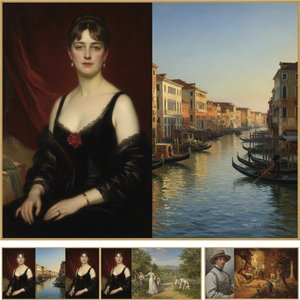
Fig. 1. John Phillip, Faith, 1864. Shown as the reproduction you are specifying: , .

§ 1Catalogue data

§ 2Abstract

Collectible Description

John Phillip's "Faith" (1864) captures a serene Spanish woman in prayer, reflecting Victorian spirituality and artistic influence. Explore this captivating portrait of faith & devotion.

Artist Biography

Discover John Phillip (1817-1867), the 'Spanish Phillip'! Victorian Scottish painter renowned for vibrant depictions of Spanish life, genre scenes & early Pre-Raphaelite influence. Explore his works inspired by Murillo & Velázquez.

§ 3Commentary

Faith – A Portrait of Devotion in Victorian Scotland

John Phillip’s “Faith,” painted in 1864, isn't merely a portrait; it’s a carefully constructed tableau of piety and domestic tranquility, steeped in the cultural currents of late Victorian Scotland. The painting depicts a woman, likely a member of the Scottish upper-middle class, enveloped in a quiet moment of prayer or contemplation. Her posture is graceful yet grounded, her hands clasped gently before her chest – a gesture universally understood as signifying reverence. The muted palette—dominated by earthy browns, soft greens, and subtle blues—evokes a sense of warmth and domesticity, while the carefully rendered fabrics and modest jewelry speak to a life of quiet dignity. Beyond the immediate subject, the inclusion of two figures on either side adds layers of narrative; one appears to be reading, perhaps offering guidance or support, while the other seems absorbed in conversation, suggesting a community bound by shared faith.

Phillip’s style is deeply rooted in the artistic traditions he studied at the Royal Academy and, crucially, his association with the influential “Clique” of Victorian artists. This group, led by Richard Dadd, championed the works of William Hogarth and David Wilkie, seeking to capture the spirit of realism and dramatic storytelling. However, Phillip’s work transcends mere imitation; he infused these influences with a distinctly Scottish sensibility, evident in his meticulous attention to detail—the texture of the woman's shawl, the subtle play of light on her face, the architectural backdrop hinting at a modest church. The composition itself is carefully balanced, drawing the eye inward towards the central figure and creating a sense of intimate serenity.

The Spanish Influence – A Painter’s Journey

It’s important to understand that “Faith” emerged from John Phillip's transformative journey to Spain in 1851. He was deeply moved by the religious fervor he witnessed there, particularly within the Catholic communities. This experience profoundly altered his artistic perspective, leading him to dedicate much of his later work to depicting Spanish life and culture – a period that earned him the affectionate moniker “Spanish Phillip.” The painting reflects this newfound inspiration; the subtle warmth of the lighting, reminiscent of the Spanish sun, and the overall atmosphere of quiet devotion are hallmarks of his Spanish-influenced style. The inclusion of elements like the rosary beads and the implied presence of a church subtly allude to the religious context of the scene.

Phillip’s background as a member of the Clique also shaped his artistic approach. The group's admiration for Hogarth, known for his satirical social commentary, is evident in the painting’s ability to subtly convey a sense of moral virtue and domestic harmony. However, Phillip’s work goes beyond mere social critique; it offers a poignant glimpse into the private world of faith—a realm of quiet contemplation and spiritual connection.

Symbolism and Emotional Resonance

The symbolism within “Faith” is both subtle and profound. The woman's closed eyes suggest a deep level of concentration, inviting the viewer to share in her moment of prayer or reflection. The simple setting—a modestly furnished room—underscores the importance of faith as an internal experience rather than an outward display of wealth or status. The two figures flanking the central subject represent the community that supports and nurtures this individual’s spiritual journey, highlighting the interconnectedness of faith within a domestic sphere.

More broadly, “Faith” speaks to the enduring human need for connection—to God, to family, and to one another. The painting's quiet dignity and serene atmosphere evoke a sense of peace and tranquility, offering a respite from the complexities of modern life. It’s a testament to the power of faith to provide solace, guidance, and a profound sense of belonging.

A Reproduction for Your Space

Reproducing “Faith” in high quality offers a beautiful way to bring this evocative Victorian painting into your home or office. The meticulous detail and rich colors of the original are faithfully captured in our hand-painted reproductions, ensuring that you experience the full emotional impact of Phillip’s masterpiece. Whether displayed as a statement piece in a living room or a calming addition to a study, “Faith” will serve as a timeless reminder of the enduring power of devotion and human connection.

Questions & Answers

What style does "Faith" belong to?

The movement associated with "Faith" by John Phillip is Victorian Scottish Painting. This classification situates the work among related artists and artworks.

How do movement and era meet in "Faith" by John Phillip?

"Faith" belongs to the Victorian Scottish Painting movement, and its creator worked in the 19th-Century era.

What does "Faith" by John Phillip depict?

"Faith" by John Phillip depicts: faith, religion, spirituality, victorian, painting, woman, prayer, scotland.

§ 4The artist

John Phillip

John Phillip

1817 - 1867, United Kingdom

Quick facts about John Phillip

  • Full Name: John Phillip
  • Nationality: Scottish
  • Date Of Birth: 1817
  • Date Of Death: 1867
  • Place Of Birth: Aberdeen, United Kingdom
  • Notable Artworks:
    • The Letter Writer, Seville
    • Early Career of Murillo
    • La Gloria
  • Artistic Movement Or Style: Victorian Genre Painting; Pre-Raphaelite Influence
  • Artists Who Influenced This Artist:
    • William Hogarth
    • David Wilkie
    • Bartolomé Murillo
    • Diego Velázquez
  • Artists Or Movements Influenced By This Artist: ['Edwin Long']

Artist Biography

The Painter of Spanish Dreams: The Life and Legacy of John Phillip

Born in the rugged landscape of Aberdeen, Scotland, in 1817, John Phillip would eventually transcend his humble beginnings to become one of the most evocative voices of the Victorian era. Affectionately known by the moniker "Spanish Phillip," his journey was one of profound transformation, moving from the meticulous, somber depictions of Scottish rural life to the sun-drenched, vibrant canvases of Southern Europe. His early years were marked by a burgeoning talent that caught the eye of influential patrons, most notably Lord Panmure, whose generosity provided the essential bridge for Phillip to reach London’s Royal Academy of Arts in 1836. It was within this prestigious institution that Phillip found his artistic tribe, joining the influential group known as The Clique. Led by the eccentric Richard Dadd, this circle of artists shared a deep reverence for the narrative realism of William Hogarth and the dramatic landscapes of David Wilkie, principles that would form the bedrock of Phillip’s early technical mastery.

In his formative years, Phillip’s brush was dedicated to the dignity and hardship of the Scottish people. He captured the quiet, often grueling existence of crofters with a precision that spoke to the soul of his homeland. These early works were characterized by a meticulous attention to detail and a sense of pious domesticity, reflecting the cultural currents of late Victorian Scotland. However, a pivotal shift occurred in 1851, prompted by medical advice to seek warmer climates for his health. This pilgrimage to Spain was not merely a restorative journey but an artistic rebirth. As he wandered through the streets of Seville and Madrid, the shadows of Scotland were replaced by the brilliant light of Andalusia. The influence of Spanish masters Bartolom Tamayo, Bartolomé Esteban Murillo, and Diego Velázquez began to permeate his work, fundamentally altering his palette and his approach to form.

A Transformation of Light and Technique

The transition from the detailed, almost documentary style of his Scottish period to a much broader, more painterly technique marks the most fascinating evolution in Phillip’s career. While he initially resisted the burgeoning Pre-Raphaelite movement, his later works, such as The Letter Writer, Seville, began to exhibit a subtle engagement with their luminous qualities. As his travels deepened his connection to the Spanish spirit, his brushwork grew more confident and expressive, mirroring the late-career developments of contemporaries like John Everett Millais. He moved away from rigid outlines toward an exploration of texture and atmosphere, using impasto to capture the heat and dust of the Spanish landscape.

This stylistic maturation reached its zenith in the 1860s, where his compositions became grander and more emotionally resonant. His ability to weave together the following elements defined his mature period:

  • Dramatic Chiaroscuro: Utilizing deep shadows and piercing highlights to create a sense of theatrical movement.
  • Cultural Immersion: Moving beyond mere observation to capture the very essence of Spanish street life and religious devotion.
  • Narrative Depth: Creating scenes that felt like frozen moments from a larger, unfolding story, much like his inspirations Murillo and Velázquez.

Major achievements such as The Early Career of Murillo (1864) and La Gloria (1865) stand as testaments to this period of mastery. In these works, Phillip did not just paint subjects; he painted the very history of art itself, paying homage to the masters who had inspired his own metamorphosis. His legacy remains that of a bridge-builder—between the somber traditions of Scottish genre painting and the vibrant, light-filled romanticism of the Mediterranean. Though his life was cut short in 1867, John Phillip left behind a body of work that continues to enchant, inviting viewers to step out of the grey mists of the North and into the eternal, golden glow of his Spanish dreams.

§ 5Comparanda

§ 6Questions

Quick Facts

  • Influences:
    • Hogarth
    • Wilkie
  • Year: 1864
  • Notable elements: Religious theme, portrait
  • Subject or theme: Faith, contemplation
  • Artist: John Phillip

Art Quiz

There is only one correct answer for each question.

Question 1:
What is the primary subject depicted in John Phillip’s painting, ‘Faith’?
Question 2:
In what year was John Phillip’s painting ‘Faith’ created?
Question 3:
Which artistic movement significantly influenced John Phillip's style, particularly evident in ‘Faith’?
Question 4:
The background of the painting includes a building with a cross. What does this element suggest about the artwork’s theme?
Question 5:
John Phillip was nicknamed ‘Spanish’ Phillip. Why did he receive this nickname?

§ 7Cite this entry

AllPaintingsStore.com, “John Phillip, Faith (1864)”, https://allpaintingsstore.com/en/art/john-phillip-faith-D7EBHW-en/ (accessed 4 October 2026).

§ 8The reproduction

Hand Made Oil Reproduction

Hand-painted oil on canvas in your size and frame, made to order by our artists. ( Switch to Print Switch to Digital Image)

It is specified on the order sheet in the margin; the present state of that sheet reads as follows.

Faith

Reproduction Medium

Reproduction Size

-

Elite Senior Artist

More detail, finesse, and extra production time

-

Reproduction Frame

-

-

For artworks or reproductions larger than 105 cm (approximately 41 inches) on any side, the frame will be shipped as a kit, disassembled. This method ensures safe delivery and prevents damage during transport.

Professional assembly required - this is not a DIY product.
The kit must be assembled and the canvas stretched by an experienced professional framer, using wood glue (not supplied), a canvas stretching plier and clamps to hold the bars square while the glue dries. Incorrect assembly or uneven canvas tension can permanently damage the artwork and is not covered by our warranty.

  • All solid wood bars are included, precisely cut to size.

  • Assembled with the screws provided, plus wood glue for the corner joints, which is not supplied and must be sourced by your framer.

  • Professional tools are required and not included: a canvas stretching plier (tensioner) and clamps to hold the bars square while the glue dries.

Important:
The corner joints require wood glue, the bars must be held with clamps until the glue is fully dry, and tightening the canvas on the assembled frame requires a canvas stretching plier. None of these are included in the kit. Please arrange an experienced professional framer before ordering this size.

Nameplate

-

-

Protective Varnish

Glossy Varnish (enhances colors, protects against light/moisture)

-

Customize My Artwork

Examples of what can be changed: Replace face with customer photo; Add pet (e.g., replace cat with dog); Include hidden message in background; Change background landscape or elements.

-

Urgent

Worldwide Delivery () in 3/4 weeks instead of standard 5 weeks. (1 November). No compromise on quality.

-

Express Shipping

Worldwide Delivery () in 5 weeks. (8 November).

Included

Total Price

$ 258

Included with every order

  • Free Worldwide Express Shipping
  • High-Quality Linen Canvas
  • Full Shipping Insurance
  • Customs Tax Refund Guarantee
  • True Color Matching Guarantee
  • 100-Day Return Policy (Defects Only)
  • 100% Money-Back Guarantee
  • Bulk Discount Offer
Order sheet