Preview
 Send
Send Share
Share
 Details
 Guide
Guide

 Download
 Similars
 X-Ray
X-Ray Diaporama
 Q&A
Q&A Stats
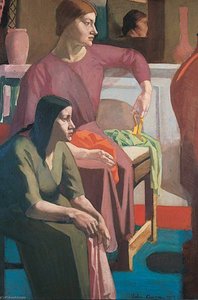
StatsThe Procession

- 63.0 x 51.0 cm
 Read More
Giclée / Art Print
Museum-quality giclée or canvas print with fast production and flexible finish options. ( Buy Hand Made Painting Switch to Digital Image)




































Pick from our preset sizes that match the artwork's original proportions.

Type the width and the height you need, to fit your frame or your wall. A print can only be cut, never made bigger than the picture, so a size with a different shape loses a part of the image. We send you a digital mockup to approve before we print anything. The picture shown on this page does not show the real cut — only the mockup does.
Worldwide Delivery () in 2 weeks instead of standard 4/5 weeks. (7 November)

Free Worldwide Express Shipping

High-Quality Linen Canvas

Full Shipping Insurance

Customs Tax Refund Guarantee

True Color Matching Guarantee

100-Day Return Policy (Defects Only)

100% Money-Back Guarantee

Bulk Discount Offer
 Glass option is only available in size under 110 CM

The Procession
Giclée / Art Print
Reproduction Size
-


Total Price
$ 65
Related Artworks


Artist Biography
The Enigmatic Vision of John S. Currie
John S. Currie remains a hauntingly beautiful, if somewhat enigmatic, presence within the tapestry of American art history. Born in Staffordshire, England, around 1884, his life was a journey of migration and profound emotional depth. As a young man, Currie emigrated to the United States, eventually finding his creative sanctuary in Gloucester, Massachusetts. This coastal enclave, with its rugged beauty and rhythmic tides, became the stage upon which he projected his unique vision of American identity. His work does not merely document the landscape; it seeks to capture the very soul of the New England coast, blending a meticulous observation of nature with a deep, psychological resonance that speaks to the transient beauty of the maritime world.
The artistry of Currie is defined by a sophisticated marriage of Impressionistic technique and Symbolist influence. While his eyes were fixed upon the tangible elements of the sea—the weathered textures of granite rocks, the churning whitecaps, and the shifting light of the Atlantic—his mind was preoccupied with the intangible. He drew significant inspiration from the European Symbolist movement, finding echoes of the emotional intensity found in the works of EdUSvard Munch and Pierre Puvis de Chavannes. This influence manifested in his use of muted, atmospheric palettes and a deliberate focus on capturing moods that transcend simple representation, turning every seascape into a meditation on solitude and the sublime.
A Mastery of Light and Atmosphere
During his formative years in Gloucester, Currie developed a style that was as much about feeling as it was about sight. He became a student of the sea's many rhythms, learning to translate the interplay of light and shadow onto canvas with remarkable sensitivity. His technique often involved the delicate layering of thin color washes, a method that allowed for a luminous quality to emerge from beneath the surface, mimicking the translucent nature of seawater and the hazy atmosphere of coastal mornings. He looked toward the great American marine painter Fitz Hugh Lane as a guiding light, adopting a similar commitment to the expressive potential of the seascape, yet infusing it with a more subjective, almost dreamlike, quality.
The significance of Currie's work lies in its ability to bridge the gap between the external world and the internal psyche. His paintings are characterized by:
- Atmospheric Perspective: The use of soft edges and receding tones to create a sense of vast, infinite space.
- Emotional Resonance: A preoccupation with capturing the "mood" of a scene, often leaning into the melancholic or the majestic.
- Textural Depth: The careful rendering of natural elements like salt-sprayed stone and turbulent currents to ground his symbolic visions in reality.
Legacy and Historical Significance
Though his life was tragically short—ending on October 11, 1914—the impact of Currie's vision continues to resonate with those who find beauty in the intersection of nature and emotion. He belonged to a pivotal era where American art was beginning to move away from purely descriptive traditions toward more complex, psychological explorations of the landscape. By integrating the heavy emotional weight of European Symbolism into the quintessential American maritime setting, Currie created a body of work that feels both deeply local and universally profound. Today, his paintings serve as poignant reminders of a lost era of coastal life, preserved through a lens of exquisite, haunting beauty.

John S Currie
1884 - 1914
Quick Facts
- Full Name: John S. Currie
- Nationality: English
- Date Of Birth: 1884
- Date Of Death: 1914
- Place Of Birth: Staffordshire, England
- Notable Artworks: ['The Last Journey']
- Artistic Movement Or Style: American Regionalism
- Artists Who Influenced This Artist: ['Fitz Hugh Lane']
- Artists Or Movements Influenced By This Artist: ['Grant Wood']