Money-Back Guarantee · 100 days Free Worldwide Delivery
449,564artworks 30,613artists 4,660museums 32languages
Catalogue entry

Black Tent

1906. Watercolor, 30.0 x 45.0 cm.

Fig. 1. John Singer Sargent, Black Tent, 1906. Shown as the reproduction you are specifying: , .

§ 1Catalogue data

Dimensions
30.0 x 45.0 cm

§ 2Abstract

Collectible Description

John Singer Sargent’s ‘Black Tent,’ a captivating Impressionistic watercolor from 1906, depicts nine figures amidst a desert scene with tents, showcasing the artist's mastery of light and color in capturing fleeting moments.

Artist Biography

Explore the art of John Singer Sargent! Discover iconic portraits like 'Madame X', Impressionistic landscapes & Gilded Age elegance from this American master.

§ 3Commentary

The Black Tent painting by John Singer Sargent is a stunning watercolor piece that showcases the artist's skill in capturing the essence of a desert landscape. Created in 1906, this artwork is part of the Impressionism movement and measures 30 x 45 cm. The scene appears to be from the Middle East, as indicated by the clothing and surroundings.

Description and Style

The painting depicts several individuals standing around, some with tents set up nearby. There are nine people visible in the image, with some standing closer together while others are more spread out across the desert landscape. A tent is located towards the center of the painting, surrounded by several individuals. Another smaller tent can be seen further to the right side of the scene. The overall atmosphere of the painting suggests a sense of camaraderie and shared experiences among these people in their desert environment. The Black Tent is reminiscent of other works by John Singer Sargent, such as Bedouins and Dugout, which also showcase his ability to capture the beauty of desert landscapes. The use of watercolor in these paintings adds a sense of delicacy and nuance, highlighting the artist's skill in this medium. Impressionism is a style of painting that emphasizes capturing the fleeting moments of modern life. Artists like John Singer Sargent were instrumental in developing this style, which focused on the play of light and color in outdoor settings. The Black Tent is a prime example of this style, with its emphasis on capturing the beauty of the desert landscape.
For more information on John Singer Sargent and his works, visit AllPaintingsStore.com.

Questions & Answers

What are the author and date of "Black Tent"?

John Singer Sargent made "Black Tent" in 1906.

Is "Black Tent" by John Singer Sargent a light or a dark artwork?

"Black Tent" is balanced overall, and its luminance is gentle luminance.

Which room is "Black Tent" by John Singer Sargent recommended for?

A reproduction of "Black Tent" fits well in a living room.
§ 4The artist

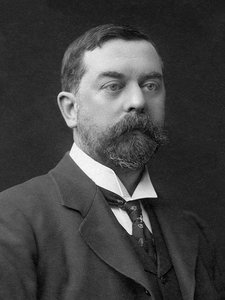
John Singer Sargent

John Singer Sargent

1856 - 1925, Italy

Quick facts about John Singer Sargent

  • Full Name: John Singer Sargent
  • Nationality: American
  • Date Of Birth: 1856
  • Date Of Death: 1925
  • Place Of Birth: Florence, Italy
  • Notable Artworks:
    • Madame X
    • El Jaleo
    • Carnation, Lily, Lily, Rose
  • Artistic Movement Or Style: Impressionism
  • Artists Who Influenced This Artist:
    • Carolus-Duran
    • Diego Velázquez

Artist Biography

A Life Immersed in Light and Society

John Singer Sargent, a name synonymous with the Gilded Age and its shimmering portraits of elegance, was an American artist who spent most of his life cultivating his craft within the European art world. Born in Florence, Italy, in 1856 to American expatriate parents, Fitzwilliam and Mary Newbold Sargent, his upbringing was anything but conventional. The family’s nomadic existence – constantly traversing France, Germany, Italy, and Switzerland – instilled in young John a cosmopolitan sensibility and an early exposure to the artistic treasures of Europe. Rather than formal schooling, his education unfolded within museum halls and ancient churches, fostering a visual literacy that would profoundly shape his artistic vision. This itinerant childhood, while lacking traditional structure, provided a rich tapestry of cultural experiences that fueled his developing talent. His father, a surgeon, and his mother, an amateur artist, encouraged his inclinations, recognizing early on the remarkable acuity of his observational skills. It was clear from a young age that John’s path lay not in medicine or conventional pursuits, but within the realm of art.

From Parisian Atelier to Portrait Master

In 1874, at the age of eighteen, Sargent embarked on a pivotal chapter of his artistic development by entering the Paris studio of Carolus-Duran. This mentorship proved transformative. Duran’s emphasis on *direct painting* – a technique eschewing preliminary sketches in favor of immediate application of paint to canvas – honed Sargent's already impressive technical facility and instilled within him an astonishing ability to capture likenesses with speed and precision. It was a revolutionary approach, encouraging boldness and spontaneity, and it became the hallmark of Sargent’s style. He absorbed Duran’s lessons wholeheartedly, mastering the art of capturing not just physical resemblance but also the very essence of his sitters. Simultaneously, he enrolled at the École des Beaux-Arts, further refining his skills in drawing from casts and life models. However, it was the influence of Spanish masters like Velázquez, encountered during a formative trip to Spain in 1879, that truly ignited Sargent’s artistic imagination. He became captivated by Velázquez's masterful use of light, brushwork, and psychological insight – qualities he would strive to emulate throughout his career.

Navigating Fame, Scandal, and Artistic Evolution

Sargent quickly established himself as a sought-after portraitist in Paris, attracting commissions from the city’s elite. However, his ascent was not without its challenges. The unveiling of *Madame X* (Portrait of Madame Pierre Gautreau) at the 1884 Salon ignited a scandal that threatened to derail his burgeoning career. The painting's daring depiction of socialite Virginie Amélie Avegno Gautreau – with her pale complexion, suggestive pose, and fallen strap – was deemed provocative and scandalous by Parisian society. Though Sargent later repainted the strap, the damage was done. Disheartened by the controversy, he relocated to London in 1886, where he found a more receptive audience for his talents. In London, he continued to paint portraits of the wealthy and prominent, capturing the opulence and social dynamics of Edwardian society with unparalleled skill. Yet, Sargent’s artistic ambitions extended beyond the confines of commissioned portraiture. He yearned for greater creative freedom and increasingly devoted himself to landscape painting and plein-air studies, embracing an Impressionistic style characterized by loose brushwork, vibrant colors, and a focus on capturing fleeting moments of light and atmosphere. These landscapes reveal a different side of Sargent – one less concerned with social status and more attuned to the beauty of the natural world.

A Lasting Legacy: Beyond Portraiture

While celebrated as “the leading portrait painter of his generation,” John Singer Sargent’s artistic legacy extends far beyond his masterful depictions of society figures. His major works, such as *El Jaleo*, a dynamic portrayal of Spanish flamenco dancers, and *Carnation, Lily, Lily, Rose*, a serene depiction of two young girls in an English garden, demonstrate his versatility and technical brilliance. Later in life, he embarked on ambitious mural projects, including the monumental cycle at the Boston Public Library, showcasing his ability to translate his artistic vision onto a grand scale. His influence can be seen in the work of subsequent generations of artists who admired his technical skill, his bold brushwork, and his ability to capture both physical likeness and psychological depth. The rediscovery of his previously overlooked male nudes in the 1980s further broadened our understanding of Sargent’s artistic range and revealed a more complex and nuanced artist than previously recognized. His paintings continue to captivate audiences worldwide, offering a fascinating glimpse into a bygone era while simultaneously transcending time through their enduring beauty and technical mastery. He remains, undeniably, one of the most significant American artists of his generation, whose work continues to inspire and provoke admiration.

Influences and Artistic Kinships

  • Carolus-Duran: His teacher, who instilled in him a direct painting technique and encouraged spontaneity.
  • Diego Velázquez: Sargent deeply admired Velázquez’s mastery of light, brushwork, and psychological insight, particularly evident in his Spanish works.
  • Impressionism: The Impressionists' emphasis on capturing fleeting moments and atmospheric effects profoundly impacted his landscape paintings, leading to a looser, more expressive style.
  • James Abbott McNeill Whistler: Sargent shared with Whistler an interest in aestheticism and the pursuit of “art for art’s sake,” influencing his approach to composition and color.

§ 5Comparanda

§ 6Questions

Quick Facts

  • Year: 1906
  • Notable elements: Desert scene, tents
  • Artistic style: Capturing light & color
  • Influences: Sargent's works
  • Subject or theme: Middle Eastern life
  • Dimensions: 30 x 45 cm

§ 7Cite this entry

AllPaintingsStore.com, “John Singer Sargent, Black Tent (1906)”, https://allpaintingsstore.com/en/art/john-singer-sargent-black-tent-8BWSV2-en/ArtistReproduction/ (accessed 5 October 2026).

§ 8The reproduction

Hand Made Oil Reproduction

Hand-painted oil on canvas in your size and frame, made to order by our artists. ( Switch to Print Switch to Digital Image)

It is specified on the order sheet in the margin; the present state of that sheet reads as follows.

Black Tent

Reproduction Medium

Reproduction Size

-

Elite Senior Artist

More detail, finesse, and extra production time

-

Reproduction Frame

-

-

For artworks or reproductions larger than 105 cm (approximately 41 inches) on any side, the frame will be shipped as a kit, disassembled. This method ensures safe delivery and prevents damage during transport.

Professional assembly required - this is not a DIY product.
The kit must be assembled and the canvas stretched by an experienced professional framer, using wood glue (not supplied), a canvas stretching plier and clamps to hold the bars square while the glue dries. Incorrect assembly or uneven canvas tension can permanently damage the artwork and is not covered by our warranty.

  • All solid wood bars are included, precisely cut to size.

  • Assembled with the screws provided, plus wood glue for the corner joints, which is not supplied and must be sourced by your framer.

  • Professional tools are required and not included: a canvas stretching plier (tensioner) and clamps to hold the bars square while the glue dries.

Important:
The corner joints require wood glue, the bars must be held with clamps until the glue is fully dry, and tightening the canvas on the assembled frame requires a canvas stretching plier. None of these are included in the kit. Please arrange an experienced professional framer before ordering this size.

Nameplate

-

-

Protective Varnish

Glossy Varnish (enhances colors, protects against light/moisture)

-

Customize My Artwork

Examples of what can be changed: Replace face with customer photo; Add pet (e.g., replace cat with dog); Include hidden message in background; Change background landscape or elements.

-

Urgent

Worldwide Delivery () in 3/4 weeks instead of standard 5 weeks. (2 November). No compromise on quality.

-

Express Shipping

Worldwide Delivery () in 5 weeks. (9 November).

Included

Total Price

$ 258

Included with every order

  • Free Worldwide Express Shipping
  • High-Quality Linen Canvas
  • Full Shipping Insurance
  • Customs Tax Refund Guarantee
  • True Color Matching Guarantee
  • 100-Day Return Policy (Defects Only)
  • 100% Money-Back Guarantee
  • Bulk Discount Offer
Order sheet