


 Preview
 Send
Send Share
Share
 Details
 Guide
Guide

 Download
 Similars
 X-Ray
X-Ray Diaporama
 Q&A
Q&A Stats
StatsComposition


 Read More
Giclée / Art Print
Museum-quality giclée or canvas print with fast production and flexible finish options. ( Buy Hand Made Painting Switch to Digital Image)




P118B $10

P118H $10

P118W $10

P438Z $10

P508JH $12

P508YH $12

P805H $10

P805Z $10

P919BZ $10

P919G $10

P919XJ $10

P959ZH $10

P968JZ $12

W106C $8

W218G $10

W218JH $8

W218Y $10

W307PJ $10

W316G $10

W316PJ $8

W316Y $10

W398PJ $8

W4111J $10

W500HY $15

W500JH $15

W692G $12

W849H $8

W940BG $15

W953PJ $8




Pick from our preset sizes that match the artwork's original proportions.

Type the width and the height you need, to fit your frame or your wall. A print can only be cut, never made bigger than the picture, so a size with a different shape loses a part of the image. We send you a digital mockup to approve before we print anything. The picture shown on this page does not show the real cut — only the mockup does.
Worldwide Delivery () in 2 weeks instead of standard 4/5 weeks. (1 November)

Free Worldwide Express Shipping

High-Quality Linen Canvas

Full Shipping Insurance

Customs Tax Refund Guarantee

True Color Matching Guarantee

100-Day Return Policy (Defects Only)

100% Money-Back Guarantee

Bulk Discount Offer
 Glass option is only available in size under 110 CM

Composition
Giclée / Art Print
Reproduction Size
-


Total Price
$ 65
A Symphony of Abstraction: The Pure Sensation of Malevich’s ‘Composition’
To step before Kazimir Malevich's 1932 Composition is to enter a realm where the noise of the material world falls into a profound, rhythmic silence. This horizontal masterpiece does not seek to mirror the landscapes or faces of our daily existence; instead, it invites the viewer into a universe of pure artistic sensation. As a pinnacle of his mature Suprematist style, the work functions as a visual symphony, where color and form dance in a carefully orchestrated tension. It is an exploration of the non-objective, stripping away the skin of reality to reveal a skeletal truth composed entirely of energy, weight, and movement.
The painting is defined by a captivating interplay of layered, rectangular stripes that vary in width and intensity. These are not merely flat bands of pigment but are perceived as dynamic planes existing within a shallow, compressed pictorial space. By deliberately minimizing traditional perspective, Malevich pushes the composition forward, demanding an immediate, visceral engagement from the observer. The eye is drawn into a rhythmic pulse created by the overlapping edges, where the boundaries between shapes become sites of subtle conflict and unexpected harmony.
A Palette of Emotion and Tactile Depth
The emotional resonance of the piece is anchored in its masterful use of color. Malevich employs a bold palette—dominated by deep reds, vibrant greens, cool blues, sun-drenched yellows, and grounding blacks—not to mimic nature, but to evoke a spectrum of human feeling. The juxtaposition of these hues creates a sense of kinetic energy; certain stripes seem to vibrate against their neighbors, while others provide moments of structural stability. This chromatic tension is further heightened by the artist's signature impasto technique. The thick, deliberate application of oil paint lends the canvas a rugged, tactile quality that transforms the surface into a sculptural landscape of its own.
For the discerning collector or interior designer, this texture offers a profound sense of authenticity and presence. The visible brushstrokes serve as a poignant reminder of the artist’s hand, ensuring that the work feels deeply personal rather than mechanically produced. When placed within a modern architectural setting, the interplay of light across these raised ridges of paint creates a living composition that changes with the time of day, offering a sophisticated focal point that embodies both strength and elegance.
Historical Resonance and Modern Legacy
Understanding Composition requires a glimpse into the revolutionary spirit of its era. Emerging from the transformative atmosphere of the Russian avant-garde, Malevich sought to create an art form that reflected a new, utopian world order. Through Suprematism, he believed that geometric abstraction could transcend political and social boundaries to express a universal spirituality. This work represents a radical break from centuries of representational tradition, standing as a monument to the courage of the modern spirit.
Today, this painting remains a cornerstone of abstract art history, offering endless inspiration for those who appreciate the beauty of structural order and emotional depth. Whether serving as a bold statement in a minimalist gallery or adding a layer of intellectual complexity to a curated residential space, Malevich’s Composition continues to captivate. It is more than a painting; it is an invitation to experience the sublime power of pure form.
Questions & Answers
What orientation does "Composition" by Kazimir Malevich have?
The format of "Composition" is landscape. This is useful when planning where a reproduction will be placed.
Which room is "Composition" by Kazimir Malevich recommended for, given its colors?
With its earthy palette, "Composition" by Kazimir Malevich is recommended for a living room. The colors are part of the reason for this suggestion.
What print size of "Composition" by Kazimir Malevich fits the recommended room?
In a living room, "Composition" is suggested at a large print size.
Related Artworks


Artist Biography
Kazimir Malevich: A Pioneer of Abstract Art
Early Life and Influences
- Born in Kyiv Oblast, Ukraine in 1878 to a Polish family, Kazimir Severinovich Malevich’s early life was shaped by the rural Ukrainian landscape and its rich folk culture.
- His upbringing instilled in him an appreciation for traditional artistic expressions that would later subtly influence his work.
- Formal training began in Kyiv, but Malevich quickly sought broader artistic horizons, moving towards Moscow and eventually engaging with the burgeoning avant-garde movements of Europe.
- Key Influences: Early exposure to folk art, combined with a desire for modern expression, formed the foundation of his unique style.
Artistic Development & Key Movements
- Initially, Malevich explored various styles including Impressionism, Symbolism, Fauvism, and Cubism. A pivotal trip to Paris in 1912 exposed him to the latest developments in European art.
- He gradually moved away from representational forms, seeking a purely artistic language based on geometric shapes and color.
- This led to the development of Suprematism around 1915 – an abstract movement focused on “the supremacy of pure feeling” in art.
- Suprematism rejected any attempt to depict objects from the visible world, instead prioritizing basic geometric forms like squares, circles, and rectangles.
Major Achievements & Notable Works
- Black Square (1915): Arguably his most famous work, it represents a radical departure from traditional art and is considered a foundational piece of abstract painting.
- White on White (1918): A series exploring the purity of form and color, featuring white geometric shapes against a white background – pushing abstraction to its limits.
- Stroyuschiysya dom [House under Construction] (1916): An early example of Suprematism showcasing his unique perspective on Ukrainian culture through abstract forms.
- He also wrote extensively on art theory, articulating the philosophical principles behind Suprematism and advocating for a new artistic consciousness.
Historical Significance & Legacy
- Malevich’s work profoundly impacted the development of 20th-century abstract art, influencing movements like Minimalism and Constructivism.
- He challenged conventional notions of representation and paved the way for non-objective art.
- His ideas about pure feeling and geometric abstraction continue to resonate with artists today.
- Despite facing political persecution under Stalin – initially supported, then suppressed – Malevich persevered in his practice and teaching.
- Influence on Later Artists: He directly influenced artists like El Lissitzky and indirectly shaped countless others through the enduring legacy of Suprematism.
Later Life & Death
- In his later years, Malevich revisited figurative painting, attempting to synthesize his abstract principles with representational forms.
- He continued to teach and write about art until his death in Leningrad (now St. Petersburg) in 1935.
- His work remained relatively obscure for decades after his death but experienced a resurgence of interest in the latter half of the 20th century, solidifying his place as one of the most important figures in modern art history.
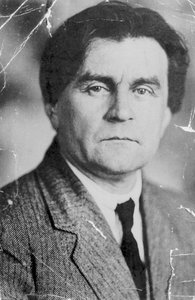
Kazimir Malevich
1878 - 1935 , Ukraine
Related Articles

Neo-Abstract Art Trend Forecast: High-Impact Geometric Compositions for Contemporary Commercial Interiors
Elevate commercial interiors with Neo-Abstract art. Discover how high-impact geometric compositions and custom oil reproductions provide scalable, sophisticated design solutions for hotels, restaurants, and corporate spaces. Expert procurement for large-scale hospitality projects.


![Black circle [1913] State Russian Museum,](/media/artworks/images-thumb/62/67/6267e452b0c8476772a6511e19ce1616.jpg)


