


 Preview
 Send
Send Share
Share
 Details
 Guide
Guide

 Download
 Similars
 X-Ray
X-Ray Diaporama
 Q&A
Q&A Stats
StatsInterior with Flowers

- 46.0 x 61.0 cm


 Read More
The artwork displayed on this page is protected by copyright law, which means we cannot legally create or sell an identical reproduction. This protection is enforced under international agreements such as the Berne Convention and by national laws, including those outlined by the U.S. Copyright Law - Title 17.
This method fully complies with copyright regulations because it does not involve copying or duplicating the protected artwork. Instead, it is a creative reinterpretation - a new painting that is influenced by the original but not identical to it.
Giclée / Art Print
Museum-quality giclée or canvas print with fast production and flexible finish options. ( Buy Hand Made Painting Switch to Digital Image)




P118B $10

P118H $10

P118W $10

P438Z $10

P508JH $12

P508YH $12

P805H $10

P805Z $10

P919BZ $10

P919G $10

P919XJ $10

P959ZH $10

P968JZ $12

W106C $8

W218G $10

W218JH $8

W218Y $10

W307PJ $10

W316G $10

W316PJ $8

W316Y $10

W398PJ $8

W4111J $10

W500HY $15

W500JH $15

W692G $12

W849H $8

W940BG $15

W953PJ $8




Pick from our preset sizes that match the artwork's original proportions.

Type the width and the height you need, to fit your frame or your wall. A print can only be cut, never made bigger than the picture, so a size with a different shape loses a part of the image. We send you a digital mockup to approve before we print anything. The picture shown on this page does not show the real cut — only the mockup does.
Worldwide Delivery () in 2 weeks instead of standard 4/5 weeks. (5 November)

Free Worldwide Express Shipping

High-Quality Linen Canvas

Full Shipping Insurance

Customs Tax Refund Guarantee

True Color Matching Guarantee

100-Day Return Policy (Defects Only)

100% Money-Back Guarantee

Bulk Discount Offer
 Glass option is only available in size under 110 CM

Interior with Flowers
Giclée / Art Print
Reproduction Size
-


Total Price
$ 65
A Window Into Vitebsk’s Soul
In the quiet intimacy of Marc Chagall’s 1918 masterpiece, Interior with Flowers, we are invited to step beyond the boundaries of a mere domestic scene and into a dreamscape where memory and reality intertwine. Painted during one of the most turbulent eras in human history—the height of the Russian Revolution—this work serves as a profound sanctuary of peace. Chagall, retreating to his beloved Vitebsk, channeled the vibrant tapestry of his Jewish heritage and the spiritual echoes of Orthodox traditions into a composition that feels less like a recorded moment and more like a whispered recollection. The painting captures a serene domesticity, featuring figures nestled within a room that seems to breathe with its own internal light, looking out toward a garden that promises eternal spring.
The aesthetic language of the piece is rooted in the Naïve Art movement, often referred to as Primitivism. Chagall masterfully eschews the rigid constraints of academic realism and anatomical precision, opting instead for a childlike spontaneity that prioritizes emotional truth over optical accuracy. By utilizing flattened planes of color and a deliberate lack of traditional perspective, he creates an illusionistic space that feels weightless. This technique allows the viewer to bypass the intellect and connect directly with the artist's subjective experience, making the painting feel as though it is floating within the subconscious mind.
The Symphony of Majorelle Blue
Color serves as the primary protagonist in this composition. The room is bathed in a striking, dominant Majorelle Blue—a deep, luminous azure that envelops the walls and sets a contemplative, almost mystical tone. This intense hue does more than define the physical space; it reflects a psychological depth, suggesting both the coolness of a quiet afternoon and the infinite expanse of a dream. To balance this oceanic blue, Chagall punctuates the canvas with warm, energetic accents of yellow and orange. These splashes of warmth act as symbols of optimism and vitality, perhaps even nodding to the golden domes of the churches that defined the skyline of his youth.
The arrangement of elements within the room—the dining table, the carefully placed chairs, and the delicate vases—creates a sense of structured harmony amidst the dreamlike atmosphere. The presence of floral abundance, from the potted plants to the blossoms in the vases, reinforces themes of fertility, growth, and the cyclical nature of life. For the collector or interior designer, this painting offers a unique opportunity to introduce a focal point that is both intellectually stimulating and visually soothing. It is a piece that does not merely occupy space but transforms it, bringing a sense of poetic movement and historical depth to any curated environment.
A Legacy for the Modern Collector
To possess a reproduction of Interior with Flowers is to hold a fragment of Chagall’s enduring legacy. The painting remains a testament to the power of the imagination to transcend political upheaval and physical displacement. It is an evocative work that speaks to anyone who finds beauty in the intersection of the mundane and the magical. Whether placed in a contemporary gallery setting or a classic study, the piece acts as a window into a world where color is emotion, and every brushstroke is a heartbeat of memory. For those seeking to decorate with art that possesses both narrative weight and aesthetic brilliance, Chagall’s vision offers an unparalleled source of inspiration.
Questions & Answers
What luminance does "Interior with Flowers" by Marc Chagall have?
"Interior with Flowers" by Marc Chagall has a soft shadow luminance. Luminance describes how much light the colors appear to reflect.
What medium is "Interior with Flowers" by Marc Chagall executed in?
The medium of "Interior with Flowers" by Marc Chagall is oil. Reproductions aim to render the appearance of this technique.
In what year was "Interior with Flowers" by Marc Chagall created?
"Interior with Flowers" dates from 1918. The date places the work within Marc Chagall's career and its era.
Related Artworks


Artist Biography
A Life Painted in Dreams: The World of Marc Chagall
Marc Chagall, born Moishe Shagal in 1887 in the small Belarussian town of Liozna near Vitebsk, wasn’t merely a painter; he was a poet of color, a weaver of dreams, and a chronicler of memory. His life, spanning nearly a century, mirrored the tumultuous currents of the 20th century, yet his art remained steadfastly rooted in a deeply personal vision—one infused with the folklore of his Hasidic Jewish upbringing and an unwavering belief in the power of imagination. Vitebsk itself was more than just a birthplace; it became the emotional core of his artistic universe, a recurring motif populated by flying figures, whimsical animals, and the vibrant hues of remembered landscapes. The town’s unique blend of cultures—Russian Orthodox churches alongside bustling Jewish marketplaces—forged an aesthetic sensibility that would defy easy categorization throughout his long career. Though he sought formal training first with a local sign painter and later in St. Petersburg under Léon Bakst, and then in Paris at the Académie de la Grande Chaumière, Chagall never fully embraced any single artistic movement. He absorbed elements of Cubism, Symbolism, and Fauvism, but always filtered them through his own intensely personal lens, creating a style that was uniquely, unmistakably Chagall.Forging a Unique Visual Language
Chagall’s early works already hinted at the distinctive language he would develop. Paintings like I and the Village (1911) are not simply depictions of place; they are explorations of identity, memory, and the relationship between the individual and community. The village isn't rendered realistically but as a fragmented collection of recollections, imbued with symbolic meaning. This ability to transmute personal experience into universal themes became a hallmark of his art. His palette was bold and expressive, often employing vibrant, non-naturalistic colors to convey emotion rather than literal representation. Figures float and dance across the canvas, defying gravity and logic, creating a dreamlike atmosphere that invites viewers into his inner world. This stylistic approach wasn’t accidental; it stemmed from a desire to move beyond mere imitation of reality and capture the essence of feeling, the weight of memory, and the power of folklore. The Russian Revolution brought Chagall back to Vitebsk, where he became involved in cultural initiatives, establishing an art school that briefly flourished before succumbing to the restrictions imposed by the new regime. This period was marked by both creative energy and political disillusionment, a tension that would continue to shape his artistic trajectory.A Life Between Worlds: Paris, New York, and Beyond
Eventually, Chagall left Russia for good, settling in France in 1923. This marked the beginning of a period of international recognition and prolific creativity. Works like Over Vitebsk (1920-1922) demonstrate his continued engagement with his childhood memories, while paintings inspired by biblical stories—such as Jacob’s Dream—reveal a growing interest in religious themes. The outbreak of World War II forced him to flee occupied France for the United States, where he spent seven years in New York City. This period was marked by profound emotional upheaval and artistic experimentation. He found solace in his art, creating powerful works that reflected the anxieties and uncertainties of the time. White Crucifixion (1938), a haunting depiction of suffering and persecution, stands as a testament to this era. After the war, Chagall returned to France, where he continued to paint and create until his death in 1985 at the age of 97.Legacy and Enduring Influence
In his later years, Marc Chagall received numerous prestigious commissions, including the ceiling of the Paris Opera (1964), a breathtaking explosion of color and form that celebrated musical masterpieces, and stunning stained glass windows for the Hadassah Hebrew University Medical Center synagogue in Jerusalem. These large-scale projects allowed him to translate his artistic vision into architectural spaces, creating immersive environments that continue to inspire awe and wonder. Chagall’s influence on subsequent generations of artists is undeniable. His lyrical quality, emotional depth, and imaginative power resonated with Surrealists and other movements that embraced fantasy and symbolism. He bridged the gap between European modernism and Jewish cultural identity, becoming known as “the quintessential Jewish artist of the twentieth century.” His ability to synthesize personal experience, folklore, and universal themes continues to resonate with audiences worldwide. His work reminds us of the power of art to transcend boundaries, to connect us to our shared humanity, and to illuminate the beauty and mystery of life.A Lasting Impression
Marc Chagall’s legacy extends beyond his paintings and stained glass; it resides in the enduring power of his vision—a vision that celebrates love, memory, and the boundless possibilities of the human imagination. He left behind a body of work that is both deeply personal and universally accessible, inviting viewers to lose themselves in a world painted with dreams and illuminated by hope. The Musée Marc Chagall in Nice stands as a testament to his enduring influence, housing an extensive collection of his works and offering visitors a glimpse into the heart and soul of this extraordinary artist. His art continues to inspire, challenge, and move us, ensuring that his vibrant and imaginative spirit will live on for generations to come.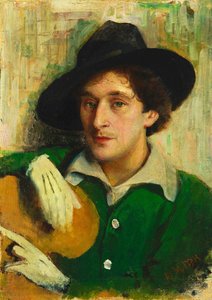
Marc Chagall
1887 - 1985 , Belarus
Quick Facts
- Artistic Movement Or Style:
- Cubism
- Symbolism
- Fauvism
- Artists Or Movements Influenced By This Artist: ['Surrealists']
- Artists Who Influenced This Artist: ['Léon Bakst']
- Full Name: Marc Chagall
- Nationality: Russian-French
- Notable Artworks:
- I and the Village
- Over Vitebsk
- White Crucifixion
- Jacob's Dream
- Place Of Birth: Liovana, Belarus
- Date Of Birth: 1887
- Date Of Death: 1985
Related Articles

Blossoms of Time: A Historical Journey Through Flower Painting
Explore the captivating history of flower painting! Discover Dutch masters, symbolic meanings, & botanical art. Expert insights & high-quality reproductions at AllPaintingsStore.

Blossoms of Time: A Historical & Aesthetic Exploration of Floral Painting Across Cultures
Explore the rich history of floral painting! Discover symbolism, techniques & masterpieces from Van Huysum to O'Keeffe. Expert insights for art lovers & collectors at AllPaintingsStore.

Cultivating Paradise: A Historical & Artistic Exploration of Gardens in Painting
Explore the rich history of gardens in painting! Discover masterpieces from Renaissance to Impressionism & beyond. Learn about symbolism, artists like Monet & Klimt, and find your perfect artwork at AllPaintingsStore.

Capturing Giverny: The Enchanting Impressionist Magic of Monet's Gardens
Embark on a visual journey through Claude Monet's Giverny. Discover the enchanting light, vibrant colors, and breathtaking landscapes of his legendary gardens through an expert exploration of Impressionist mastery and timeless beauty.

Blossoming Symbolism: A Historical Journey Through Flowers in Western Painting
Explore the rich history of flower symbolism in Western painting! Discover how artists from the Renaissance to Modernism used blossoms to convey meaning, emotion & beauty. Learn about iconic artworks and movements.


