


 Preview
 Send
Send Share
Share
 Details
 Guide
Guide

 Download
 Similars
 X-Ray
X-Ray Diaporama
 Stats
StatsLandscape 1


 Read More
The artwork displayed on this page is protected by copyright law, which means we cannot legally create or sell an identical reproduction. This protection is enforced under international agreements such as the Berne Convention and by national laws, including those outlined by the U.S. Copyright Law - Title 17.
As a respectful and legal alternative, we offer custom, hand-painted artworks inspired by the original. Our skilled and professional artists carefully study the original's style, mood, and artistic essence to create a new, unique piece that evokes the same feeling - while remaining an original creation in its own right.
This method fully complies with copyright regulations because it does not involve copying or duplicating the protected artwork. Instead, it is a creative reinterpretation - a new painting that is influenced by the original but not identical to it.
Hand Made Oil Reproduction
Hand-painted oil on canvas in your size and frame, made to order by our artists. ( Switch to Print Switch to Digital Image)




P118B $10

P118H $10

P118W $10

P438Z $10

P508JH $12

P508YH $12

P805H $10

P805Z $10

P919BZ $10

P919G $10

P919XJ $10

P959ZH $10

P968JZ $12

W106C $8

W218G $10

W218JH $8

W218Y $10

W307PJ $10

W316G $10

W316PJ $8

W316Y $10

W398PJ $8

W4111J $10

W500HY $15

W500JH $15

W692G $12

W849H $8

W940BG $15

W953PJ $8




Pick from our preset sizes that match the artwork's original proportions.

Type the width and the height you need, to fit your frame or your wall. This is hand-painted, so for a size with a different shape the artist can paint a bit more around the picture, or cut a bit — you choose. We send you a digital mockup to approve before the painting starts. The picture shown on this page does not show the real result — only the mockup does.
After order, AllPaintingsStore.com team will email client for instructions and provide a mockup preview
Worldwide Delivery () in 3/4 weeks instead of standard 5 weeks. (25 October). No compromise on quality.

Free Worldwide Express Shipping

High-Quality Linen Canvas

Full Shipping Insurance

Customs Tax Refund Guarantee

True Color Matching Guarantee

100-Day Return Policy (Defects Only)

100% Money-Back Guarantee

Bulk Discount Offer
 Glass option is only available in size under 110 CM

Landscape 1
Reproduction Medium
Reproduction Size
-


Total Price
$ 258
A Symphony of Color and Existential Depth
In the vast, silent theater of Mark Rothko’s Landscape, the viewer is not merely an observer but a participant in a profound emotional journey. Painted in 1960, this masterpiece stands as a pinnacle of the Color Field Painting movement, a style that eschews the frantic energy of traditional Abstract Expressionism in favor of a meditative, immersive experience. Rather than depicting a literal horizon or a recognizable terrain, Rothko presents an inner landscape—a psychological space where color becomes the primary language of the soul. The composition is defined by monumental, soft-edged rectangles of saturated hues that seem to hover and pulse against one another, inviting the eye to lose itself in the infinite layers of pigment.
The technique employed by Rothko is a masterclass in subtlety and luminous depth. Eschewing heavy impasto or aggressive brushstrokes, he applied thin, translucent washes of paint to the canvas. This delicate layering process allows light to penetrate the surface, creating an effect where the colors appear to glow from within, as if the canvas itself were a source of illumination. The edges of his color blocks are never sharp; instead, they bleed into one another with a feathered softness that suggests movement and breath. This method creates a mesmerizing interplay of light and shadow, where the boundaries between different tones become blurred, evoking a sense of atmospheric mystery that is both captivating and unsettling.
Symbolism and the Weight of Human Experience
To gaze upon Landscape is to confront the heavy themes of human existence. During the era in which Rothko worked, the intellectual landscape was dominated by existentialism, a philosophy grappling with the concepts of isolation, freedom, and the search for meaning in an often absurd world. The artist’s use of color serves as a symbolic vessel for these complex emotions. The deep crimsons, vibrant oranges, and warm yellows are not merely aesthetic choices; they represent the heat of passion, the glow of life, and the inevitable descent into shadow. Each layer of pigment acts as a metaphor for the layers of human consciousness—some bright and visible, others dark and buried.
For the collector or interior designer, this piece offers more than just visual splendor; it provides an emotional anchor for a space. The painting’s ability to command attention through stillness makes it an extraordinary centerpiece for any sophisticated environment. Whether placed in a quiet study intended for contemplation or a grand gallery setting designed to provoke conversation, Landscape brings with it a sense of monumental gravity. It is a work that demands a slow encounter, rewarding the patient viewer with a profound sense of transcendence and a reminder of the beauty found within the depths of our own reflections.
Questions & Answers
Which print setup is suggested for "Landscape 1" by Mark Rothko?
For "Landscape 1", the recommended print setup is a large size and a landscape orientation.
At what size is "Landscape 1" recommended to be printed?
The recommended print size for "Landscape 1" by Mark Rothko is large.
Which artist is "Landscape 1" attributed to?
"Landscape 1" was created by Mark Rothko. The information on this page describes Mark Rothko's original work.
Related Artworks


Artist Biography
A Life Shaped by Displacement
Mark Rothko arrived in the United States as a young boy, part of a family moving from Dvinsk, Latvia, to Portland, Oregon, in 1913. His early years were marked by the heavy atmosphere of the Pale of Settlement, where his family lived amidst political unrest and the fear of pogroms. This sense of instability followed him across the ocean. The loss of his father, Jacob, shortly after their arrival in America added a layer of personal grief to the challenges of settling in a new culture. While he studied at Yale University, the pull of New York City eventually led him to leave formal academics behind for the Art Students League.
His upbringing was one of intellect and debate. His father, a pharmacist with socialist leanings, fostered a home where learning was central. This environment, combined with the hardships of the immigrant experience, created a deep sensitivity to human suffering. These early experiences of loss and the struggle to find a place in a chaotic world became the quiet foundation for everything he would later paint.
From Figures to Fields of Color
In his early years in New York, Rothko focused on realism, painting portraits and urban scenes with careful attention to detail. As the 1940s brought the horrors of World War II, his work began to shift. He moved away from recognizable objects, looking instead toward Surrealism and mythology to find a way to express universal human emotions. During this period, his canvases featured biomorphic shapes that seemed to float between being figures and being abstract forms.
By the late 1940s, he had developed the style that would define his career. He stripped away all imagery, leaving only large-scale canvases with rectangular blocks of color. These forms appeared to hover and resonate against one another. He used thin washes of paint to create subtle changes in tone and texture, making the edges of his shapes appear blurred. He often avoided titles, using simple numbers like No. 1 or No. 6 so that viewers could face the work without any preconceived ideas.
The Search for Emotional Truth
Rothko’s mature period is associated with Color Field painting. His goal was to use color to speak directly to the human soul, bypassing the intellect to reach deep emotions such as tragedy, ecstasy, and despair. He meticulously layered paint to create a sense of depth and light that seemed to come from within the canvas itself. These large works were intended to envelop the viewer in an immersive experience.
His commitment to this emotional honesty led to several significant projects:
- The Seagram Murals, which he originally intended for a New York restaurant but later donated to the Tate Gallery after feeling the setting would compromise the work.
- The Rothko Chapel in Houston, Texas, a non-denominational space containing fourteen of his paintings in varying shades of black, designed as a place for quiet reflection.
- The Harvard Mural series, which were donated to a dining room at the Holyoke Center.
Despite his immense influence on Abstract Expressionism and the later Minimalist movement, Rothko struggled with depression throughout his life. He died by suicide in 1970. His work remains a central part of modern art history, found in permanent collections such as the Museum of Modern Art in New York and the Tate Modern in London.
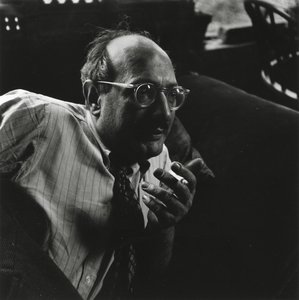
Mark Rothko
1903 - 1970 , Latvia
Quick Facts
- Artistic Movement Or Style: Abstract Expressionism, Color Field Painting
- Artists Or Movements Influenced By This Artist: ['Minimalist art']
- Full Name: Markus Yakovlevich Rothkowitz
- Nationality: American
- Notable Artworks:
- No. 10
- Seagram Murals
- Untitled
- Place Of Birth: Daugavpils, Latvia
- Date Of Birth: 1903
- Date Of Death: 1970
Related Articles
Kandinsky's Masterpieces: 25 Paintings That Define Abstract Art | AllPaintingsStore
Journey through Wassily Kandinsky's 25 most iconic abstract paintings. Explore his revolutionary use of color, form & spiritual expressionism. Find museum-quality Kandinsky reproductions and elevate your home decor with AllPaintingsStore.com. Discover all masterpieces on AllPaintingsStore.com!

Color Field Painting: The Emotional Power of Pure Abstraction and Chromatic Depth
Explore the profound emotional depth of Color Field painting. Discover the history of mid-century abstraction, from Rothko to Newman, and learn how pure color transforms the viewer's experience through our expert art history guide.

Mark Rothko's Masterpieces: 25 Paintings That Define Abstract Expressionism | AllPaintingsStore
Explore 25 iconic Mark Rothko paintings that define Abstract Expressionism. Discover the stories, colors & emotions behind these masterpieces. Find museum-quality art reproductions and curated decor ideas at AllPaintingsStore.com.

The Sublimity of Color: Exploring the Emotional Landscapes of Mark Rothko's Abstract Expressionism
Explore the profound emotional depth of Mark Rothko's abstract expressionism. Discover the history, techniques & lasting impact of this pivotal Color Field painter. Expert insights for collectors and art enthusiasts.

Abstract Expressionism's 10 Defining Masterpieces |
Explore 10 defining Abstract Expressionism masterpieces by Pollock, Rothko & de Kooning. Discover the stories behind these iconic paintings and find museum-quality art reproductions to elevate your home decor on .


