


 Preview
 Send
Send Share
Share
 Details
 Guide
Guide

 Download
 Similars
 X-Ray
X-Ray Diaporama
 Q&A
Q&A Stats
StatsUntitled 87

 Read More
Get a print-ready file that goes far beyond the web preview. Every digital image we sell comes from a high-resolution master in our stock database — usually 5,000 to 15,000 pixels wide — so you can print large, crop tightly, or reproduce fine detail with confidence.
No file leaves our studio untouched. A digital expert checks the colors against the original painting and corrects them if needed, then improves clarity and detail with professional retouching tools — always staying faithful to the artist's brushwork and style. The result is an image that looks like the painting, not like a filtered scan.
You approve before you're done: our expert sends the image by e-mail within 72 hours for your review. Not satisfied? Ask for improvements or corrections, or request a refund if the quality falls short.
This is the quality relied on by publishers, design studios, galleries and print shops.
Digital Image
Download a high-resolution file for personal display, printing, and creative projects. ( Switch to Print Buy Hand Made Painting)
Included in Every Digital Image Order
Expert Digital Delivery, Guaranteed
When you choose AllPaintingsStore.com, you're not just getting an image - you're receiving a professionally enhanced digital artwork, crafted with precision and backed by a satisfaction guarantee. Here's everything that comes with your order, automatically:

Fast Email Delivery
Your high-resolution digital image file will be emailed to you within 72 hours of ordering - ready for immediate use.

AI-Enhanced Digital File
Your artwork is professionally optimized using advanced AI tools and manual editing, ensuring maximum detail, clarity, and color accuracy.

Free Lifetime Re-Delivery
Accidentally deleted or lost your file? No worries - we'll resend it to you anytime, free of charge.

No Import Fees - Ever
Enjoy your artwork instantly with zero customs, duties, or delivery fees - digital downloads are always tax-free.

Color Accuracy Guarantee
We ensure your digital image reflects the original colors as closely as possible using professional tools and color management.

100-Day Satisfaction Guarantee
If you're not satisfied with your digital image, we'll revise it or refund 100% within 100 days - no questions asked.

100% Money-Back Guarantee
Not satisfied? Get a full refund within 100 days of receiving your digital file - no questions asked.

Bulk Order Discounts
Buy 3 images, save 10% - Buy 5, save 15% - Buy 10+, save 20%. Great for creative projects, galleries, and agencies.
The Genesis of a Silent Dialogue
Mark Rothko's "Untitled 87," a deceptively simple composition centered around a luminous white vase, isn’t merely a depiction of an object; it’s a profound exploration of human experience distilled into pure color. Born in 1903 in Daugavpils, Latvia – a region steeped in historical displacement and cultural tension – Rothko carried within him the indelible marks of his early life. This sense of rootedness in a world often marked by instability profoundly shaped his artistic vision, leading him to seek refuge not in narrative or representation, but in the elemental power of color itself. The painting’s creation occurred during a period when Rothko was deeply engaged with the concept of “sublimity” – that elusive quality of art which transcends the rational and touches upon something deeper within the human psyche. He deliberately avoided overt symbolism, believing that the emotional impact of his work should arise organically from the interaction of color fields, rather than being dictated by a specific image or narrative.

Color as a Language of Feeling
Rothko’s technique is remarkably restrained, yet intensely expressive. He employed thin layers of oil paint applied directly to the canvas, creating a matte surface that absorbs light and generates a subtle luminosity. The vase itself isn't rendered with meticulous detail; instead, it exists as a block of white, its edges softly blurred, inviting the viewer to lose themselves within the surrounding fields of color. The interplay between the dominant white and the subtly shifting hues – hints of pale blues, greens, and reds – generates an almost palpable sense of depth and atmosphere. This deliberate avoidance of sharp outlines is crucial to Rothko’s approach; he sought to create a meditative space where the viewer could engage with pure feeling, unburdened by the constraints of recognizable form. The inclusion of smaller vases and bowls adds layers of visual interest without disrupting the overall contemplative mood.
- Color Fields: Rothko’s signature technique – large, overlapping rectangular areas of color – creates a sense of immersion and emotional resonance.
- Matte Surface: The lack of gloss allows the colors to absorb light, generating a subtle luminosity and depth.
- Blurred Edges: Softening the edges of forms dissolves boundaries and encourages contemplation.
A Reflection on Loss and Transcendence
Considering Rothko’s personal history – his early experiences of displacement, loss (particularly the death of his father), and assimilation – it's not surprising that his work often grapples with themes of mortality, trauma, and the search for meaning. “Untitled 87” can be interpreted as a visual meditation on these profound human concerns. The white vase, a symbol of purity and potential, might represent the enduring spirit amidst suffering. The surrounding colors – suggestive of both sorrow and hope – evoke a sense of longing and introspection. It’s important to note that Rothko deliberately avoided providing explicit answers or narratives; he sought to create paintings that would resonate with each viewer on a deeply personal level.
Interestingly, the chapel where many of these works reside, the Rothko Chapel in Houston, Texas, was designed specifically to complement and amplify Rothko’s vision. The building's architecture – an octagon inscribed within a Greek cross – creates a space of quiet contemplation, mirroring the emotional atmosphere of the paintings themselves. The chapel’s use of dark materials and diffused light further enhances the sense of mystery and reverence.
Collecting the Essence of Rothko
AllPaintingsStore offers meticulously crafted hand-painted reproductions of Mark Rothko's "Untitled 87," allowing you to bring this iconic work into your own space. Our skilled artisans replicate Rothko’s distinctive technique with exceptional accuracy, capturing the subtle nuances of color and texture that define his style. Whether for a contemporary interior or as a treasured addition to a classic collection, our reproductions provide an authentic representation of this profoundly moving artwork. Explore the full detail and dimensions on our website and discover how you can own a piece of art history.
Questions & Answers
Can I watch "Untitled 87" as a full-screen slideshow?
The diaporama of "Untitled 87" can be watched on the artwork's Diaporama page.
Does "Untitled 87" show strong light-dark contrasts?
"Untitled 87" by Mark Rothko shows a statement contrast between its light and dark areas.
What technique and style characterize "Untitled 87" by Mark Rothko?
"Untitled 87" by Mark Rothko combines the acrylic on canvas technique with the Color Field Abstraction style. Technique and movement describe the making and the style of the work.
Related Artworks


Artist Biography
A Life Shaped by Displacement
Mark Rothko arrived in the United States as a young boy, part of a family moving from Dvinsk, Latvia, to Portland, Oregon, in 1913. His early years were marked by the heavy atmosphere of the Pale of Settlement, where his family lived amidst political unrest and the fear of pogroms. This sense of instability followed him across the ocean. The loss of his father, Jacob, shortly after their arrival in America added a layer of personal grief to the challenges of settling in a new culture. While he studied at Yale University, the pull of New York City eventually led him to leave formal academics behind for the Art Students League.
His upbringing was one of intellect and debate. His father, a pharmacist with socialist leanings, fostered a home where learning was central. This environment, combined with the hardships of the immigrant experience, created a deep sensitivity to human suffering. These early experiences of loss and the struggle to find a place in a chaotic world became the quiet foundation for everything he would later paint.
From Figures to Fields of Color
In his early years in New York, Rothko focused on realism, painting portraits and urban scenes with careful attention to detail. As the 1940s brought the horrors of World War II, his work began to shift. He moved away from recognizable objects, looking instead toward Surrealism and mythology to find a way to express universal human emotions. During this period, his canvases featured biomorphic shapes that seemed to float between being figures and being abstract forms.
By the late 1940s, he had developed the style that would define his career. He stripped away all imagery, leaving only large-scale canvases with rectangular blocks of color. These forms appeared to hover and resonate against one another. He used thin washes of paint to create subtle changes in tone and texture, making the edges of his shapes appear blurred. He often avoided titles, using simple numbers like No. 1 or No. 6 so that viewers could face the work without any preconceived ideas.
The Search for Emotional Truth
Rothko’s mature period is associated with Color Field painting. His goal was to use color to speak directly to the human soul, bypassing the intellect to reach deep emotions such as tragedy, ecstasy, and despair. He meticulously layered paint to create a sense of depth and light that seemed to come from within the canvas itself. These large works were intended to envelop the viewer in an immersive experience.
His commitment to this emotional honesty led to several significant projects:
- The Seagram Murals, which he originally intended for a New York restaurant but later donated to the Tate Gallery after feeling the setting would compromise the work.
- The Rothko Chapel in Houston, Texas, a non-denominational space containing fourteen of his paintings in varying shades of black, designed as a place for quiet reflection.
- The Harvard Mural series, which were donated to a dining room at the Holyoke Center.
Despite his immense influence on Abstract Expressionism and the later Minimalist movement, Rothko struggled with depression throughout his life. He died by suicide in 1970. His work remains a central part of modern art history, found in permanent collections such as the Museum of Modern Art in New York and the Tate Modern in London.
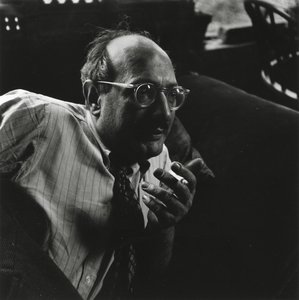
Mark Rothko
1903 - 1970 , Latvia
Quick Facts
- Artistic Movement Or Style: Abstract Expressionism, Color Field Painting
- Artists Or Movements Influenced By This Artist: ['Minimalist art']
- Full Name: Markus Yakovlevich Rothkowitz
- Nationality: American
- Notable Artworks:
- No. 10
- Seagram Murals
- Untitled
- Place Of Birth: Daugavpils, Latvia
- Date Of Birth: 1903
- Date Of Death: 1970

