


 Preview
 Send
Send Share
Share
 Details
 Guide
Guide

 Download
 Similars
 X-Ray
X-Ray Diaporama
 Q&A
Q&A Stats
StatsUntitled

- 259.0 x 218.0 cm


 Read More
Get a print-ready file that goes far beyond the web preview. Every digital image we sell comes from a high-resolution master in our stock database — usually 5,000 to 15,000 pixels wide — so you can print large, crop tightly, or reproduce fine detail with confidence.
No file leaves our studio untouched. A digital expert checks the colors against the original painting and corrects them if needed, then improves clarity and detail with professional retouching tools — always staying faithful to the artist's brushwork and style. The result is an image that looks like the painting, not like a filtered scan.
You approve before you're done: our expert sends the image by e-mail within 72 hours for your review. Not satisfied? Ask for improvements or corrections, or request a refund if the quality falls short.
This is the quality relied on by publishers, design studios, galleries and print shops.
Digital Image
Download a high-resolution file for personal display, printing, and creative projects. ( Switch to Print Buy Hand Made Painting)
Included in Every Digital Image Order
Expert Digital Delivery, Guaranteed
When you choose AllPaintingsStore.com, you're not just getting an image - you're receiving a professionally enhanced digital artwork, crafted with precision and backed by a satisfaction guarantee. Here's everything that comes with your order, automatically:

Fast Email Delivery
Your high-resolution digital image file will be emailed to you within 72 hours of ordering - ready for immediate use.

AI-Enhanced Digital File
Your artwork is professionally optimized using advanced AI tools and manual editing, ensuring maximum detail, clarity, and color accuracy.

Free Lifetime Re-Delivery
Accidentally deleted or lost your file? No worries - we'll resend it to you anytime, free of charge.

No Import Fees - Ever
Enjoy your artwork instantly with zero customs, duties, or delivery fees - digital downloads are always tax-free.

Color Accuracy Guarantee
We ensure your digital image reflects the original colors as closely as possible using professional tools and color management.

100-Day Satisfaction Guarantee
If you're not satisfied with your digital image, we'll revise it or refund 100% within 100 days - no questions asked.

100% Money-Back Guarantee
Not satisfied? Get a full refund within 100 days of receiving your digital file - no questions asked.

Bulk Order Discounts
Buy 3 images, save 10% - Buy 5, save 15% - Buy 10+, save 20%. Great for creative projects, galleries, and agencies.
A Dialogue Between Color: Exploring Mark Rothko’s Untitled
The painting “Untitled,” created by Mark Rothko in 1957, stands as a testament to the artist's unwavering commitment to distilling emotion into pure visual form. Measuring 259 x 218 cm, this monumental canvas embodies Rothko’s signature approach – large rectangular blocks of color stacked horizontally, eschewing traditional representation for an intensely contemplative experience. The photograph captures precisely this understated grandeur, highlighting the subtle interplay between shades of blue and green that dominate the composition.- Subject Matter: At first glance, “Untitled” appears deceptively simple. It rejects narrative storytelling altogether, presenting instead a series of luminous rectangles devoid of recognizable imagery. This deliberate absence serves not to diminish its impact but rather to elevate it, inviting viewers to engage in an internal dialogue about color and feeling.
- Style: Rothko’s style is undeniably abstract expressionist, aligning him with the broader movement that emerged in New York City during the postwar era. However, unlike many of his contemporaries who sought to convey psychological turmoil or social commentary, Rothko aimed for a more profound connection with the viewer—one rooted in universal human experience.
- Technique: The artist achieved this ethereal effect through meticulous layering of thin washes of pigment onto linen canvases. This technique, honed over years of experimentation, resulted in velvety surfaces that absorb light and create an illusion of depth. Rothko’s careful consideration of color gradations—the subtle shifts between hues within each rectangle—is crucial to understanding the painting's emotive power.
Historical Context: The Rise of Color Field Painting
“Untitled” emerged during a pivotal moment in art history – the ascendancy of color field painting. Artists like Rothko, Barnett Newman, and Clyfford Still were rejecting Cubism and Surrealism’s fragmented perspectives, opting instead for expansive canvases filled with blocks of color that aimed to evoke feelings rather than depict objects. This stylistic shift reflected a broader cultural preoccupation with spirituality and introspection following World War II.Symbolism Beyond Representation
While Rothko vehemently denied any intention to imbue his paintings with symbolic meaning, scholars have argued that the colors themselves carry significant weight. Blue, often associated with tranquility, contemplation, and sorrow, is juxtaposed against green—a hue linked to growth, renewal, and harmony. The deliberate repetition of these rectangles creates a rhythmic pattern that encourages prolonged observation, prompting viewers to confront their own emotional responses.Emotional Impact: A Journey Into Inner Space
Ultimately, “Untitled” succeeds in transporting the viewer beyond the confines of visual perception into a realm of psychological resonance. The painting’s luminous hues and velvety surfaces generate an atmosphere of profound stillness—a space for contemplation and emotional exploration. It's precisely this ability to elicit such visceral reactions that secures Rothko’s place as one of the most influential artists of the 20th century, continuing to inspire audiences today.Questions & Answers
Why is the copyright status of "Untitled" what it is?
The copyright status of "Untitled" - still protected by copyright - follows from the artist's death in 1970.
Is "Untitled" typical of what Mark Rothko usually created?
Mark Rothko's recurring themes include color theory, existentialism, emotional depth, minimalist aesthetic, rothko legacy; "Untitled" focuses on color field, geometric shapes, contrast, minimalism, emotional resonance, blue square, green square.
Who sells hand-painted copies of "Untitled" by Mark Rothko?
"Untitled" is available as a hand-painted oil reproduction on linen canvas. The order can be placed on its Hand-Painted Reproduction page, with a choice of sizes.


Artist Biography
A Life Shaped by Displacement
Mark Rothko arrived in the United States as a young boy, part of a family moving from Dvinsk, Latvia, to Portland, Oregon, in 1913. His early years were marked by the heavy atmosphere of the Pale of Settlement, where his family lived amidst political unrest and the fear of pogroms. This sense of instability followed him across the ocean. The loss of his father, Jacob, shortly after their arrival in America added a layer of personal grief to the challenges of settling in a new culture. While he studied at Yale University, the pull of New York City eventually led him to leave formal academics behind for the Art Students League.
His upbringing was one of intellect and debate. His father, a pharmacist with socialist leanings, fostered a home where learning was central. This environment, combined with the hardships of the immigrant experience, created a deep sensitivity to human suffering. These early experiences of loss and the struggle to find a place in a chaotic world became the quiet foundation for everything he would later paint.
From Figures to Fields of Color
In his early years in New York, Rothko focused on realism, painting portraits and urban scenes with careful attention to detail. As the 1940s brought the horrors of World War II, his work began to shift. He moved away from recognizable objects, looking instead toward Surrealism and mythology to find a way to express universal human emotions. During this period, his canvases featured biomorphic shapes that seemed to float between being figures and being abstract forms.
By the late 1940s, he had developed the style that would define his career. He stripped away all imagery, leaving only large-scale canvases with rectangular blocks of color. These forms appeared to hover and resonate against one another. He used thin washes of paint to create subtle changes in tone and texture, making the edges of his shapes appear blurred. He often avoided titles, using simple numbers like No. 1 or No. 6 so that viewers could face the work without any preconceived ideas.
The Search for Emotional Truth
Rothko’s mature period is associated with Color Field painting. His goal was to use color to speak directly to the human soul, bypassing the intellect to reach deep emotions such as tragedy, ecstasy, and despair. He meticulously layered paint to create a sense of depth and light that seemed to come from within the canvas itself. These large works were intended to envelop the viewer in an immersive experience.
His commitment to this emotional honesty led to several significant projects:
- The Seagram Murals, which he originally intended for a New York restaurant but later donated to the Tate Gallery after feeling the setting would compromise the work.
- The Rothko Chapel in Houston, Texas, a non-denominational space containing fourteen of his paintings in varying shades of black, designed as a place for quiet reflection.
- The Harvard Mural series, which were donated to a dining room at the Holyoke Center.
Despite his immense influence on Abstract Expressionism and the later Minimalist movement, Rothko struggled with depression throughout his life. He died by suicide in 1970. His work remains a central part of modern art history, found in permanent collections such as the Museum of Modern Art in New York and the Tate Modern in London.
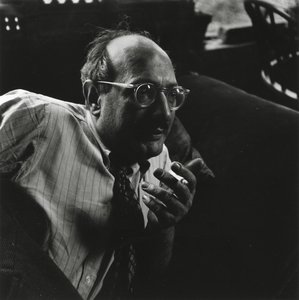
Mark Rothko
1903 - 1970 , Latvia
Quick Facts
- Artistic Movement Or Style: Abstract Expressionism, Color Field Painting
- Artists Or Movements Influenced By This Artist: ['Minimalist art']
- Full Name: Markus Yakovlevich Rothkowitz
- Nationality: American
- Notable Artworks:
- No. 10
- Seagram Murals
- Untitled
- Place Of Birth: Daugavpils, Latvia
- Date Of Birth: 1903
- Date Of Death: 1970