.

§ 1Catalogue data

§ 2Abstract
Collectible Description
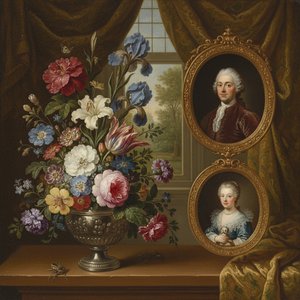
A detailed portrait of Christopher Hatton by Nicholas Hilliard, capturing the elegance and status of Elizabethan England's prominent figure.
 Read More
Artist Biography
Nicholas Hilliard (1547-1619): England's foremost Elizabethan miniaturist. Master of exquisite portraits, symbolic detail & capturing the spirit of the Tudor court.
§ 3Commentary
A Glimpse into Elizabethan Grandeur: Christopher Hatton by Nicholas Hilliard
This exquisite miniature portrait captures Sir Christopher Hatton, a prominent figure in the court of Queen Elizabeth I. Painted around 1570-1580 by the renowned English limner, Nicholas Hilliard, it offers a fascinating window into the opulence and formality of Elizabethan England. More than just a likeness, this artwork is a testament to status, power, and the artistic skill of its creator.
Style & Technique: The Art of Miniature Portraiture
Nicholas Hilliard was the undisputed master of miniature portraiture in England during the late 16th century. This piece exemplifies his signature style – characterized by meticulous detail, vibrant color palettes achieved through layering translucent glazes, and a remarkable ability to capture personality within a small format (typically oval). The technique involved applying thin layers of paint onto vellum or ivory, requiring immense precision and control. Hilliard’s use of gold leaf highlights the intricate embroidery on Hatton's doublet and adds an element of regal splendor. Notice how he skillfully renders the textures of fabric and skin, creating a remarkably lifelike representation despite its diminutive size.
Historical Context & Symbolism
Sir Christopher Hatton (1540-1591) served as Lord Chancellor under Queen Elizabeth I and was one of her closest confidants. The portrait’s historical significance lies in providing a visual record of a key figure within the Elizabethan court. Several symbolic elements are present:
- The Elaborate Attire: Hatton's richly embroidered doublet, white ruff collar, and black cloak signify his high social standing and political importance. The dark colors were fashionable at the time and conveyed seriousness and authority.
- The Book: The small book he holds suggests learning and intellectual pursuits, further reinforcing his image as a man of substance.
- The Chair: His hand resting on the chair arm conveys a sense of relaxed confidence and power.
- The Circular Format: The oval shape was typical for Hilliard's miniatures and was considered aesthetically pleasing, reflecting Renaissance ideals of harmony and balance.
Emotional Impact & Lasting Appeal
Beyond its historical and technical merits, this portrait evokes a sense of quiet dignity and understated power. Hatton’s gaze is direct yet reserved, conveying intelligence and perhaps a hint of melancholy. The overall impression is one of refined elegance and unwavering loyalty to the Crown. The enduring appeal of Hilliard's portraits lies in their ability to transcend mere representation; they offer intimate glimpses into the lives and personalities of individuals who shaped Elizabethan England, making them invaluable treasures for art lovers, collectors, and those seeking a touch of historical grandeur within their interiors.
Questions & Answers
Are the colors of "Christopher Hatton" by Nicholas Hilliard saturated or muted?
The palette of "Christopher Hatton" is subtle color in saturation.
Who is the artist behind "Christopher Hatton"?
The artist behind "Christopher Hatton" is Nicholas Hilliard. The work is catalogued under Nicholas Hilliard's name.
How do I preview a reproduction of "Christopher Hatton" by Nicholas Hilliard?
A preview of "Christopher Hatton" by Nicholas Hilliard is available on the artwork's Preview page.


 Switch to Print


 For artworks or reproductions larger than 105 cm (approximately 41 inches) on any side, the frame will be shipped as a kit, disassembled. This method ensures safe delivery and prevents damage during transport.