

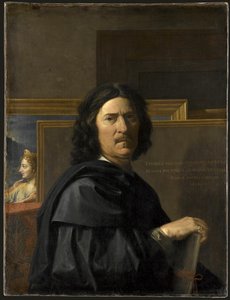
1626. Oil On Canvas. Museum of Fine Arts.

§ 1Catalogue data


§ 2Abstract
Collectible Description
Explore Nicolas Poussin’s ‘Mars & Venus,’ a Baroque masterpiece depicting Diana & Actaeon. Admire its dynamic composition, dramatic lighting & classical mythology – a stunning artwork.
 Read More
Artist Biography
Explore Nicolas Poussin's masterful Baroque paintings—renowned for serene landscapes and mythological narratives inspired by classical antiquity. Discover iconic artworks at AllPaintingsStore.
§ 3Commentary
A Mythological Encounter: Nicolas Poussin’s *Mars and Venus*
Painted in 1626, *Mars and Venus* by Nicolas Poussin is a captivating example of French Baroque painting, steeped in classical mythology. While often misidentified as Diana and Actaeon, the scene depicts the Roman deities Mars (god of war) and Venus (goddess of love), caught in a moment of intimate repose before being interrupted – a theme central to Poussin’s exploration of human passion and divine intervention.
Decoding the Scene: Subject & Narrative
- Mythological Basis: The painting draws upon the well-known Roman myth of Mars and Venus, whose illicit affair was a source of scandal amongst the gods. Poussin doesn’t depict the moment of discovery, but rather a fleeting instance *before* disruption, heightening the sense of impending drama.
- Compositional Focus: The central grouping features Mars and Venus reclining amidst a lush landscape, surrounded by attendant figures – nymphs, satyrs, and hunting companions. This crowded composition isn’t chaotic; Poussin masterfully organizes it using a pyramidal structure, drawing the eye towards the entwined deities at its apex.
- Impending Disruption: The presence of hunting dogs and figures in the background subtly foreshadows an intrusion, creating a palpable tension. This anticipation is key to understanding Poussin’s intent – he isn't simply illustrating a story, but exploring the psychological state *before* a pivotal moment.
Style & Technique: A Baroque Classicist
- Baroque Drama: While rooted in classical ideals, Poussin employs Baroque techniques to enhance the emotional impact. Dramatic lighting – strong contrasts between illuminated areas and deep shadows (chiaroscuro) – creates a theatrical quality.
- Linear Precision: Unlike many of his Baroque contemporaries who favored painterly brushwork, Poussin prioritizes clarity of line and form. This emphasis on *disegno* (drawing) is a hallmark of his style, lending the scene a sense of order and intellectual rigor.
- Oil on Canvas: Executed in oil paints on canvas, Poussin’s technique involves meticulous layering to achieve rich textures and subtle gradations of tone. The drapery folds are particularly noteworthy, demonstrating his skill in rendering fabric with both realism and elegance.
Symbolism & Interpretation: Love, War, and Divine Order
- Contrasting Forces: The pairing of Mars and Venus embodies the inherent tension between love and war – two powerful forces that shape human existence. Their union, though passionate, is forbidden and threatens the established order.
- The Landscape as Metaphor: The secluded, wooded landscape symbolizes a hidden realm where passions can flourish unchecked. However, its very seclusion also suggests vulnerability to external forces.
- Divine Caprice: Poussin’s work often explores the capricious nature of the gods and the consequences of human transgression. *Mars and Venus* serves as a reminder that even deities are subject to fate and moral consequence.
Historical Context & Legacy: A Bridge Between Eras
- Poussin in Rome: Painted during Poussin’s first period in Rome, the artwork reflects his deep engagement with classical antiquity and Renaissance art. He was particularly influenced by Raphael, whose emphasis on composition and idealized forms is evident here.
- A Lasting Influence: Poussin's work profoundly impacted subsequent generations of artists, including Jacques-Louis David and Paul Cézanne. His commitment to clarity, order, and intellectual rigor established him as a pivotal figure in the development of French painting.
- Emotional Resonance: Beyond its historical significance, *Mars and Venus* continues to resonate with viewers today due to its timeless themes of love, desire, and the complexities of human relationships. It’s a work that invites contemplation and offers a glimpse into the enduring power of myth.
Questions & Answers
What is a reproduction of "Mars and Venus" by Nicolas Poussin recommended for?
The recommended use of a print of "Mars and Venus" is statement.
Who created "Mars and Venus" and in what year?
The author of "Mars and Venus" is Nicolas Poussin, and the work is dated 1626.
Which palette and lead color define "Mars and Venus"?
"Mars and Venus" is defined by an earthy palette led by walnut (#744d3c).


 Switch to Print


 For artworks or reproductions larger than 105 cm (approximately 41 inches) on any side, the frame will be shipped as a kit, disassembled. This method ensures safe delivery and prevents damage during transport.


