


 Preview
 Send
Send Share
Share
 Details
 Guide
Guide

 Download
 Similars
 X-Ray
X-Ray Diaporama
 Q&A
Q&A Stats
StatsBathers (8)

- 59.0 x 80.0 cm


 Read More
Get a print-ready file that goes far beyond the web preview. Every digital image we sell comes from a high-resolution master in our stock database — usually 5,000 to 15,000 pixels wide — so you can print large, crop tightly, or reproduce fine detail with confidence.
No file leaves our studio untouched. A digital expert checks the colors against the original painting and corrects them if needed, then improves clarity and detail with professional retouching tools — always staying faithful to the artist's brushwork and style. The result is an image that looks like the painting, not like a filtered scan.
You approve before you're done: our expert sends the image by e-mail within 72 hours for your review. Not satisfied? Ask for improvements or corrections, or request a refund if the quality falls short.
This is the quality relied on by publishers, design studios, galleries and print shops.
Digital Image
Download a high-resolution file for personal display, printing, and creative projects. ( Switch to Print Buy Hand Made Painting)
Included in Every Digital Image Order
Expert Digital Delivery, Guaranteed
When you choose AllPaintingsStore.com, you're not just getting an image - you're receiving a professionally enhanced digital artwork, crafted with precision and backed by a satisfaction guarantee. Here's everything that comes with your order, automatically:

Fast Email Delivery
Your high-resolution digital image file will be emailed to you within 72 hours of ordering - ready for immediate use.

AI-Enhanced Digital File
Your artwork is professionally optimized using advanced AI tools and manual editing, ensuring maximum detail, clarity, and color accuracy.

Free Lifetime Re-Delivery
Accidentally deleted or lost your file? No worries - we'll resend it to you anytime, free of charge.

No Import Fees - Ever
Enjoy your artwork instantly with zero customs, duties, or delivery fees - digital downloads are always tax-free.

Color Accuracy Guarantee
We ensure your digital image reflects the original colors as closely as possible using professional tools and color management.

100-Day Satisfaction Guarantee
If you're not satisfied with your digital image, we'll revise it or refund 100% within 100 days - no questions asked.

100% Money-Back Guarantee
Not satisfied? Get a full refund within 100 days of receiving your digital file - no questions asked.

Bulk Order Discounts
Buy 3 images, save 10% - Buy 5, save 15% - Buy 10+, save 20%. Great for creative projects, galleries, and agencies.
A Symphony of Form and Light: Exploring Cézanne’s *Bathers (8)*
Paul Cézanne's *Bathers (8)*, painted in 1905, is not merely a depiction of figures in a landscape; it represents a pivotal moment in the evolution of modern art. This oil on canvas (59 x 80 cm) embodies Cézanne’s revolutionary approach to painting, bridging the gap between Impressionism and the burgeoning Cubist movement. It's a work that invites contemplation not just on its surface beauty, but also on the very *act* of seeing and representing reality.Subject & Composition: A Pastoral Scene Reimagined
The painting presents a group of nude figures – men and women – scattered throughout a lush forest setting. They are not engaged in any specific narrative action; rather, they exist as integral parts of the landscape itself. Cézanne deliberately avoids traditional compositional techniques that would create a clear focal point. Instead, he arranges the figures in a loose, almost circular grouping, allowing the eye to wander and explore the interplay between bodies and foliage. The inclusion of birds adds a subtle dynamism, hinting at life and movement within this tranquil scene.Style & Technique: Deconstructing Reality
*Bathers (8)* is a quintessential example of Cézanne’s Post-Impressionist style. He moves beyond simply capturing the fleeting effects of light – as did the Impressionists – to investigate the underlying geometric structure of forms. Notice how the bodies are rendered not with smooth, blended tones, but with fragmented brushstrokes and planes of color. This technique isn't about *imitating* nature; it’s about constructing a new reality on canvas. Cézanne famously sought to “treat nature by means of the cylinder, the sphere, the cone,” and this is clearly visible in the simplified forms of both figures and trees. The deliberate distortion of perspective further emphasizes his rejection of traditional academic conventions.Historical Context: A Bridge to Modernism
Created during a period of significant artistic upheaval, *Bathers (8)* reflects Cézanne’s growing dissatisfaction with the limitations of Impressionism. He was searching for a more solid and enduring way to represent the world – one that went beyond mere optical impressions. This quest would profoundly influence subsequent generations of artists, most notably Pablo Picasso and Georges Braque, who developed Cubism based on Cézanne's groundbreaking explorations of form and space. Cézanne’s work challenged established norms and paved the way for abstract art.Symbolism & Emotional Impact: Nature, Humanity, and Connection
The nude figures in *Bathers (8)* evoke a sense of vulnerability and naturalness, harking back to classical depictions of bathers but stripped of mythological or allegorical baggage. They are simply *being* – existing harmoniously within the landscape. The painting can be interpreted as an exploration of humanity’s relationship with nature, suggesting a primal connection that transcends societal constraints. The overall effect is one of quiet contemplation and serene beauty. While not overtly emotional, the work possesses a subtle power to evoke feelings of peace, tranquility, and a profound appreciation for the natural world.Cézanne's Legacy & Collecting Today
Paul Cézanne remains one of the most influential figures in art history. His innovative techniques and philosophical approach to painting continue to inspire artists and captivate audiences worldwide. Owning a reproduction of *Bathers (8)* is not just acquiring a beautiful image; it’s embracing a legacy of artistic innovation. It's an investment in a piece of art history that speaks to the enduring power of form, color, and the human spirit.- Related Works: Explore Cézanne’s other “Bathers” series paintings – *Four Bathers* and *The Large Bathers* – for a deeper understanding of his evolving style.
- Post-Impressionism: Discover the broader context of this movement, including works by Van Gogh, Gauguin, and Seurat.
- Interior Design: The muted palette and harmonious composition of *Bathers (8)* make it a versatile addition to various interior styles, from modern minimalist spaces to more traditional settings.
Questions & Answers
Who is the artist behind "Bathers (8)"?
"Bathers (8)" is attributed to Paul Cézanne.
What technique was used for "Bathers (8)" by Paul Cézanne?
"Bathers (8)" is executed in oil on canvas.
What color leads the composition of "Bathers (8)" by Paul Cézanne?
The dominant color of "Bathers (8)" by Paul Cézanne is phthalo green (#1e2612).
Related Artworks


Artist Biography
The Architect of Form
Paul Cézanne was born in Aix-en-Provence, France, into a family with deep roots in the local banking industry. His father, Louis-Auguste Cézanne, helped found the Banque Cézanne et Cabassol, providing a level of financial stability that many of his contemporaries lacked. This security allowed Paul to move away from the legal studies his father had planned for him. Though he initially studied law at the University of Aix-en-Provence, he abandoned those studies in 1860 to focus entirely on painting. His early years were spent in the company of friends like Émile Zola, and together they shared a childhood of swimming and fishing along the banks of the Arc River.
The early works of Cézanne often carried the weight of Romanticism, utilizing dark palettes and heavy, expressive brushwork. He was influenced by the dramatic tonal contrasts found in the tradition of Eugène Delacroix. However, his approach began to shift as he moved toward Paris. He sought a way to move beyond the fleeting light captured by the Impressionists. Instead of merely recording a passing moment, he wanted to find the permanent structure within nature. He looked at a mountain or a piece of fruit and saw the underlying geometry—the cones, spheres, and cylinders that form the bones of the world.
A New Way of Seeing
Cézanne developed a technique characterized by small, repetitive, and constructive brushstrokes. He layered these patches of color to build up volume and texture, creating a sense of solidity. This method allowed him to explore spatial relationships without relying on traditional single-point perspective. In many of his compositions, objects appear independent within the space, often presented from multiple viewpoints at once. This rejection of classical perspective rules helped create a new pictorial language.
His subject matter was deeply tied to his surroundings in Provence. The Mont Sainte-Victoire became a recurring presence in his work, appearing in approximately eighty different paintings and watercolors over many years. He also found profound meaning in the simplest objects. His still lifes, featuring items like apples, jars, and cups, were not mere decorations but intense studies of light, shadow, and mass. Through these works, he demonstrated how color modulation could define shape without the need for traditional shading.
- The Bathers (Les Grandes Baigneuses)
- Mont Sainte-Victoire series
- Still Life with Apples and a Pot of Primroses
- Portrait of Émile Zola
- The Card Players
A Lasting Influence
By the time of his death in 1906, Cézanne had fundamentally altered the direction of modern painting. His emphasis on geometric form and multiple perspectives provided a foundation for the Cubist movement. Artists such as Pablo Picasso and Georges Braque drew heavily from his analytical approach to nature. His use of bold, non-naturalistic color also left an impression on the Fauvists, including Henri Matisse. He moved art away from the imitation of reality toward a construction of visual experience based on perception and structure.
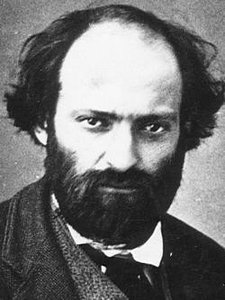
Paul Cézanne
1839 - 1906 , France
Quick Facts
- Artistic Movement Or Style: Post-Impressionism
- Artists Or Movements Influenced By This Artist:
- Cubism
- Fauvism
- Pablo Picasso
- Henri Matisse
- Artists Who Influenced This Artist:
- Paul Gauguin
- Georges Seurat
- Full Name: Paul Cézanne
- Nationality: French
- Notable Artworks:
- The Pond at Jas de Bouffan
- Portrait of Émile Zola
- Mont Sainte-Victoire series
- Bathers
- Place Of Birth: Aix-en-Provence, France
- Date Of Birth: 1839
- Date Of Death: 1906