

Bathsheba Hand-painted oil painting – standard and custom sizes
1890. Oil, 32.0 x 23.0 cm.

§ 1Catalogue data
 Oil
Oil- WallArt
- Post-Impressionism
 1890
1890- 19th Century
 32.0 x 23.0 cm
§ 2Abstract
Collectible Description
Paul Cézanne's 'Bathsheba' (1890) captures serene beauty & human connection within a lush forest setting, showcasing his Post-Impressionist style and bridging art history.
 Read More
Artist Biography
Post-Impressionist master Paul Cezanne bridged Impressionism and Cubism with Mont Sainte-Victoire. Explore his revolutionary works today.
§ 3Commentary
Paul Cézanne’s “Bathsheba”: A Study in Serenity and Transition
Paul Cézanne's "Bathsheba," painted around 1890, is more than just a depiction of two women; it’s a pivotal moment in the evolution of art. This intimate canvas, measuring a modest 32 x 23 centimeters, embodies Cézanne’s groundbreaking approach to painting – a deliberate move away from the fleeting impressions of Impressionism and toward the structured forms that would foreshadow Cubism. The work invites us into a quiet forest scene, where a sense of profound peace and subtle drama intertwine, revealing Cézanne's masterful manipulation of light, color, and perspective.
The painting centers on two figures: one woman reclining gracefully on the ground, seemingly lost in contemplation, and another standing over her, offering what appears to be care or perhaps a silent vigil. The setting is a dappled forest, rendered with Cézanne’s characteristic use of broken brushstrokes and flattened planes. Notice how he doesn't attempt to recreate the naturalistic depth of the landscape; instead, he simplifies it, suggesting space through color and form rather than traditional perspective. The sky, filled with soft, diffused clouds, contributes to the overall atmosphere of tranquility, while a rocky outcrop provides a grounding element within this otherwise ethereal scene.
Post-Impressionism: A Revolutionary Shift
Cézanne’s “Bathsheba” firmly places him within the Post-Impressionist movement. Following in the footsteps of Impressionists like Monet and Renoir, who focused on capturing the ephemeral effects of light and color, Cézanne sought to delve deeper into the underlying structure of reality. He wasn't interested in simply *seeing* a scene; he wanted to *understand* it – to capture its essence through geometric forms and carefully considered composition. This is evident in his use of rectangular shapes, which dominate the canvas, creating a sense of stability and order amidst the naturalistic setting. His work represents a deliberate rejection of Impressionism’s emphasis on capturing fleeting moments, opting instead for a more enduring representation of form and structure.
Symbolic Resonance and Narrative Hints
While the painting's subject matter – a woman tending to another – is straightforward, it carries subtle layers of meaning. The scene evokes a sense of vulnerability and connection, hinting at themes of care, devotion, or perhaps even sacrifice. Some art historians have linked the work to biblical narratives surrounding Bathsheba, though Cézanne himself remained deliberately ambiguous about the painting's specific symbolism. The woman on the ground could be interpreted as representing passivity and receptiveness, while the figure standing over her embodies strength and responsibility. The ambiguity is precisely what makes the painting so compelling – it invites viewers to project their own interpretations onto the scene.
Cézanne’s Legacy: Bridging Eras
Paul Cézanne's influence on 20th-century art is undeniable. His exploration of form, color, and perspective paved the way for Cubism, with artists like Picasso and Braque building upon his innovations. Cézanne’s deliberate simplification of objects and his emphasis on geometric structure challenged traditional notions of representation, ultimately transforming the very nature of painting. “Bathsheba” stands as a testament to this revolutionary vision – a serene yet profoundly influential work that continues to captivate viewers with its quiet beauty and enduring artistic significance. It's a piece that speaks not just to the eye but also to the heart, inviting contemplation on themes of human connection and the timeless allure of nature.
To explore more of Cézanne’s remarkable oeuvre and discover high-quality reproductions of his paintings, including “Bathsheba,” visit AllPaintingsStore.
Questions & Answers
Can I examine "Bathsheba" in more detail?
The X-Ray page of "Bathsheba" by Paul Cézanne is an interactive viewer that lets you slide through eleven optical layers of the artwork's image, including an X-ray style view.
How is "Bathsheba" by Paul Cézanne proportioned, and how big is it?
The format of "Bathsheba" is portrait, and the original measures 32 x 23 cm. Both are useful when planning a reproduction.
What style does "Bathsheba" belong to?
"Bathsheba" is a work of Post-Impressionism. The movement indicates the artistic tradition the work is part of.
§ 4The artist
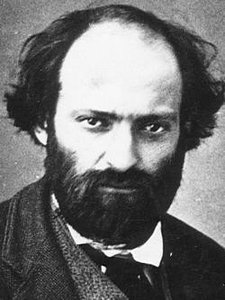
Paul Cézanne
1839 - 1906, France
Quick facts about Paul Cézanne
- Artistic Movement Or Style: Post-Impressionism
- Artists Or Movements Influenced By This Artist:
- Cubism
- Fauvism
- Pablo Picasso
- Henri Matisse
- Artists Who Influenced This Artist:
- Paul Gauguin
- Georges Seurat
- Full Name: Paul Cézanne
- Nationality: French
- Notable Artworks:
- The Pond at Jas de Bouffan
- Portrait of Émile Zola
- Mont Sainte-Victoire series
- Bathers
- Place Of Birth: Aix-en-Provence, France
- Date Of Birth: 1839
- Date Of Death: 1906
Artist Biography
The Architect of Form
Paul Cézanne was born in Aix-en-Provence, France, into a family with deep roots in the local banking industry. His father, Louis-Auguste Cézanne, helped found the Banque Cézanne et Cabassol, providing a level of financial stability that many of his contemporaries lacked. This security allowed Paul to move away from the legal studies his father had planned for him. Though he initially studied law at the University of Aix-en-Provence, he abandoned those studies in 1860 to focus entirely on painting. His early years were spent in the company of friends like Émile Zola, and together they shared a childhood of swimming and fishing along the banks of the Arc River.
The early works of Cézanne often carried the weight of Romanticism, utilizing dark palettes and heavy, expressive brushwork. He was influenced by the dramatic tonal contrasts found in the tradition of Eugène Delacroix. However, his approach began to shift as he moved toward Paris. He sought a way to move beyond the fleeting light captured by the Impressionists. Instead of merely recording a passing moment, he wanted to find the permanent structure within nature. He looked at a mountain or a piece of fruit and saw the underlying geometry—the cones, spheres, and cylinders that form the bones of the world.
A New Way of Seeing
Cézanne developed a technique characterized by small, repetitive, and constructive brushstrokes. He layered these patches of color to build up volume and texture, creating a sense of solidity. This method allowed him to explore spatial relationships without relying on traditional single-point perspective. In many of his compositions, objects appear independent within the space, often presented from multiple viewpoints at once. This rejection of classical perspective rules helped create a new pictorial language.
His subject matter was deeply tied to his surroundings in Provence. The Mont Sainte-Victoire became a recurring presence in his work, appearing in approximately eighty different paintings and watercolors over many years. He also found profound meaning in the simplest objects. His still lifes, featuring items like apples, jars, and cups, were not mere decorations but intense studies of light, shadow, and mass. Through these works, he demonstrated how color modulation could define shape without the need for traditional shading.
- The Bathers (Les Grandes Baigneuses)
- Mont Sainte-Victoire series
- Still Life with Apples and a Pot of Primroses
- Portrait of Émile Zola
- The Card Players
A Lasting Influence
By the time of his death in 1906, Cézanne had fundamentally altered the direction of modern painting. His emphasis on geometric form and multiple perspectives provided a foundation for the Cubist movement. Artists such as Pablo Picasso and Georges Braque drew heavily from his analytical approach to nature. His use of bold, non-naturalistic color also left an impression on the Fauvists, including Henri Matisse. He moved art away from the imitation of reality toward a construction of visual experience based on perception and structure.
§ 5Comparanda
Related Artworks


§ 6Questions
§ 7Cite this entry
AllPaintingsStore.com, “Paul Cézanne, Bathsheba (1890)”, https://allpaintingsstore.com/en/art/paul-cezanne-bathsheba-8XYPXB-en/ (accessed 1 October 2026).
§ 8The reproduction
Hand Made Oil Reproduction
Hand-painted oil on canvas in your size and frame, made to order by our artists. ( Switch to Print Switch to Digital Image)
It is specified on the order sheet in the margin; the present state of that sheet reads as follows.

Bathsheba
Reproduction Medium
Reproduction Size
-

Elite Senior Artist
More detail, finesse, and extra production time
-

Reproduction Frame
-
-
For artworks or reproductions larger than 105 cm (approximately 41 inches) on any side, the frame will be shipped as a kit, disassembled. This method ensures safe delivery and prevents damage during transport.
Professional assembly required - this is not a DIY product.
The kit must be assembled and the canvas stretched by an experienced professional framer, using wood glue (not supplied), a canvas stretching plier and clamps to hold the bars square while the glue dries. Incorrect assembly or uneven canvas tension can permanently damage the artwork and is not covered by our warranty.
 For artworks or reproductions larger than 105 cm (approximately 41 inches) on any side, the frame will be shipped as a kit, disassembled. This method ensures safe delivery and prevents damage during transport.
All solid wood bars are included, precisely cut to size.
Assembled with the screws provided, plus wood glue for the corner joints, which is not supplied and must be sourced by your framer.
Professional tools are required and not included: a canvas stretching plier (tensioner) and clamps to hold the bars square while the glue dries.
Important:
The corner joints require wood glue, the bars must be held with clamps until the glue is fully dry, and tightening the canvas on the assembled frame requires a canvas stretching plier. None of these are included in the kit. Please arrange an experienced professional framer before ordering this size.

Nameplate
-
-

Protective Varnish
Glossy Varnish (enhances colors, protects against light/moisture)
-

Customize My Artwork
Examples of what can be changed: Replace face with customer photo; Add pet (e.g., replace cat with dog); Include hidden message in background; Change background landscape or elements.
-

Urgent
Worldwide Delivery () in 3/4 weeks instead of standard 5 weeks. (29 October). No compromise on quality.
-
Express Shipping
Worldwide Delivery () in 5 weeks. (5 November).
Included
Total Price
$ 258
Included with every order
- Free Worldwide Express Shipping
- High-Quality Linen Canvas
- Full Shipping Insurance
- Customs Tax Refund Guarantee
- True Color Matching Guarantee
- 100-Day Return Policy (Defects Only)
- 100% Money-Back Guarantee
- Bulk Discount Offer


