


 Preview
 Send
Send Share
Share
 Details
 Guide
Guide

 Download
 Similars
 X-Ray
X-Ray Diaporama
 Q&A
Q&A Stats
StatsHalme

- 29.0 x 21.0 cm


 Read More
Get a print-ready file that goes far beyond the web preview. Every digital image we sell comes from a high-resolution master in our stock database — usually 5,000 to 15,000 pixels wide — so you can print large, crop tightly, or reproduce fine detail with confidence.
No file leaves our studio untouched. A digital expert checks the colors against the original painting and corrects them if needed, then improves clarity and detail with professional retouching tools — always staying faithful to the artist's brushwork and style. The result is an image that looks like the painting, not like a filtered scan.
You approve before you're done: our expert sends the image by e-mail within 72 hours for your review. Not satisfied? Ask for improvements or corrections, or request a refund if the quality falls short.
This is the quality relied on by publishers, design studios, galleries and print shops.
Digital Image
Download a high-resolution file for personal display, printing, and creative projects. ( Switch to Print Buy Hand Made Painting)
Included in Every Digital Image Order
Expert Digital Delivery, Guaranteed
When you choose AllPaintingsStore.com, you're not just getting an image - you're receiving a professionally enhanced digital artwork, crafted with precision and backed by a satisfaction guarantee. Here's everything that comes with your order, automatically:

Fast Email Delivery
Your high-resolution digital image file will be emailed to you within 72 hours of ordering - ready for immediate use.

AI-Enhanced Digital File
Your artwork is professionally optimized using advanced AI tools and manual editing, ensuring maximum detail, clarity, and color accuracy.

Free Lifetime Re-Delivery
Accidentally deleted or lost your file? No worries - we'll resend it to you anytime, free of charge.

No Import Fees - Ever
Enjoy your artwork instantly with zero customs, duties, or delivery fees - digital downloads are always tax-free.

Color Accuracy Guarantee
We ensure your digital image reflects the original colors as closely as possible using professional tools and color management.

100-Day Satisfaction Guarantee
If you're not satisfied with your digital image, we'll revise it or refund 100% within 100 days - no questions asked.

100% Money-Back Guarantee
Not satisfied? Get a full refund within 100 days of receiving your digital file - no questions asked.

Bulk Order Discounts
Buy 3 images, save 10% - Buy 5, save 15% - Buy 10+, save 20%. Great for creative projects, galleries, and agencies.
A Symphony of Yellow and Shadow: The Luminous World of Paul Klee’s Halme
In the vast landscape of twentieth-century abstraction, few works possess the immediate, sun-drenched vitality of Paul Klee’s “Halme,” painted in 1940. This deceptively simple canvas, a delicate composition measuring just 29 x 21 cm, acts as a window into the artist's late-career mastery of light and rhythm. At first glance, the viewer is greeted by a radiant, luminous yellow background that seems to pulse with an inner warmth, much like a summer afternoon captured in a single moment. Across this golden expanse, Klee has meticulously placed black shapes and fine, intersecting lines that dance across the surface, creating a visual melody that resonates far beyond the physical boundaries of the frame.
To look upon “Halme” is to witness the culmination of Klee’s lifelong obsession with the intersection of music and painting. As the son of a music teacher, Klee approached the canvas not merely as a space for pigment, but as a staff for visual notation. The rhythmic arrangement of black elements suggests a sense of movement—a silent choreography where each line acts as a melodic note and each shape as a sudden, bright chord. This technique draws heavily from his time at the Bauhaus, where he explored the profound psychological effects of color theory and geometric harmony. For the discerning collector or interior designer, this piece offers a sophisticated balance of energetic movement and structural stability, making it an ideal focal point for spaces that require both intellectual depth and a sense of uplifting brightness.
Symbolism and the Echoes of Folklore
Beyond its striking aesthetic, “Halme” carries a weight of meaning rooted in the artist's Swiss heritage. The title itself, translating to “bells” or “stems,” evokes a sense of connection to the natural world and the subtle sounds of the landscape. In Swiss folklore, bells are often symbols of communication, spiritual awakening, and the marking of time. Klee utilizes these scattered black forms to represent fragments of memory or perhaps visual echoes of sound, inviting the viewer into a state of deep contemplation. There is a haunting beauty in how the dark, precise shapes interact with the expansive yellow; they appear as shadows cast by unseen objects, or perhaps as the skeletal remains of a forgotten melody.
<The technique employed—a delicate balance of watercolor and gouache—is essential to the painting's emotional impact. The translucency of the watercolor allows the yellow light to glow from within the paper, while the opacity of the gouache provides the necessary weight to the black structural elements. This interplay between transparency and density creates a subtle illusion of depth, transforming a flat surface into a multidimensional experience. For those seeking to bring a piece of art history into a contemporary home, a high-quality reproduction of “Halme” offers more than just decoration; it provides an invitation to engage with the profound, quiet magic of an artist who saw the hidden rhythms of the universe in every stroke of his brush.
Questions & Answers
When was "Halme" made?
"Halme" dates from 1940. The date places the work within Paul Klee's career and its era.
What national origin stands behind the Abstract Expressionism of "Halme"?
The Abstract Expressionism work "Halme" was made by an artist born in Switzerland.
Which reproduction size is suggested for "Halme" by Paul Klee?
A small reproduction is suggested for "Halme" by Paul Klee. Size can be adjusted while keeping the proportions.
Related Artworks


Artist Biography
The Early Life of Paul Klee
Born on December 18, 1879, in Münchenbuchsee, near Bern, Switzerland, Paul Klee grew up in a home defined by the discipline of music. He was the second child of Hans Wilhelm Klee, a German music teacher, and Ida Marie Klee, a Swiss singer. The sounds of his parents' professions likely shaped the atmosphere of his childhood, providing a rhythmic foundation that would follow him into his later years. By the age of eleven, Klee was already showing a significant talent for the violin, earning an invitation to play with the Bern Music Association.
Despite his musical aptitude, a different path began to call to him as he grew older. In 1898, he moved to Munich to begin studying at the Academy of Fine Arts. Between 1898 and 1901, he trained under Heinrich Knirr and Franz von Stuck. These early years of formal study were a period of intense learning and struggle. While he showed a natural skill for drawing, he often found the use of color to be a difficult hurdle to clear during those first cold winters in Munich.
A Journey Toward Abstraction
The path toward a new way of seeing was not a straight line. In the early years, Klee traveled to Italy from October 1901 to May 1902 with Hermann Haller. While the experience was significant, he later noted that the struggle with color remained a difficult, long-term challenge. He found himself caught between the classical traditions of the past and a growing desire to find a more personal visual language. For a long time, his work remained largely focused on drawing and black-and-white compositions, often leaning into the grotesque or the satirical.
A profound shift occurred in 1914 during a trip to Tunisia with August Macke and Louis Moilliet. The limpid light of North Africa changed everything for him. In that intense sunlight, he began to detach color from its duty to describe physical objects. Instead of using color to mimic the world, he used it as an independent force. This realization provided the push he needed to move toward abstraction. By 1915, he had turned his back to nature and never painted after the model again, choosing instead to express the world through his own internal symbols and imagination.
- Hammamet with Its Mosque (1914)
The Bauhaus and Teaching Years
In 1920, a new chapter began when Walter Gropius invited Klee to join the faculty of the Bauhaus. He spent the next decade at the school, working alongside Wassily Kandinsky. This period was perhaps his most prolific, as nearly half of his total output was produced during these ten years. His time at the Bauhaus allowed him to explore the relationship between color and form with a scientific precision that he documented extensively in his notebooks. These writings became essential for anyone trying to understand the mechanics of modern composition.
The stability of his teaching career was interrupted by the political shifts in Germany. In 1933, Klee was dismissed from his position at the Academy of Fine Arts in Düsseldorf due to the rise of the National Socialist regime, which classified his work as “degenerate.” This forced him to leave the academy and return to his native Bern. The shift in his surroundings and the growing political turmoil began to change the tone of his work, moving away from the whimsy of his earlier years toward a more somber and heavy perspective.
Technique and Artistic Style
Klee was a natural draftsman who possessed a deep, almost scientific understanding of color theory. His approach to a canvas was rarely about simple imitation; instead, he built his compositions through a highly individual style influenced by expressionism, cubism, and surrealism. He often worked on a small scale, using delicate media like watercolor on gauze or paper with a chalk ground. This experimentation allowed him to explore how light and pigment interacted in ways that traditional oil painting could not capture. He was also a prolific printmaker, utilizing zinc-plate etchings and lithographs to expand his visual language.
There was a certain playfulness in his imagery that felt both sophisticated and simple. He frequently populated his works with recurring motifs: small stick figures, suspended fish, and moon faces. These symbols were often arranged in grids or patterns that felt like visual music. His technical curiosity even led him to unconventional methods, such as using a needle to draw on blackened glass, a technique he used to create fifty-seven distinct works. This method required a steady hand and a precise understanding of how light would catch the scratches in the dark surface.
- With the Egg (1917)
- Fish Magic (1925)
- Static-Dynamic Gradation (1923)
- Comedians' Handbill (1938)
Key Works and Notable Compositions
Klee’s ability to translate the invisible into something visible is perhaps most evident in his mid-career works. In 1915, he painted Woman Knitting, a piece that captures a sense of quiet, rhythmic movement. As his fascination with the relationship between color and form deepened, he produced Fish Magic in 1925, a work that demonstrates his ability to use simple shapes to suggest something much more complex and mysterious. His compositions often relied on a specific kind of visual music, where lines and colors acted like notes on a staff.
By the late 1920s, his work took on a more structured, almost architectural quality. Ships in the Dark, created in 1927, shows his skill at balancing light and shadow to create a sense of space. As the political climate in Europe grew heavier, his art followed suit. The whimsy of his earlier years began to fade, replaced by a more somber tone. This shift is visible in Comedians' Handbill from 1938, where the lines become thicker and the forms more generalized. Even in his final years, as his health declined, he continued to find ways to express the gravity of his surroundings, as seen in the 1939 work Angel Applicant.
- Woman Knitting (1915)
- Fish Magic (1925)
- Ships in the Dark (1927)
- Comedians' Handbill (1938)
- Angel Applicant (1939)
Later Years and Death
The political climate in Europe began to darken significantly in the 1930s. In 1933, the National Socialists declared his art to be "degenerate," a decision that forced him out of his teaching position at the Academy of Fine Arts in Düsseldorf. This dismissal ended a period of relative stability and sent him back to his native Bern. As the shadows of war and political turmoil grew, his work began to change. The lightness of his earlier years faded, replaced by a more somber and melancholic perspective. His lines grew heavier, often turning into thick black bars, and his forms became more generalized and broad.
This shift in his painting reflected the increasing gravity of the world around him. The whimsicality that once defined his compositions gave way to a sense of weight and seriousness. Even as his own health declined, he continued to produce work that captured the tension of the era. His later pieces often felt more stripped down, using simpler colors and more substantial shapes to express a sense of loss or gravity. He died on June 29, 1940, in Muralto, Switzerland.
- Comedians' Handbill (1938)
- Angel Applicant (1939)
Where to See His Works Today
To find the traces of his prolific output, one might travel to Bern, Switzerland. The Zentrum Paul Klee holds a significant presence of his work, offering a space to encounter the visual language he developed throughout his life. Nearby, the Kunstmuseum Bern also preserves pieces of his history, including works like To Parnassus.
His influence reaches far beyond Switzerland. In New York, the Metropolitan Museum of Art maintains a substantial collection, including ninety works that were gifted by Heinz Berggruen. These pieces allow viewers to see the evolution of his thought through his specific use of color and form. In London, the Tate collection holds several of his compositions, such as Walpurgis Night.
- To Parnassus
- Walpurgis Night
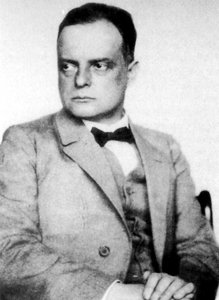
Paul Klee
1879 - 1940 , Switzerland
Quick Facts
- Artistic Movement Or Style: Expressionism, Cubism, Surrealism
- Artists Who Influenced This Artist:
- Pablo Picasso
- Georges Braque
- Robert Delaunay
- Maurice de Vlaminck
- Vincent van Gogh
- Paul Cézanne
- Georges Seurat
- Full Name: Paul Klee
- Nationality: German and Swiss
- Notable Artworks:
- Woman Knitting
- With the Egg
- Flower myth
- Rose Garden
- Redgreen and Violet-Yellow Rhythms
- Arctic Dew
- Women
- City Picture with Red and Green Accents
- The messenger of autumn
- Landscape with Yellow Birds
- Puppet theater
- Structural II
- Fish Magic
- May Picture
- The Goldfish
- Collection of Figurines
- Flora on sand
- Strong Dream
- Fire evening
- Individualized Altimetry of Stripes
- To Parnassus
- Botanical Theater
- Legend of the Nile
- Super-Chess
- Comedians' Handbill
- Flora on rocks Sun
- Death and fire
- Woman in Peasant Dress
- Gauze
- Place Of Birth: Münchenbuchsee, Switzerland
- Date Of Birth: 1879
- Date Of Death: 1940