Money-Back Guarantee · 100 days Free Worldwide Delivery
449,564artworks 30,613artists 4,660museums 32languages
Catalogue entry

Jug

Oil On Canvas.

Fig. 1. Pierre-Auguste Renoir, Jug. Shown as the reproduction you are specifying: , .

§ 1Catalogue data

§ 2Abstract

Collectible Description

Discover Pierre-Auguste Renoir’s ‘Jug,’ a captivating Impressionist still life brimming with color and light. Explore its artistic significance & beauty in this hand-painted reproduction.

Artist Biography

Renoir was an Impressionist master known for Luncheon of the Boating Party. Discover his luminous paintings today.

§ 3Commentary

The Quiet Elegance of Renoir’s Jug

Pierre-Auguste Renoir's “Jug,” painted circa 1915, isn’t merely a still life; it’s a carefully orchestrated tableau of domesticity and subtle beauty—a testament to the Impressionist artist’s ability to elevate the commonplace into something profoundly evocative. This oil on canvas captures a simple white and blue ceramic jug resting upon a table, surrounded by the familiar objects of everyday life: books, a bottle, and hints of other vessels. Yet, within this seemingly straightforward arrangement lies a wealth of artistic intention and a deep exploration of light, color, and the quiet pleasures of domesticity. Renoir’s masterful brushwork—characterized by soft, broken strokes—creates an atmosphere of warmth and intimacy, drawing the viewer into a scene that feels both familiar and subtly dreamlike. The colors are rich and luminous, reflecting the artist's signature approach to capturing the fleeting effects of light on surfaces. Notice how he uses subtle variations in tone to suggest the curves and textures of the jug, the sheen of the bottle, and the worn surface of the table—details that contribute significantly to the painting’s overall sense of realism and depth.

Impressionism: Capturing a Moment

Renoir's “Jug” firmly establishes itself within the broader context of Impressionist art. Emerging in the late 19th century, Impressionism sought to move beyond traditional academic styles by prioritizing the artist’s subjective experience of light and color. Unlike the polished surfaces and carefully constructed narratives favored by earlier painters, Impressionists like Renoir aimed to capture the *impression* of a scene—the fleeting moment, the play of sunlight, the subtle nuances of perception. This is evident in “Jug,” where the focus isn't on precise representation but rather on conveying the feeling of warmth and tranquility associated with a simple domestic setting. The painting echoes the work of other Impressionist masters like Paul Cézanne and Gustave Courbet, both of whom explored still life subjects with remarkable sensitivity to form and color. Cézanne’s “Still Life, Delft vase with flowers” shares Renoir's interest in capturing the essence of objects through careful observation and a focus on light and shadow, while Courbet’s “Still Life: Apples and Pears” demonstrates a similar commitment to depicting the beauty of ordinary subjects. These comparisons highlight Renoir’s place within a vibrant artistic lineage—one that valued direct observation, innovative techniques, and a celebration of everyday life.

Symbolism and Domesticity

Beyond its technical merits, “Jug” is rich in symbolic meaning. The jug itself represents not just a functional object but also a symbol of hospitality, nourishment, and the comforts of home. Its simple form and unassuming presence suggest a quiet dignity—a celebration of the beauty found in the ordinary. The surrounding objects – the books hinting at intellectual pursuits, the bottle suggesting refreshment – further enrich this sense of domesticity. The placement of these items on the table creates a balanced composition, reflecting a harmonious relationship between man and his environment. It’s important to note that Renoir was deeply interested in portraying women and their lives, often capturing scenes of leisure and social interaction. This painting can be viewed as part of this broader exploration of feminine beauty and domesticity—a theme that resonated strongly with the artist throughout his career.

A Legacy of Light and Color

Pierre-Auguste Renoir’s “Jug” stands as a quintessential example of Impressionist art, showcasing the artist's unique style and composition. Its enduring appeal lies in its ability to evoke a sense of warmth, tranquility, and quiet beauty—qualities that continue to resonate with viewers today. The painting’s masterful use of light, color, and brushwork creates an immersive experience, inviting us to pause and appreciate the simple pleasures of everyday life. It's a reminder that even the most ordinary objects can be transformed into works of art through the discerning eye and skillful hand of a master artist. For those seeking a high-quality reproduction of this iconic painting, AllPaintingsStore offers meticulously crafted prints that faithfully capture the original’s beauty and nuance—allowing you to bring Renoir's vision into your home or office. Explore our collection today and discover the timeless elegance of “Jug.”

Questions & Answers

How many people view "Jug"?

The Stats page of "Jug" by Pierre-Auguste Renoir presents public visit statistics: monthly visits of this artwork, a comparison with the artist's most viewed works, and where its visitors come from.

Where does "Jug" stand among Pierre-Auguste Renoir's recurring subjects?

"Jug" depicts still life, renoir, jug, flowers, impressionism, vase, composition, while Pierre-Auguste Renoir's recorded themes are rubens & watteau, courbet’s realism, manet’s modern life, impressionist color, everyday objects”, “domestic scene”, “light and shadow” ], "still life masterpiece". Comparing the two shows how the work relates to the artist's usual subjects.

Does "Jug" by Pierre-Auguste Renoir use strong contrasts or soft harmonies?

The color analysis of "Jug" by Pierre-Auguste Renoir records a gentle contrast and a strong color unity harmony.
§ 4The artist

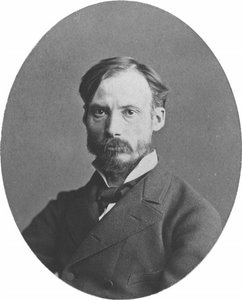
Pierre-Auguste Renoir

Pierre-Auguste Renoir

1841 - 1919, France

Quick facts about Pierre-Auguste Renoir

  • Artistic Movement Or Style: Impressionism
  • Artists Or Movements Influenced By This Artist: ['Impressionism']
  • Artists Who Influenced This Artist:
    • Gustave Courbet
    • Édouard Manet
    • Peter Paul Rubens
    • Jean-Antoine Watteau
  • Full Name: Pierre-Auguste Renoir
  • Nationality: French
  • Notable Artworks:
    • Dance at Le Moulin de la Galette
    • Luncheon of the Boating Party
    • After the Bath
  • Place Of Birth: Limoges, France
  • Date Of Birth: 1841
  • Date Of Death: 1919

Artist Biography

A Childhood of Porcelain and Light

In the provincial streets of Limoges, France, a young boy named Pierre-Auguste Renoir began his life immersed in the delicate precision of craftsmanship. His father was a tailor, and the family eventually moved to Paris in 1845, seeking better prospects in the bustling capital. At thirteen, necessity led him into an apprenticeship as a porcelain painter, a role that demanded a keen eye for detail and a steady hand. This early work with ceramics instilled in him a lasting appreciation for color and texture. While his days were spent decorating fine china, his spirit often wandered toward the galleries of the Louvre. There, he studied the techniques of the Old Masters, absorbing the way they handled light and form.

The path from decorative art to the canvas was paved by a desire for something more expressive than mere reproduction. After leaving the porcelain factory, he sought formal training at the studio of Charles Gleyre. It was within this creative circle that he met fellow students such as Claude Monet, Alfred Sisley, and Frédéric Bazille. These friendships formed the bedrock of a new way of seeing. They shared a common goal to move away from the rigid rules of academic painting, preferring instead to capture the fleeting atmosphere of a moment. His early successes, like Lise with a Parasol in 1867, began to show this emerging interest in the natural world and the soft glow of outdoor light.

The Pulse of Parisian Life

As the years progressed, Renoir became a central figure in the movement known as Impressionism. He participated in the first exhibition of this group in 1874, displaying six paintings that challenged the traditional art establishment. His work during this period focused on the joy found in everyday social gatherings and the lively energy of the city. In works such as Dance at Le Moulin de la Galette, he used broken brushstrokes to mimic the way sunlight filters through leaves, creating a sense of movement and warmth. He did not seek grand historical narratives; rather, he looked for beauty in the simple pleasure of a summer afternoon or a group of friends enjoying a meal.

The subject matter of his canvases often celebrated the human form and the softness of skin. He had a particular talent for portraying feminine beauty, drawing inspiration from the sensual lines of Peter Paul Rubens and Jean-Antoine Watteau. His paintings, such as Luncheon of the Boating Party, captured the conviviality of life on the Seine, with figures bathed in a natural, luminous glow. This period of his life was defined by an embrace of the ephemeral, focusing on how light dances across fabric and settles upon a garden landscape.

A Shift Toward Form and Final Years

In the 1890s, Renoir’s approach to the canvas underwent a significant change. Following travels to Italy, where he studied the works of Raphael and Titian, he began to move away from the loose, blurry edges of his youth. He sought a more structured and classical method, emphasizing volume, contour, and clear lines. This transition toward a more disciplined technique is evident in his later works, such as The Great Bathers, which possess a sculptural quality. Despite the physical struggle of rheumatoid arthritis, which eventually forced him to paint with a brush attached to his hand, his dedication to his vision never wavered.

He eventually settled in Cagnes-sur-Mer, France, at the Domaine des Collettes, a place filled with olive groves and orange trees that provided fresh inspiration. In these later years, his palette remained warm, even as his style became more formal. He continued to produce portraits, landscapes, and still lifes until his death in 1919. His legacy remains tied to his ability to find divinity in the mundane, leaving behind a body of work that continues to reflect the warmth and light of the human experience.

§ 5Comparanda

§ 6Questions

Quick Facts

  • Title: Jug
  • Medium: Oil on canvas
  • Movement: Impressionism
  • Artistic style: Still life, Intimate
  • Artist: Pierre-Auguste Renoir

Art Quiz

There is only one correct answer for each question.

Question 1:
What artistic movement is Pierre-Auguste Renoir’s ‘Jug’ primarily associated with?
Question 2:
The painting features a vase filled with what objects, contributing to its still life composition?
Question 3:
Which of the following artists’ works does Renoir's 'Jug' share a similar focus on capturing everyday objects with?
Question 4:
What is a key characteristic of Renoir’s style as demonstrated in ‘Jug’, contributing to its warm and intimate feel?
Question 5:
The painting’s composition is reminiscent of still lifes created by which of the following artists?

§ 7Cite this entry

AllPaintingsStore.com, “Pierre-Auguste Renoir, Jug”, https://allpaintingsstore.com/en/art/pierre-auguste-renoir-jug-8EWPVR-en/ArtistReproduction/ (accessed 10 October 2026).

§ 8The reproduction

Hand Made Oil Reproduction

Hand-painted oil on canvas in your size and frame, made to order by our artists. ( Switch to Print Switch to Digital Image)

It is specified on the order sheet in the margin; the present state of that sheet reads as follows.

Jug

Reproduction Medium

Reproduction Size

-

Elite Senior Artist

More detail, finesse, and extra production time

-

Reproduction Frame

-

-

For artworks or reproductions larger than 105 cm (approximately 41 inches) on any side, the frame will be shipped as a kit, disassembled. This method ensures safe delivery and prevents damage during transport.

Professional assembly required - this is not a DIY product.
The kit must be assembled and the canvas stretched by an experienced professional framer, using wood glue (not supplied), a canvas stretching plier and clamps to hold the bars square while the glue dries. Incorrect assembly or uneven canvas tension can permanently damage the artwork and is not covered by our warranty.

  • All solid wood bars are included, precisely cut to size.

  • Assembled with the screws provided, plus wood glue for the corner joints, which is not supplied and must be sourced by your framer.

  • Professional tools are required and not included: a canvas stretching plier (tensioner) and clamps to hold the bars square while the glue dries.

Important:
The corner joints require wood glue, the bars must be held with clamps until the glue is fully dry, and tightening the canvas on the assembled frame requires a canvas stretching plier. None of these are included in the kit. Please arrange an experienced professional framer before ordering this size.

Nameplate

-

-

Protective Varnish

Glossy Varnish (enhances colors, protects against light/moisture)

-

Customize My Artwork

Examples of what can be changed: Replace face with customer photo; Add pet (e.g., replace cat with dog); Include hidden message in background; Change background landscape or elements.

-

Urgent

Worldwide Delivery () in 3/4 weeks instead of standard 5 weeks. (7 November). No compromise on quality.

-

Express Shipping

Worldwide Delivery () in 5 weeks. (14 November).

Included

Total Price

$ 258

Included with every order

  • Free Worldwide Express Shipping
  • High-Quality Linen Canvas
  • Full Shipping Insurance
  • Customs Tax Refund Guarantee
  • True Color Matching Guarantee
  • 100-Day Return Policy (Defects Only)
  • 100% Money-Back Guarantee
  • Bulk Discount Offer
Order sheet