


 Preview
 Send
Send Share
Share
 Details
 Guide
Guide

 Download
 Similars
 X-Ray
X-Ray Diaporama
 Q&A
Q&A Stats
StatsSt cecilia (detail)

 Read More
Giclée / Art Print
Museum-quality giclée or canvas print with fast production and flexible finish options. ( Buy Hand Made Painting Switch to Digital Image)




P118B $10

P118H $10

P118W $10

P438Z $10

P508JH $12

P508YH $12

P805H $10

P805Z $10

P919BZ $10

P919G $10

P919XJ $10

P959ZH $10

P968JZ $12

W106C $8

W218G $10

W218JH $8

W218Y $10

W307PJ $10

W316G $10

W316PJ $8

W316Y $10

W398PJ $8

W4111J $10

W500HY $15

W500JH $15

W692G $12

W849H $8

W940BG $15

W953PJ $8




Pick from our preset sizes that match the artwork's original proportions.

Type the width and the height you need, to fit your frame or your wall. A print can only be cut, never made bigger than the picture, so a size with a different shape loses a part of the image. We send you a digital mockup to approve before we print anything. The picture shown on this page does not show the real cut — only the mockup does.
Worldwide Delivery () in 2 weeks instead of standard 4/5 weeks. (9 November)

Free Worldwide Express Shipping

High-Quality Linen Canvas

Full Shipping Insurance

Customs Tax Refund Guarantee

True Color Matching Guarantee

100-Day Return Policy (Defects Only)

100% Money-Back Guarantee

Bulk Discount Offer
 Glass option is only available in size under 110 CM

St cecilia (detail)
Giclée / Art Print
Reproduction Size
-


Total Price
$ 65
A Glimpse into Urbino’s Renaissance Soul: Examining Raphael's ‘St Cecilia’ Detail
The painting “St Cecilia,” a captivating fragment from Raphael’s oeuvre, offers more than just visual beauty; it embodies the intellectual fervor and artistic innovation characteristic of the Urbino Renaissance. Created sometime around 1512-1513 during his illustrious Florentine period, this portrait transcends mere representation, delving into themes of piety, contemplation, and idealized femininity—elements deeply rooted in humanist ideals prevalent at the time.- Subject Matter & Composition: At its core lies a serene depiction of Saint Cecilia, revered as the patron saint of music and depicted here with an air of dignified repose. She is accompanied by a man – likely Federico da Montefeltro himself – whose presence underscores the Duke’s patronage of the arts and reinforces the painting's connection to Urbino’s cultural elite.
- Style & Technique: Raphael’s masterful handling of chiaroscuro—the dramatic interplay between light and shadow—is immediately apparent. Observe how the artist skillfully sculpts Cecilia’s form, emphasizing her delicate musculature and conveying a sense of ethereal grace. The muted palette contributes to an atmosphere of solemn contemplation, prioritizing subtlety over ostentation.
Historical Context: Urbino Under Federico da Montefeltro’s Vision
Federico da Montefeltro’s reign marked a pivotal moment in Renaissance history. Recognizing the transformative power of art and scholarship, he established Urbino as a beacon of humanist culture, attracting artists, poets, and thinkers from across Europe. Raphael benefited enormously from this environment, absorbing influences from Leonardo da Vinci and Michelangelo—artists who similarly championed innovation and pursued ambitious artistic endeavors. The Duke’s unwavering commitment to fostering creativity ensured that Urbino remained at the forefront of artistic experimentation.- Symbolism: Cecilia's posture – gazing upwards with a serene expression – speaks volumes about Christian piety and spiritual aspiration. The vase held in her hand symbolizes purity and devotion, mirroring the saint’s unwavering faith. Furthermore, the inclusion of additional figures—a man beside Cecilia and two others flanking the composition—suggests a broader narrative exploring themes of divine grace and human virtue.
- Emotional Impact: Raphael's depiction aims to evoke feelings of tranquility and reverence. The artist’s meticulous attention to detail – from the folds of Cecilia’s veil to the subtle nuances of her gaze – invites viewers into a moment of contemplative stillness, prompting reflection on faith and beauty.
Rediscovering Raphael's Legacy Through Reproduction
A high-quality reproduction of “St Cecilia” allows art enthusiasts to experience Raphael’s genius firsthand. AllPaintingsStore.com offers meticulously crafted reproductions that faithfully capture the painting’s luminous quality and nuanced tonal range, ensuring that its artistic essence remains accessible to collectors and interior designers alike. Bringing this masterpiece into your home transforms it from a historical artifact into an enduring symbol of Renaissance artistry—a testament to Raphael's unparalleled skill and his profound contribution to Western art history.Questions & Answers
Which artist and which style stand behind "St cecilia (detail)"?
"St cecilia (detail)" was created by Raphael in the Renaissance style. Artist and movement identify the work's tradition.
How is the color composition of "St cecilia (detail)" by Raphael built?
In "St cecilia (detail)", a statement contrast is paired with a balanced harmony harmony.
Is "St cecilia (detail)" more bright or more dark overall?
"St cecilia (detail)" is balanced overall, and its luminance is soft shadow.
Related Artworks


![Stanze Vaticane - The Parnassus (detail) [05] — Raphael, High Renaissance](/media/artworks/images-thumb/60/02/6002d0747e1f5c9679776e473ff12a11.jpg)

![Stanze Vaticane - La Disputa (detail) [08] — Raphael, Renaissance](/media/artworks/images-thumb/3d/82/3d824970f573582a9a29e0e167a781f5.jpg)


Artist Biography
The Life and Identity of Raphael
Raphael, known to history by several names including Raffaello Sanzio, Raffaello Santi, and Raffaello Sanzio da Urbino, was a central figure of the Italian High Renaissance. His life was defined by a dual mastery of painting and architecture, a versatility that allowed him to move seamlessly between the intimate scale of a portrait and the monumental demands of papal construction. He was born in Urbino, Italy, on April 6, 1483, into a world of intellectual and artistic activity.
His career was marked by an immense productivity that required the management of a large workshop to meet the needs of his patrons. This professional capacity was matched by a social grace that allowed him to navigate the highest circles of the papal court. He moved through the major artistic centers of Italy, eventually settling in Rome, where his influence on the physical and visual landscape of the city was profound. He was a man of significant social standing, often engaging with the political and religious leaders of his age.
The arc of his life was cut short in Rome, Papal States, Italy. He died on April 6, 1520, at the age of 37. His passing was felt deeply within the papal court, marking the end of a career that had already reshaped the standards of classical composition and architectural design. He left behind a vast body of work that remains a primary reference for the study of Renaissance ideals.
Early Life, Family and Training
The quiet, intellectual atmosphere of Urbino provided the foundation for the young Raffaello Sanzio. He was born into a world of courtly refinement, the son of Giovanni Santi and Magia di Battista Ciarla. His father, a painter for the Duke, ensured that the boy’s early years were steeped in the humanist traditions of the Italian courts. This environment offered more than just a home; it provided a window into the advanced artistic ideas flowing through central Italy. When tragedy struck and his father passed away in 1494, the boy was only eleven. This loss forced a premature maturity upon him, as he found himself tasked with managing the family workshop.
His formal artistic education took him to the workshop of Pietro Perugino in Perugia. Under this master, he absorbed the Umbrian style, a method defined by soft modeling and serene religious scenes. The training was rigorous and effective. By the time he was recognized as an independent master around 1500, his hand already showed a certain clarity and ease. He moved through the cities of northern Italy, gathering knowledge like a traveler collecting coins, before the pull of larger artistic centers began to reshape his vision.
The Florentine Period and Artistic Growth
Upon his arrival in Florence in 1504, the young painter entered a city defined by the presence of giants. He did not merely exist alongside the works of Leonardo da Vinci and Michelangelo; he absorbed them. His development was shaped by a careful study of their distinct approaches, alongside the influences of Fra Bartolommeo and Masaccio. This period was less a departure from his Umbrian roots and more a sophisticated synthesis of the Florentine style. He took the anatomical precision and dramatic weight of his contemporaries and integrated them into a more balanced, clear visual language.
This era saw him refine his ability to capture the human presence through both religious and secular lenses. Between 1504 and 1507, he produced a series of Madonnas that demonstrated a growing mastery of composition and emotional clarity. During these years, he also established himself as a noted portraitist, moving beyond simple likeness to capture a sense of dignity in his subjects. His work from this time reflects a transition from the gentler traditions of his apprenticeship toward the monumental clarity that would later define his career in Rome.
- Marriage of the Virgin (1504)
- Young Man with an Apple (1505)
- St. George and the Dragon (1506)
- La Belle Jardinière (1507)
The Roman Years and Papal Patronage
The summons from Pope Julius II in 1508 altered the course of Raphael's life, drawing him from the competitive atmosphere of Florence to the monumental scale of Rome. He arrived in the Eternal City not merely as a painter, but as a central figure in the visual language of the Papacy. His presence in the Vatican was marked by an immense productivity that saw him become the most favored artist in Rome. He was tasked with the decoration of the papal apartments, a responsibility that required him to balance intimate devotional subjects with grand, historical narratives. This period saw him move beyond the easel to take on significant architectural responsibilities. Following the death of Donato Bramante in 1514, he was appointed architect in charge of St. Peter's, a position that reflected the immense trust placed in his ability to organize and execute complex, large-scale projects.
His influence extended through the reigns of successive Popes, including Leo X, as he navigated the intricate social and political hierarchies of the papal court. The scale of his commissions grew alongside his reputation, requiring him to manage an unusually large workshop to meet the demands of his patrons. While his early years were defined by the pursuit of grace, his Roman years were defined by the pursuit of order and monumental grandeur. He became a fixture of the Vatican, his hand visible in the very fabric of the city's most sacred spaces.
- The School of Athens (undated)
- The Transfiguration (commissioned 1517)
Technique, Style and Artistic Vision
Raphael possessed a rare capacity to synthesize the disparate innovations of his contemporaries into a singular, coherent language. He did not merely mimic the masters he encountered in Florence; instead, he distilled their strengths. From Leonardo da Vinci, he adopted the subtle gradations of sfumato, while the anatomical precision and muscularity of Michelangelo informed his understanding of the human form. This synthesis allowed him to move beyond simple imitation, creating a style defined by clarity of form and an effortless ease of composition. His figures inhabit their spaces with a natural grace, avoiding the heavy tension that sometimes characterized the works of his peers.
His aesthetic was rooted in the Neoplatonic ideal of human grandeur, seeking to represent the dignity of the individual through balanced proportions and luminous color. He utilized chiaroscuro to provide depth and volume, yet he maintained a sense of order that prevented his scenes from becoming chaotic. This equilibrium between light and shadow, between the physical and the ideal, gave his work a sense of celestial calm. Even in his most complex historical or religious arrangements, there is a perceptible sense of harmony that guides the eye through the narrative.
This pursuit of perfection was evident in his various depictions of the Madonna, where he balanced maternal warmth with a structured, geometric grace. His ability to marry the scientific observation of light with an idealized sense of beauty ensured that his compositions felt both grounded in reality and elevated by spirit. He achieved a visual stability that became a standard for the High Renaissance, focusing on the quiet strength of a well-placed glance or the precise fold of a garment to convey profound human emotion.
Major Commissions and Workshop Management
The scale of Raphael’s Roman career required a level of organization that moved beyond the traditional studio model. To meet the immense demands of the papal court, he managed an unusually large workshop, a bustling center of production that functioned with the precision of a small enterprise. While his own hand guided the most significant compositions, much of the physical execution of his vision fell to his assistants. These skilled pupils often produced works directly from his preparatory drawings, ensuring a consistency of style across a vast array of projects. This system allowed him to maintain a high output even as his responsibilities expanded into the realm of architecture and urban design.
His influence within the Vatican was both broad and profound. He was entrusted with a series of important commissions to decorate the papal apartments, but his authority extended far beyond the canvas. Raphael was placed in charge of all papal projects involving architecture, paintings, decoration, and the preservation of antiquities. This multifaceted role made him a central figure in the physical and aesthetic shaping of the papal residence. His design work was not limited to walls and ceilings; he also provided designs for tapestries intended for the papal court, integrating his aesthetic into the very fabric of courtly life.
- The Transfiguration (commissioned 1517)
Notable Masterpieces and Famous Works
The breadth of his output is perhaps best understood through his many Madonnas, works that defined the visual language of maternal grace. These paintings often displayed a human warmth and a sense of serene equilibrium that became a hallmark of his style. In Florence, his experimentation with this theme reached a significant point with La belle jardinière, completed in 1507. This work reflects the transition from his earlier Umbrian training toward the more sophisticated compositions that would later define his Roman period.
In Rome, his commissions reached a monumental scale within the Vatican. He was tasked with decorating the Stanza della Segnatura, where he created expansive fresco cycles that integrated classical philosophy with religious themes. Among these, the School of Athens remains his most famous work, a vast composition that brought together the great thinkers of antiquity into a single, harmonious space. This achievement demonstrated his ability to manage complex, large-scale narratives through precise perspective and order.
His final years were marked by an immense productivity that included his largest work on canvas, The Transfiguration, which was commissioned in 1517. This painting, which he was working on at the time of his death, represents the culmination of his technical skill and his ability to handle dramatic, large-scale subjects. His ability to balance such intense human emotion with classical structure remained a constant throughout his career.
- Crucifixion (1502)
- Marriage of the Virgin (1504)
- Portrait of Julius II (1512)
- Madonna della Sedia (1514)
Pupils, Rivals and Artistic Lineage
Raphael occupied a singular position in the High Renaissance, forming a triumvirate of creative giants alongside Leonardo da Vinci and Michelangelo. While his contemporaries often pursued divergent paths of scientific observation or muscular tension, Raphael cultivated a style of clarity and balance that became a standard for the academic tradition. This equilibrium was not merely a personal achievement but a pedagogical one, as his prolific output required a highly organized studio to sustain the demands of his papal commissions.
The management of this workshop was a central part of his professional life. His pupils were not merely assistants but were trained to uphold the specific aesthetic of his school. Among them, Giulio Romano emerged as a significant figure, often tasked with executing works from Raphael's original drawings. Romano’s own style would eventually carry the artist's influence into new directions, frequently echoing the compositions and forms established in the Vatican. This lineage ensured that the Raphael name remained synonymous with a particular brand of grace and order long after his death.
Despite his immense success, his career was shadowed by the presence of his great rival, Michelangelo. The tension between their differing approaches—one favoring harmonious proportion and the other dramatic anatomical power—defined much of the era's artistic discourse. While Raphael’s influence was profound, the weight of Michelangelo’s stylistic impact often exceeded his own in the eyes of subsequent generations, particularly through the 18th and 19th centuries. This competition between two distinct visions of human grandeur helped shape the trajectory of Western painting for centuries.
The End of a Prolific Career
The momentum of a career that had reached the very heights of papal favor was halted with startling suddenness. On April 6, 1520, the day of his thirty-seventh birthday, Raphael died unexpectedly in Rome. His passing was felt as a profound loss within the papal court, where his influence was so deeply integrated into the fabric of religious and civic life that the Pope had intended to elevate him to the rank of Cardinal. Instead, the man who had become the visual voice of the papacy was gone before such honors could be bestowed.
At the time of his death, he was still actively engaged in his most monumental undertaking, the large-scale canvas of The Transfiguration. This work remained unfinished at the moment of his passing, a final, lingering fragment of a life defined by immense productivity. His sudden departure left the Vatican and the artistic community of Rome in a state of mourning, marking a quiet end to a period of intense creative output.
His remains were interred in the Pantheon in Rome, Italy, a site of immense historical and architectural significance. This final resting place reflected the dignity of his station and the high esteem in which he was held by the authorities of the Papal States. He left behind a vast body of work that had been executed through a highly organized workshop, ensuring that his presence in the history of the High Renaissance remained firmly established.
Where to See His Works Today
The physical remnants of his prolific career are scattered across the major centers of European art. In Rome, much of his most significant output remains within the Vatican Palace, where his frescoes continue to define the visual language of the papal apartments. These works, including the celebrated School of Athens, occupy the very spaces he helped decorate during his most productive years in the Eternal City.
Beyond the Vatican, his presence is felt in the great galleries of the continent. The Louvre in Paris holds several of his paintings, while the National Gallery of Art in Washington preserves his works for modern audiences. In Florence, the Galleria degli Uffizi houses many of his portraits, offering a glimpse into the faces of the Renaissance nobility he so carefully rendered. The Uffizi Gallery also contains several other significant pieces, ensuring that his influence remains anchored in the Italian tradition.
- The Transfiguration, Vatican Museums, Vatican City
- Madonna della Seggiola, Palazzo Pitti, Florence
- Portrait of Julius II, Galleria degli Uffizi, Florence
- Self Portrait, Galleria degli Uffizi, Florence
- The Marriage of the Virgin, Pinacoteca di Brera, Milan
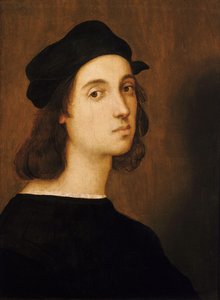
Raphael
1483 - 1520 , Italy
Quick Facts
- Artistic Movement Or Style: High Renaissance
- Artists Or Movements Influenced By This Artist:
- Giulio Romano
- Academic tradition
- Artists Who Influenced This Artist:
- Pietro Perugino
- Leonardo da Vinci
- Michelangelo
- Full Name: Raffaello Sanzio
- Nationality: Italian
- Notable Artworks:
- School of Athens
- Sistine Madonna
- The Transfiguration
- The Alba Madonna
- Place Of Birth: Urbino, Italy
- Date Of Birth: 1483
- Date Of Death: 1520
Related Articles

Fresco Art Guide: Mastering the Timeless Technique of Wall Painting for Luxury Interior Design
Master the art of fresco for luxury hospitality design. Explore technical insights into historical wall painting and discover how professional-grade, large-scale reproductions can elevate hotel interiors with timeless Renaissance elegance.



![Stanze Vaticane - The Fire in the Borgo (detail) [01]](/media/artworks/images-thumb/76/f6/76f6220ba33c4e1d9790e47ace4c7148.jpg)
