


 Preview
 Send
Send Share
Share
 Details
 Guide
Guide

 Download
 Similars
 X-Ray
X-Ray Diaporama
 Q&A
Q&A Stats
StatsThe Alba Madonna


 Read More
Get a print-ready file that goes far beyond the web preview. Every digital image we sell comes from a high-resolution master in our stock database — usually 5,000 to 15,000 pixels wide — so you can print large, crop tightly, or reproduce fine detail with confidence.
No file leaves our studio untouched. A digital expert checks the colors against the original painting and corrects them if needed, then improves clarity and detail with professional retouching tools — always staying faithful to the artist's brushwork and style. The result is an image that looks like the painting, not like a filtered scan.
You approve before you're done: our expert sends the image by e-mail within 72 hours for your review. Not satisfied? Ask for improvements or corrections, or request a refund if the quality falls short.
This is the quality relied on by publishers, design studios, galleries and print shops.
Digital Image
Download a high-resolution file for personal display, printing, and creative projects. ( Switch to Print Buy Hand Made Painting)
Included in Every Digital Image Order
Expert Digital Delivery, Guaranteed
When you choose AllPaintingsStore.com, you're not just getting an image - you're receiving a professionally enhanced digital artwork, crafted with precision and backed by a satisfaction guarantee. Here's everything that comes with your order, automatically:

Fast Email Delivery
Your high-resolution digital image file will be emailed to you within 72 hours of ordering - ready for immediate use.

AI-Enhanced Digital File
Your artwork is professionally optimized using advanced AI tools and manual editing, ensuring maximum detail, clarity, and color accuracy.

Free Lifetime Re-Delivery
Accidentally deleted or lost your file? No worries - we'll resend it to you anytime, free of charge.

No Import Fees - Ever
Enjoy your artwork instantly with zero customs, duties, or delivery fees - digital downloads are always tax-free.

Color Accuracy Guarantee
We ensure your digital image reflects the original colors as closely as possible using professional tools and color management.

100-Day Satisfaction Guarantee
If you're not satisfied with your digital image, we'll revise it or refund 100% within 100 days - no questions asked.

100% Money-Back Guarantee
Not satisfied? Get a full refund within 100 days of receiving your digital file - no questions asked.

Bulk Order Discounts
Buy 3 images, save 10% - Buy 5, save 15% - Buy 10+, save 20%. Great for creative projects, galleries, and agencies.
A Vision of Maternal Grace: Unveiling Raphael’s Alba Madonna
Raphael’s *Alba Madonna*, painted around 1511, is more than just a depiction of the Virgin Mary with the Christ Child and young John the Baptist; it's an embodiment of High Renaissance ideals – harmony, beauty, and spiritual depth. Currently residing in the National Gallery of Art in Washington D.C., this circular oil painting, originally executed on wood and later transferred to canvas, radiates a serene intimacy that has captivated viewers for centuries. The composition is deceptively simple: Mary sits gracefully amidst a verdant landscape, her gaze directed beyond the frame, hinting at an awareness of the divine destiny awaiting her son. The Christ Child, full of playful energy, reaches towards John the Baptist who offers a small cross – a poignant foreshadowing of the sacrifice to come. Raphael masterfully balances this solemn symbolism with a tender portrayal of familial love, creating a scene that is both profoundly moving and aesthetically pleasing. The painting’s circular format, known as a *tondo*, was particularly favored in Florence for domestic settings, suggesting an intimate intended audience.The Renaissance Ideal Embodied
To understand the *Alba Madonna* fully, one must consider its place within Raphael's artistic development and the broader context of the High Renaissance. Born Raffaello Sanzio da Urbino in 1483, Raphael quickly ascended to become one of Italy’s most celebrated artists, alongside Leonardo da Vinci and Michelangelo. He absorbed influences from both masters – Leonardo’s *sfumato* technique is subtly echoed in the soft modeling of Mary's face and hands, while Michelangelo’s emphasis on anatomical accuracy informs the figures’ graceful forms. However, Raphael synthesized these influences into a style uniquely his own—characterized by clarity, balance, and an unparalleled sense of harmony. The painting reflects this synthesis; it isn’t burdened by the psychological complexity often found in Leonardo's work nor the dramatic intensity of Michelangelo’s. Instead, it presents a vision of idealized beauty and serene spirituality that perfectly encapsulates the Renaissance pursuit of classical ideals. The landscape itself is not merely a backdrop but an integral part of the composition, echoing the gentle curves of the figures and contributing to the overall sense of tranquility.Symbolism Woven into Nature
A closer examination reveals a rich tapestry of symbolism woven throughout the *Alba Madonna*. Raphael was known for his meticulous attention to detail, and every element within the painting carries meaning. The flowers scattered around the base of the composition are not merely decorative; they represent virtues and foreshadow events in Christ’s life. Lady's bedstraw symbolizes childbirth, cyclamen represents love and sorrow, violets denote humility, while dandelions and anemones allude to the Passion of Christ. The inclusion of these botanical symbols adds layers of meaning to the scene, inviting contemplation on themes of motherhood, sacrifice, and divine grace. Even the gentle gesture of young John the Baptist presenting the cross is laden with significance – a premonition of the suffering that awaits Jesus, yet presented with a quiet reverence rather than overt drama. This subtle symbolism elevates the painting beyond a simple religious depiction; it becomes a meditation on faith, destiny, and the enduring power of love.A Lasting Emotional Resonance
The *Alba Madonna* continues to resonate deeply with viewers today because of its profound emotional impact. Raphael’s masterful use of color, light, and composition creates an atmosphere of serene beauty that transcends time. The soft, luminous tones of Mary's garments contrast beautifully with the vibrant greens of the landscape, drawing the eye towards the central figures. The gentle curves of their bodies and the tender expressions on their faces evoke a sense of warmth and intimacy. It’s a painting that invites quiet contemplation, offering solace and inspiration to those who gaze upon it. The enduring appeal of this masterpiece lies in its ability to connect with our deepest emotions – our love for family, our faith in something greater than ourselves, and our appreciation for the beauty that surrounds us. A reproduction of the *Alba Madonna* brings not only a piece of art history into your space but also a timeless symbol of grace, hope, and enduring maternal love.Questions & Answers
Is "The Alba Madonna" by Raphael in the public domain?
The copyright answer for "The Alba Madonna" by Raphael: the work is in the public domain - its copyright has expired. This determines whether reproductions of the image may be freely made.
Which room is "The Alba Madonna" by Raphael recommended for, given its colors?
The neutrals colors of "The Alba Madonna" by Raphael match its recommended space: a living room.
Who is the author of "The Alba Madonna", and in which movement?
Raphael created "The Alba Madonna" within the High Renaissance movement.
Related Artworks


Artist Biography
The Grace of Urbino
In the quiet, intellectual halls of Urbino, a young boy named Raffaello Sanzio grew up surrounded by the scent of ink and the rhythms of courtly life. His father, Giovanni Santi, was a man of letters and a painter for the Duke, ensuring that the child’s earliest memories were steeped in the humanist traditions of the Italian courts. This environment provided more than just a home; it offered a window into the advanced artistic ideas flowing through central Italy. When tragedy struck and his father passed away when Raphael was only eleven, the boy found himself managing the family workshop. He learned the weight of responsibility alongside the delicate touch of the brush.
His early training led him to the workshop of Pietro Perugino in Perugia. Under this master, he absorbed the Umbrian style, a method defined by soft modeling and serene religious scenes. By the time he was recognized as an independent master around 1500, his hand already showed a certain clarity and ease. He moved through the cities of northern Italy, gathering knowledge like a traveler collecting coins, before the pull of larger artistic centers began to reshape his vision.
The Florentine Crucible
When Raphael arrived in Florence in 1504, he entered a city pulsing with the energy of new discoveries. He did not merely observe the works of Leonardo da Vinci and Michelangelo; he studied them with an insatiable hunger. From Leonardo, he learned the subtle gradations of light and shadow known as sfumato. From Michelangelo, he drew an understanding of anatomical precision and the power of dramatic composition. This period was a transformation. His earlier, gentler Madonnas began to take on a new psychological depth and physical presence.
The Florentine influence allowed him to synthesize these diverse techniques into something uniquely his own. He possessed a rare ability to take the scientific shadows of one master and the muscular strength of another, blending them into a style characterized by balance and luminous color. His portraits from this era reflect a growing sophistication, capturing not just the likeness of his subjects but a sense of their inner dignity.
The Roman Triumph
A summons from Pope Julius II in 1508 brought Raphael to Rome, an event that changed the trajectory of his life. The Eternal City offered him the grandest stage imaginable. Tasked with decorating the papal apartments in the Vatican, he began work on the Stanze della Segnatura. It was here that he produced the School of Athens, a vast fresco where he brought together the great thinkers of antiquity—Plato, Aristotle, and Euclid—into a single, harmonious space. This work celebrated human reason through a masterful use of perspective and classical allegory.
His productivity in Rome was immense. Working for successive Popes, including Leo X, he expanded his reach from painting to architecture, even overseeing projects at St. Peter's basilica. His hands decorated the halls of the Vatican with scenes that spoke of justice, prudence, and fortitude. Even as he managed an unusually large workshop to meet these monumental demands, the clarity of his original vision remained intact. He became a central figure in the High Renaissance, a painter whose work embodied the Neoplatonic ideal of human grandeur.
A Legacy of Harmony
The sudden end of his life in 1520, at only thirty-seven years of age, left the papal court in deep mourning. Though his career was cut short, the foundation he laid was unshakable. His emphasis on order, proportion, and idealized beauty became a standard for European painting for centuries. While later movements would occasionally reject his polished grace, his influence remained a cornerstone of the academic tradition.
The impact of his work can be seen in several key areas:
- The Development of the High Renaissance: He perfected the balance between classical structure and human emotion.
- Architectural Influence: His work on papal projects helped shape the physical landscape of the Vatican.
- Artistic Lineage: His workshop trained pupils like Giulio Romano, ensuring his methods endured.
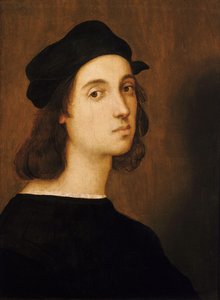
Raphael
1483 - 1520 , Italy
Quick Facts
- Artistic Movement Or Style: High Renaissance
- Artists Or Movements Influenced By This Artist: ['Neoclassical painting']
- Artists Who Influenced This Artist:
- Pietro Perugino
- Leonardo da Vinci
- Michelangelo
- Full Name: Raffaello Sanzio da Urbino
- Nationality: Italian
- Notable Artworks:
- The School of Athens
- Madonnas
- The Transfiguration
- Place Of Birth: Urbino, Italy
- Date Of Birth: 1483
- Date Of Death: 1520

