


 Preview
 Send
Send Share
Share
 Details
 Guide
Guide

 Download
 Similars
 X-Ray
X-Ray Diaporama
 Q&A
Q&A Stats
StatsThe knight's dream (study)


 Read More
Get a print-ready file that goes far beyond the web preview. Every digital image we sell comes from a high-resolution master in our stock database — usually 5,000 to 15,000 pixels wide — so you can print large, crop tightly, or reproduce fine detail with confidence.
No file leaves our studio untouched. A digital expert checks the colors against the original painting and corrects them if needed, then improves clarity and detail with professional retouching tools — always staying faithful to the artist's brushwork and style. The result is an image that looks like the painting, not like a filtered scan.
You approve before you're done: our expert sends the image by e-mail within 72 hours for your review. Not satisfied? Ask for improvements or corrections, or request a refund if the quality falls short.
This is the quality relied on by publishers, design studios, galleries and print shops.
Digital Image
Download a high-resolution file for personal display, printing, and creative projects. ( Switch to Print Buy Hand Made Painting)
Included in Every Digital Image Order
Expert Digital Delivery, Guaranteed
When you choose AllPaintingsStore.com, you're not just getting an image - you're receiving a professionally enhanced digital artwork, crafted with precision and backed by a satisfaction guarantee. Here's everything that comes with your order, automatically:

Fast Email Delivery
Your high-resolution digital image file will be emailed to you within 72 hours of ordering - ready for immediate use.

AI-Enhanced Digital File
Your artwork is professionally optimized using advanced AI tools and manual editing, ensuring maximum detail, clarity, and color accuracy.

Free Lifetime Re-Delivery
Accidentally deleted or lost your file? No worries - we'll resend it to you anytime, free of charge.

No Import Fees - Ever
Enjoy your artwork instantly with zero customs, duties, or delivery fees - digital downloads are always tax-free.

Color Accuracy Guarantee
We ensure your digital image reflects the original colors as closely as possible using professional tools and color management.

100-Day Satisfaction Guarantee
If you're not satisfied with your digital image, we'll revise it or refund 100% within 100 days - no questions asked.

100% Money-Back Guarantee
Not satisfied? Get a full refund within 100 days of receiving your digital file - no questions asked.

Bulk Order Discounts
Buy 3 images, save 10% - Buy 5, save 15% - Buy 10+, save 20%. Great for creative projects, galleries, and agencies.
A Window into the Renaissance Mind
To encounter The Knight’s Dream (study) is to step behind the velvet curtain of art history and witness the very moment of creation. This exquisite preparatory drawing by the High Renaissance master Raphael serves as a profound intellectual bridge between a fleeting thought and a finished masterpiece. While many are drawn to the polished perfection of his completed altarpieces, there is an undeniable, raw intimacy found in this monochrome study. It offers a rare glimpse into the artist's workshop, revealing the meticulous calculations and rhythmic sketches that preceded his most celebrated allegories. As a piece, it captures the essence of Renaissance idealism—a period where the boundaries between human emotion and divine order were beautifully blurred.
The composition is anchored by a delicate triangular arrangement of three figures, a structural choice that reflects the humanist pursuit of stability, harmony, and balance. Through the masterful use of hatching and cross-hatching, Raphael breathes life into two-dimensional space, creating a sense of volume and weight within the drapery of the figures' attire. The eye is led on a journey from the immediate presence of the central characters toward a distant, atmospheric landscape where castles and hills emerge through a soft, receding haze. This use of linear and atmospheric perspective does more than just create depth; it establishes a sense of infinite possibility, suggesting that the knight’s internal dream is as vast and enduring as the world surrounding him.
Symbolism and the Spirit of Chivalry
Beyond its technical brilliance, the artwork is steeped in the symbolic language of the early 16th century. As a study for his larger work, The Vision of a Knight, this drawing explores profound themes of chivalry, faith, and divine inspiration. The presence of medieval elements—the noble silhouettes, the distant fortifications, and the subtle hints of weaponry—evokes an era defined by codes of honor and spiritual devotion. There is a quiet tension held within the lines; the stillness of the figures suggests a moment of profound introspection or perhaps a prophetic encounter. For the collector or designer, this piece offers more than mere decoration; it provides a narrative anchor, inviting viewers to contemplate the intersection of earthly duty and celestial vision.
The emotional resonance of the work lies in its ability to evoke mystery. The title itself suggests a state of transition—a threshold between wakefulness and sleep, reality and myth. This dreamlike quality is amplified by the monochrome palette, which strips away the distraction of color to focus entirely on form, light, and shadow. The interplay of deep blacks and luminous grays creates a dramatic chiaroscuro effect that lends the scene a haunting, timeless beauty. Whether placed in a curated gallery setting or as a focal point in a sophisticated interior, The Knight’s Dream serves as an enduring testament to Raphael's ability to capture the profound complexities of the human soul through the simple, disciplined stroke of a pen.
Questions & Answers
Why is the copyright status of "The knight's dream (study)" what it is?
The copyright status of "The knight's dream (study)" - in the public domain - its copyright has expired - follows from the artist's death in 1520.
Which artist is "The knight's dream (study)" attributed to?
"The knight's dream (study)" is attributed to Raphael.
From which country does the Renaissance Humanism work "The knight's dream (study)" come?
The Renaissance Humanism work "The knight's dream (study)" was made by an artist born in Italy.
Related Artworks


Artist Biography
The Grace of Urbino
In the quiet, intellectual halls of Urbino, a young boy named Raffaello Sanzio grew up surrounded by the scent of ink and the rhythms of courtly life. His father, Giovanni Santi, was a man of letters and a painter for the Duke, ensuring that the child’s earliest memories were steeped in the humanist traditions of the Italian courts. This environment provided more than just a home; it offered a window into the advanced artistic ideas flowing through central Italy. When tragedy struck and his father passed away when Raphael was only eleven, the boy found himself managing the family workshop. He learned the weight of responsibility alongside the delicate touch of the brush.
His early training led him to the workshop of Pietro Perugino in Perugia. Under this master, he absorbed the Umbrian style, a method defined by soft modeling and serene religious scenes. By the time he was recognized as an independent master around 1500, his hand already showed a certain clarity and ease. He moved through the cities of northern Italy, gathering knowledge like a traveler collecting coins, before the pull of larger artistic centers began to reshape his vision.
The Florentine Crucible
When Raphael arrived in Florence in 1504, he entered a city pulsing with the energy of new discoveries. He did not merely observe the works of Leonardo da Vinci and Michelangelo; he studied them with an insatiable hunger. From Leonardo, he learned the subtle gradations of light and shadow known as sfumato. From Michelangelo, he drew an understanding of anatomical precision and the power of dramatic composition. This period was a transformation. His earlier, gentler Madonnas began to take on a new psychological depth and physical presence.
The Florentine influence allowed him to synthesize these diverse techniques into something uniquely his own. He possessed a rare ability to take the scientific shadows of one master and the muscular strength of another, blending them into a style characterized by balance and luminous color. His portraits from this era reflect a growing sophistication, capturing not just the likeness of his subjects but a sense of their inner dignity.
The Roman Triumph
A summons from Pope Julius II in 1508 brought Raphael to Rome, an event that changed the trajectory of his life. The Eternal City offered him the grandest stage imaginable. Tasked with decorating the papal apartments in the Vatican, he began work on the Stanze della Segnatura. It was here that he produced the School of Athens, a vast fresco where he brought together the great thinkers of antiquity—Plato, Aristotle, and Euclid—into a single, harmonious space. This work celebrated human reason through a masterful use of perspective and classical allegory.
His productivity in Rome was immense. Working for successive Popes, including Leo X, he expanded his reach from painting to architecture, even overseeing projects at St. Peter's basilica. His hands decorated the halls of the Vatican with scenes that spoke of justice, prudence, and fortitude. Even as he managed an unusually large workshop to meet these monumental demands, the clarity of his original vision remained intact. He became a central figure in the High Renaissance, a painter whose work embodied the Neoplatonic ideal of human grandeur.
A Legacy of Harmony
The sudden end of his life in 1520, at only thirty-seven years of age, left the papal court in deep mourning. Though his career was cut short, the foundation he laid was unshakable. His emphasis on order, proportion, and idealized beauty became a standard for European painting for centuries. While later movements would occasionally reject his polished grace, his influence remained a cornerstone of the academic tradition.
The impact of his work can be seen in several key areas:
- The Development of the High Renaissance: He perfected the balance between classical structure and human emotion.
- Architectural Influence: His work on papal projects helped shape the physical landscape of the Vatican.
- Artistic Lineage: His workshop trained pupils like Giulio Romano, ensuring his methods endured.
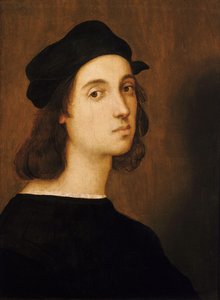
Raphael
1483 - 1520 , Italy
Quick Facts
- Artistic Movement Or Style: High Renaissance
- Artists Or Movements Influenced By This Artist: ['Neoclassical painting']
- Artists Who Influenced This Artist:
- Pietro Perugino
- Leonardo da Vinci
- Michelangelo
- Full Name: Raffaello Sanzio da Urbino
- Nationality: Italian
- Notable Artworks:
- The School of Athens
- Madonnas
- The Transfiguration
- Place Of Birth: Urbino, Italy
- Date Of Birth: 1483
- Date Of Death: 1520