


 Preview
 Send
Send Share
Share
 Details
 Guide
Guide

 Download
 Similars
 X-Ray
X-Ray Diaporama
 Q&A
Q&A Stats
StatsThe Triangular Hour, 1933


 Read More
The artwork displayed on this page is protected by copyright law, which means we cannot legally create or sell an identical reproduction. This protection is enforced under international agreements such as the Berne Convention and by national laws, including those outlined by the U.S. Copyright Law - Title 17.
This method fully complies with copyright regulations because it does not involve copying or duplicating the protected artwork. Instead, it is a creative reinterpretation - a new painting that is influenced by the original but not identical to it.
Giclée / Art Print
Museum-quality giclée or canvas print with fast production and flexible finish options. ( Buy Hand Made Painting Switch to Digital Image)




P118B $10

P118H $10

P118W $10

P438Z $10

P508JH $12

P508YH $12

P805H $10

P805Z $10

P919BZ $10

P919G $10

P919XJ $10

P959ZH $10

P968JZ $12

W106C $8

W218G $10

W218JH $8

W218Y $10

W307PJ $10

W316G $10

W316PJ $8

W316Y $10

W398PJ $8

W4111J $10

W500HY $15

W500JH $15

W692G $12

W849H $8

W940BG $15

W953PJ $8




Pick from our preset sizes that match the artwork's original proportions.

Type the width and the height you need, to fit your frame or your wall. A print can only be cut, never made bigger than the picture, so a size with a different shape loses a part of the image. We send you a digital mockup to approve before we print anything. The picture shown on this page does not show the real cut — only the mockup does.
Worldwide Delivery () in 2 weeks instead of standard 4/5 weeks. (9 November)

Free Worldwide Express Shipping

High-Quality Linen Canvas

Full Shipping Insurance

Customs Tax Refund Guarantee

True Color Matching Guarantee

100-Day Return Policy (Defects Only)

100% Money-Back Guarantee

Bulk Discount Offer
 Glass option is only available in size under 110 CM

The Triangular Hour, 1933
Giclée / Art Print
Reproduction Size
-


Total Price
$ 65
A Dreamscape of Time and Contemplation
Salvador Dalí’s *The Triangular Hour*, painted in 1933, is a quintessential example of Surrealism's power to unlock the subconscious. More than just a landscape, it’s a meticulously rendered dream – unsettling yet captivating – inviting viewers into a world where logic dissolves and symbolic meaning reigns supreme. The painting presents a scene both familiar and profoundly strange, prompting introspection on themes of time, mortality, and the human condition.Decoding the Composition & Symbolism
The composition is anchored by a dramatic rock formation resembling an archway or portal, leading the eye towards a distant, hazy sea. This creates a sense of journey or transition. A solitary figure stands beside a peculiar clock draped over a hillside, seemingly lost in thought. Above, two birds perch on the branches of a gnarled tree – potential symbols of freedom, observation, or perhaps even fleeting moments. Dalí’s recurring motif of the melting clock is central to understanding the painting's core message. It isn’t merely a timepiece; it represents the *fluidity* and *relativity* of time itself—a concept heavily influenced by Einstein’s theories which fascinated Dalí. The triangular form, echoing an hourglass, suggests the convergence of past, present, and future into a single, distorted moment. The barren landscape contributes to a feeling of isolation and existential questioning.Masterful Technique & Surrealist Style
Dalí’s technical skill is remarkable. Executed in oil on canvas, *The Triangular Hour* showcases his mastery of realistic detail alongside the illogical juxtapositions characteristic of Surrealism. He achieves a stunning sense of depth and dimensionality through meticulous blending and precise brushwork. The smooth textures and diffused lighting enhance the dreamlike quality, while the warped perspective further destabilizes reality. This deliberate contrast between hyper-realism and fantastical imagery is what defines Dalí’s unique style.Historical Context & Artistic Movement
*The Triangular Hour* emerged during the height of the Surrealist movement (early 20th century), a period marked by a rejection of rational thought in favor of exploring the subconscious mind. Inspired by the psychoanalytic theories of Sigmund Freud, artists like Dalí, René Magritte, and Max Ernst sought to liberate creativity from the constraints of reason. They aimed to depict the irrationality of dreams, desires, and fears—challenging conventional notions of beauty and reality. Dalí quickly became a leading figure in this movement, pushing its boundaries with his provocative imagery and flamboyant persona.Emotional Resonance & Lasting Impact
The painting evokes a powerful sense of melancholy and contemplation. The vastness of the landscape, combined with the solitary figure and distorted timepieces, creates an atmosphere of isolation and existential questioning. *The Triangular Hour* isn’t simply a visual experience; it's an invitation to delve into one’s own subconscious—to confront anxieties about mortality, the passage of time, and the search for meaning in a chaotic world. For collectors and interior designers: A reproduction of *The Triangular Hour* can introduce a striking focal point to any space. Its muted color palette and surreal imagery lend themselves well to modern or eclectic interiors, sparking conversation and adding an element of intellectual intrigue. Its enduring appeal lies in its ability to resonate with viewers on a deeply personal level—a testament to Dalí’s genius and the lasting power of Surrealist art.- Explore more of Salvador Dalí's work and discover his profound influence on modern art.
- Consider a high-quality reproduction from AllPaintingsStore.com to bring this masterpiece into your home or office.
- Visit the Dalí Theatre and Museum in Figueres, Spain, for an immersive experience of his artistic world.
Questions & Answers
What is the perceived brightness of "The Triangular Hour, 1933" by Salvador Dalí?
The perceived brightness of "The Triangular Hour, 1933" by Salvador Dalí is bright. It can be matched to the light of the intended space.
How harmonious are the colors of "The Triangular Hour, 1933" by Salvador Dalí?
"The Triangular Hour, 1933" by Salvador Dalí displays a discordant palette color harmony.
What color palette is used in "The Triangular Hour, 1933" by Salvador Dalí?
The colors of "The Triangular Hour, 1933" form a neutrals palette. This classification describes the dominant color families.
Related Artworks


Artist Biography
The Early Life of Salvador Dalí
In the sun-drenched town of Figueres, Spain, Salvador Dalí arrived into a world already marked by a profound sense of loss. Nine months before his birth, an older brother, also named Salvador, had passed away. This early trauma, set against the backdrop of a strict father and a nurturing mother, forged a spirit that was simultaneously flamboyant and deeply introspective. His father, Salvador Luca Rafael Aniceto Dalí Cusí, worked as a middle-class lawyer and notary, while his mother, Felipa Domènech Ferrés, provided a different kind of influence. He also grew up alongside his sister, Anna Maria.
The shadow of his brother would resurface decades later in his work, a recurring theme of duality and replacement. His path toward the canvas began with formal training at the San Fernando Academy of Fine Arts in Madrid. There, he moved through the traditions of the Renaissance masters and the light of the Impressionists. He possessed a technical skill that allowed him to paint with a clarity that made even the most unsettling visions feel tangibly real. His early years were a slow accumulation of these influences, a period of learning the precise rendering of form before he ever sought to break it.
The Formative Years in Madrid and Paris
Formal training at the San Fernando Academy of Fine Arts in Madrid provided the foundation. He studied the traditions of the Renaissance masters and the light of the Impressionists, but a restless curiosity pulled him toward the edges of the known. By 1926, he moved to Paris. The city was a cultural earthquake, and he found himself in the center of it. He was drawn to the rebellious spirit of Dadaism, finding a resonance in its rejection of logic and its embrace of absurdity.
The atmosphere in Paris was thick with the energy of the avant-garde. He did not merely observe the shifts occurring in the studios and cafes; he became part of the friction. In 1929, he joined the Surrealist group. This move marked a departure from his earlier studies, as he began to develop the paranoiac-critical method. This was a way to access the irrationality of the subconscious by inducing a state of controlled delirium, turning the internal chaos of the mind into something that could be rendered with photographic clarity.
- 1926: Cubist Self-portrait
- 1928: Symbiotic Woman-Animal
The Development of a Unique Technique
He worked with a precision that felt almost clinical. His hands moved to render the irrationality of the subconscious with the clarity of a photograph, making the impossible feel tangible. This was not a matter of mere imitation, but a deliberate process he called the paranoiac-critical method. Through this, he sought to access irrational knowledge by inducing a state of controlled delirium. He used this method to translate the fragmented, often unsettling imagery of the human psyche into hyper-realistic forms. The result was a visual language where the boundaries between the waking world and the dreamscape dissolved.
His canvases relied on unsettling juxtapositions. He placed objects in contexts where they did not belong, forcing the eye to reconcile the familiar with the bizarre. A landscape might hold a melting timepiece or a long, spindly leg, creating a sense of tension that felt deeply personal yet strangely universal. He focused on the textures of decay and the fluidity of time, using his technical skill to give weight and substance to things that should have no form. The shadows in his work do not merely fall; they stretch with a specific, heavy intention.
- The Persistence of Memory (1931)
- The Enigma of Desire, My Mother (1929)
- The Birth of Liquid Desires (1932)
- The Hallucinogenic Toreador
The Iconic Masterpieces of Surrealism
In August 1931, the landscape of the subconscious took a physical form in The Persistence of Memory. Here, time loses its rigid structure, appearing instead as something soft and melting. The imagery relies on a precise, almost photographic rendering of the impossible, where objects that should be hard and unyielding succumb to a liquid state. This ability to make the irrational feel tangible became a hallmark of his approach, turning the fleeting distortions of a dream into something that feels heavy and real.
His work often moved toward the monumental, such as The Hallucinogenic Toreador. This large-scale piece captures a sense of scale and movement that shifts the viewer's perspective. It is a work that occupies space with a certain weight, using his signature symbols to populate a dreamscape. He continued to refine this visual language through various stages of his life, even as his interests shifted toward the intersection of science and faith.
By 1955, his focus had moved toward The Sacrament of the Last Supper, a work that blends traditional religious themes with surrealist elements like melting watches and distorted features. This period showed a different side of his technical skill, applying meticulous draftsmanship to the divine. Later, between 1958 and 1959, he produced The Discovery of America by Christopher Columbus, continuing to use his specific, detailed style to explore historical and spiritual subjects.
- The Persistence of Memory (1931)
- The Hallucinogenic Toreador
- The Sacrament of the Last Supper (1955)
- The Discovery of America by Christopher Columbus (1958-1959)
The Influence of Gala on His Art
Gala, born Elena Ivanovna Diakonova in 1894, was the steadying presence in a life often lived as a performance. She was more than a partner; she acted as his muse and managed the business side of his career. Their connection was deep and structured, leading to a civil marriage in 1934. While he focused on the irrationality of the subconscious, she provided the practical foundation that allowed his work to reach a wider audience. She was the one who helped direct his focus, often acting as an agent for his creative impulses.
Her face and presence appear frequently across his canvases, often cast in roles of religious or maternal importance. In The Madonna of Port Lligat, she is rendered with a specific, quiet gravity. She was a constant subject, her image used to explore themes of desire and identity. Their bond was the structural core of his most productive years, providing a sense of stability amidst his more eccentric public behaviors. She was a collaborator in the sense that her presence was woven into the very fabric of his visual language.
- The Madonna of Port Lligat
- Imperial Monument to the Child-Woman, Gala (1929)
- Memory of the Child-Woman (1932)
- The Angelus of Gala (1935)
- Gala and "The Angelus" of Millet before the Imminent Arrival of the Conical Anamorphoses (1933)
- William Tell and Gradiva (1931)
The Transition to Nuclear Mysticism
When he returned to Spain in 1948, the focus of his work began to shift. The earlier, chaotic explorations of the subconscious gave way to a period he called "nuclear mysticism." This was a time when his fascination with the discoveries of modern science met a deep, renewed interest in the Catholic faith. He sought to find a way to reconcile the invisible forces of the atom with the spiritual weight of religious tradition.
His hand remained as precise as ever. He applied a meticulous draftsmanship to these new, sacred themes, rendering religious subjects with a clarity that felt almost clinical. The brushwork did not soften; instead, it became a tool to map out the intersection of the physical and the divine. He used this technical discipline to explore the mysteries of the faith through a lens shaped by the changing understanding of the physical universe.
- The Sacrament of the Last Supper (1955)
- Christ of Saint John of the Cross (1951)
- The Ascension of Christ (1958)
The Final Years and Death
The final years were spent in Figueres, Spain. He lived there from 1984 until his death in 1989. The town of his birth remained the center of his world, a place where the boundaries between his private life and his public persona had long since dissolved. He had designed the Dalí Theatre-Museum in this same town, a space that functioned as a large-scale surrealist object, incorporating the old theatre where he had once exhibited as a young man.
On 23 January 1989, his life came to an end. He is buried in a crypt located below the stage of the Dalí Theatre-Museum. This resting place sits beneath the very structure he helped transform, a final placement within the labyrinthine space he helped create. The museum remains a physical part of his history, housing his final works, including a painting from 1983 titled The Swallow's Tail.
The Lasting Legacy of His Work
The imagery he created did not stay confined to the canvas. It leaked into the edges of daily life, finding its way into fashion, advertising, and the broader currents of popular culture. This reach ensured that his visual language became part of the collective memory, moving beyond the galleries and into the streets. His presence in the 20th-century avant-garde helped shape how much of the world perceived the irrational and the strange.
His influence stretched toward the next generation of creators. The way he manipulated symbols and reality left a mark on pop art and the work of contemporary artists like Jeff Koons and Damien Hirst. He provided a blueprint for how an artist might interact with the public, using his own persona and his specific, unsettling symbols to bridge the gap between high art and the common gaze. Other Surrealists also drew from the paths he cleared, finding ways to navigate the subconscious through the methods he developed.
- The Persistence of Memory
- The Sacrament of the Last Supper
- The Disintegration of Persistence of Memory
- The Hallucinogenic Toreador
Where to See His Works Today
To find his traces, one can start in Figueres, Spain, at the Dalí Theatre-Museum. The building itself is a labyrinthine structure, built around the old town theatre where he once exhibited as a young man. He is buried in a crypt beneath the stage. The space contains a variety of objects, including a collection of jewelry and a room filled with optical illusions and anamorphic art. A large car, inspired by a 1938 work, sits near the center of the space.
In the United States, the Salvador Dalí Museum in Saint Petersburg, Florida, holds a significant portion of his output. The museum is built with eighteen-inch thick concrete walls to withstand local weather. Its architecture features a large glass entryway and a geodesic dome known as "The Enigma." This collection includes large-scale paintings such as The Disintegration of Persistence of Memory. Visitors can also find his sculptures and various objets d'art within these walls.
Other collections offer a different way to encounter his imagery. The Reynolds Morse Foundation in Cleveland, Ohio, maintains a comprehensive collection of his work. Meanwhile, the Solomon R. Guggenheim Venice, located in a Venetian Palazzo, features his paintings among its holdings. These locations allow for a close look at the specific details of his technical draftsmanship and his use of symbols like ants or melting clocks.
- The Disintegration of Persistence of Memory
- The Hallucinogenic Toreador
- The Sacrament of the Last Supper
- Portrait of My Dead Brother
- The Persistence of Memory
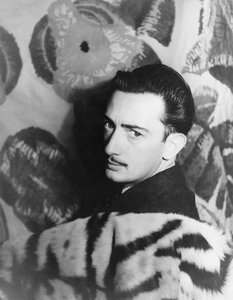
Salvador Dalí
1904 - 1989 , Spain
Quick Facts
- Full Name: Salvador Domingo Felipe Jacinto Dalí i Domènech
- Nationality: Spanish
- Date Of Birth: 1904
- Date Of Death: 1989
- Place Of Birth: Figueres, Spain
- Notable Artworks:
- Persistence of Memory
- Juliet's Tomb
- Mannequin
- Landscape with Flies
- The Angelus of Gala
- Artistic Movement Or Style: Surrealism
- Artists Who Influenced This Artist:
- Cubism
- Dada
- Pablo Picasso
- Artists Or Movements Influenced By This Artist:
- Pop art
- Contemporary artists
Related Articles

Beyond Reality: A Sophisticated Guide to the Dreamlike World of Surrealist Art
Embark on a sophisticated journey through the subconscious. Explore the profound symbolism, iconic masters like Dalí, and the enduring legacy of Surrealist art in this expert guide for discerning collectors and art enthusiasts.


