


 Preview
 Send
Send Share
Share
 Details
 Guide
Guide

 Download
 Similars
 X-Ray
X-Ray Diaporama
 Stats
StatsUntitled
 Contemporary Realism
 1979
1979 43.0 x 43.0 cm
 Read More
The artwork displayed on this page is protected by copyright law, which means we cannot legally create or sell an identical reproduction. This protection is enforced under international agreements such as the Berne Convention and by national laws, including those outlined by the U.S. Copyright Law - Title 17.
This method fully complies with copyright regulations because it does not involve copying or duplicating the protected artwork. Instead, it is a creative reinterpretation - a new painting that is influenced by the original but not identical to it.
Giclée / Art Print
Museum-quality giclée or canvas print with fast production and flexible finish options. ( Buy Hand Made Painting Switch to Digital Image)




































Pick from our preset sizes that match the artwork's original proportions.

Type the width and the height you need, to fit your frame or your wall. A print can only be cut, never made bigger than the picture, so a size with a different shape loses a part of the image. We send you a digital mockup to approve before we print anything. The picture shown on this page does not show the real cut — only the mockup does.
Worldwide Delivery () in 2 weeks instead of standard 4/5 weeks. (26 October)

Free Worldwide Express Shipping

High-Quality Linen Canvas

Full Shipping Insurance

Customs Tax Refund Guarantee

True Color Matching Guarantee

100-Day Return Policy (Defects Only)

100% Money-Back Guarantee

Bulk Discount Offer
 Glass option is only available in size under 110 CM

Untitled
Giclée / Art Print
Reproduction Size
-


Total Price
$ 65
Related Artworks


Artist Biography
A Life Etched in Light: The Desert Visions of Terry Husebye
Terry Husebye stands as a compelling figure within the landscape of contemporary photography, an artist whose work quietly yet powerfully blends observation, history, and a profound connection to the natural world. While biographical details remain somewhat elusive—a deliberate choice perhaps, allowing the art itself to take center stage—the trajectory of his career reveals a dedicated explorer of form, texture, and the evocative power of place. Husebye’s artistic journey began with formal training at the University of Wisconsin, culminating in an MFA in Photography. This academic foundation provided him with technical mastery, but it was his subsequent embrace of the American West—specifically its stark deserts—that truly ignited his distinctive vision. He received a National Endowment for the Arts Fellowship and a Guggenheim Fellowship, accolades that affirmed his growing reputation and allowed him to delve deeper into his artistic pursuits.The Allure of Aridity: Desert Scenes as Historical Echoes
Husebye’s most recognizable work centers on the desert landscapes of the American Southwest. These are not merely picturesque depictions, however; they possess a haunting quality, imbued with a sense of time and memory. His photographs often feature cacti silhouetted against dramatic skies, fissures cleaving the earth, and subtle gradations of light that reveal the raw beauty hidden within seemingly barren terrain. Untitled, from 1979, exemplifies this aesthetic—a striking composition capturing the resilience of life in an unforgiving environment. The digital photography employed isn’t about pristine clarity; instead, it emphasizes texture and tonal range, creating images that feel both immediate and distant, like fragments of a forgotten past. He doesn't simply record what he sees but evokes a feeling—a sense of solitude, vulnerability, and the enduring power of nature. This is further highlighted in works such as Untitled (desert scene with cactus foreground, mountain background), where the composition draws the viewer into the vastness of the landscape.Beyond the Horizon: Fairfax House Portraits & Expanding Themes
While celebrated for his desert scenes, Husebye’s artistic scope extends beyond arid landscapes. He has also turned his lens towards portraits taken within the historic Fairfax House in York, England. This shift demonstrates a broader interest in exploring spaces laden with history and character. The portraits are not traditional studies of individuals but rather investigations into identity, place, and the passage of time—a continuation of themes present in his desert work. The interiors of Fairfax House provide a contrasting backdrop to the open expanses of the American West, yet both settings share a common thread: they serve as vessels for stories waiting to be uncovered.Influences & Artistic Development
Pinpointing specific artistic influences is challenging given Husebye’s relatively private nature. However, one can discern echoes of early landscape photographers like Carleton Watkins and Timothy O'Sullivan in his meticulous attention to detail and dramatic compositions. The New Topographics movement, with its focus on objective documentation of altered landscapes, may also have played a role in shaping his aesthetic. Yet Husebye transcends simple categorization; he infuses his work with a poetic sensibility that sets him apart. His development as an artist has been marked by a consistent exploration of light and shadow, texture and form—a refinement of technique honed over decades of dedicated practice. His photographs are held in prestigious collections including the Art Institute of Chicago, the Boston Museum of Fine Arts, and the Library of Congress, attesting to his enduring impact on the field.A Legacy of Quiet Observation
Terry Husebye’s historical significance lies not in grand pronouncements or overt stylistic innovation but rather in a quiet dedication to observation and a profound respect for the natural world. His work serves as a reminder that beauty can be found even in the most desolate landscapes, and that history is etched into every surface—every grain of sand, every weathered wall. He invites viewers to slow down, to contemplate the subtle nuances of light and form, and to connect with the stories embedded within the spaces he photographs. His art isn’t about providing answers but rather about raising questions—questions about our relationship to nature, to history, and to ourselves. He is a master of atmosphere, creating images that linger in the mind long after they are seen.
Quick Facts
- Full Name: Terry Husebye
- Date Of Birth: (Living)
- Place Of Birth: (City, Country)
- Notable Artworks: ['Untitled']
- Artistic Movement Or Style: Contemporary
Related Articles
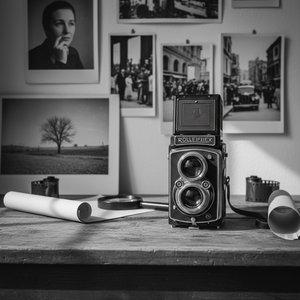
Monochrome Visions: Exploring the Aesthetic & Historical Significance of Black & White Photography
Explore the rich history & artistic power of black and white photography. From early techniques to iconic masters like Ansel Adams, discover why monochrome continues to captivate art lovers today. Expert insights for collectors.

Beyond the Lens: Photography's Enduring Influence on Modern & Contemporary Art
Explore photography's pivotal role in shaping modern & contemporary art. Discover key movements, influential artists like Stieglitz, and expert collecting advice from AllPaintingsStore.

Evocations of Place: A Historical Journey Through Landscape Art
Explore the rich history of landscape art with AllPaintingsStore. Discover renowned artists, movements like Impressionism & Romanticism, and expert guidance for collecting timeless pieces. Find your perfect serene escape today!

John Constable's Masterpieces: Explore 25 Iconic Landscapes for Your Home
Journey through John Constable's 25 most celebrated landscapes. Explore Romanticism, Dedham Vale & his masterful use of light in iconic paintings like 'Hay Wain'. Find museum-quality art reproductions and elevate your home decor on AllPaintingsStore.com.

Romantic Landscapes: 10 Masterpieces for Your Home | AllPaintingsStore
Journey through 10 Romantic landscape masterpieces by Friedrich, Turner & Cole. Explore emotional art, sublime nature scenes & iconic 19th-century paintings. Find museum-quality reproductions for your home at AllPaintingsStore.com – discover the full collection online!


