- Home

- Oil Painting Reproduction
- Thomas Cole
- Winnipesaukee

 Buy print
 Send
Send Share
Share
 Details

 Download
 Similars
 X-Ray
X-Ray Diaporama
Winnipesaukee


 Read More
Hand Made Oil Reproduction
Hand-painted oil on canvas in your size and frame, made to order by our artists.




P118B $10

P118H $10

P118W $10

P438Z $10

P508JH $12

P508YH $12

P805H $10

P805Z $10

P919BZ $10

P919G $10

P919XJ $10

P959ZH $10

P968JZ $12

W106C $8

W218G $10

W218JH $8

W218Y $10

W307PJ $10

W316G $10

W316PJ $8

W316Y $10

W398PJ $8

W4111J $10

W500HY $15

W500JH $15

W692G $12

W849H $8

W940BG $15

W953PJ $8




Pick from our preset sizes that match the artwork's original proportions.

You may enter your own dimensions to fit a specific frame or space. If your selected size does not match the original image's proportions, we will either crop the artwork or extend the painting with additional hand-painted elements. A digital mockup will be sent for your approval before production begins.
Please note that the on-screen preview does not reflect the actual cropping or extension. Only the mockup will accurately show the final composition.
While custom sizes are available, we recommend selecting a dimension from the predefined list to preserve the original proportions.
After order, AllPaintingsStore.com team will email client for instructions and provide a mockup preview
Worldwide Delivery () in 3/4 weeks instead of standard 5 weeks. (16 July). No compromise on quality.

Free Worldwide Express Shipping

High-Quality Linen Canvas

Full Shipping Insurance

Customs Tax Refund Guarantee

True Color Matching Guarantee

60-Day Return Policy (Defects Only)

100% Money-Back Guarantee

Bulk Discount Offer
 Glass option is only available in size under 110 CM

Winnipesaukee
Reproduction Medium
Reproduction Size
-


Total Price
-
Artwork Description
The Sublime Majesty of the American Wilderness
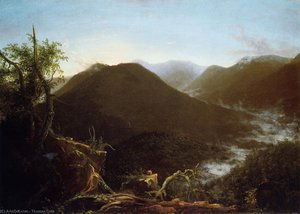
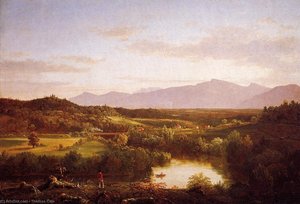
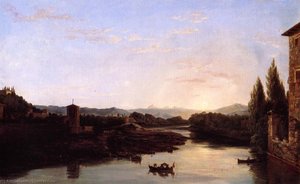
To gaze upon Thomas Cole's Winnipesaukee is not merely to observe a landscape; it is to be enveloped by a profound sense of sublime tranquility. Painted in 1827, this oil on canvas masterpiece stands as a quintessential testament to the Romantic movement and the burgeoning spirit of American identity. Cole, who would become the guiding force behind the Hudson River School, possessed an unparalleled gift for translating the raw, untamed grandeur of the American wilderness onto linen. Here, the viewer is invited into a scene where nature reigns supreme, yet human life coexists with it in perfect, harmonious balance.
Composition and the Art of Light
The eye is immediately drawn across the serene expanse of water, mirroring the majestic sweep of the distant mountain range. Cole masterfully employs depth, drawing the viewer deep into the pictorial space. The composition is a careful orchestration of elements: the solid permanence of the mountains anchoring the background, the fluid grace of the lake occupying the foreground, and the delicate placement of trees along the banks. Notice the subtle inclusion of human figures and the two visible boats; these details are crucial. They do not diminish nature's power but rather serve to measure it, providing a sense of scale against the overwhelming backdrop of natural beauty. The handling of light is particularly breathtaking—a warm, enveloping glow that suggests either early morning or late afternoon, imbuing every leaf and ripple with an almost palpable warmth.
Romanticism and National Spirit
Historically, Winnipesaukee speaks volumes about the cultural moment from which it emerged. In the early decades of the American republic, artists like Cole sought to define a visual language for a continent undergoing rapid expansion and self-definition. His work transcended mere topographical record; it was imbued with allegory. The landscape becomes a metaphor—a reflection of the nation's own potential, its inherent beauty, and its spiritual promise. This Romantic sensibility elevates the scene from a picturesque view to an almost sacred encounter with creation itself.
Bringing the Vista Home
For those who wish to capture this enduring feeling of pastoral grandeur within their own walls, owning a high-quality reproduction of Winnipesaukee is acquiring more than just decoration. It is acquiring a piece of artistic narrative. The rich depth of Cole's oils and the evocative subject matter—the meeting point of water, mountain, and human endeavor—make it an unparalleled focal point for any room. Whether adorning a formal drawing-room or lending quiet dignity to a study, this artwork promises to infuse your space with the enduring sense of peace and awe that Thomas Cole so brilliantly captured on canvas.
Related Artworks


Artist Biography
A Pioneer of American Landscape Painting
Thomas Cole, a name synonymous with the birth of distinctly American art, stands as a pivotal figure in 19th-century painting. Born in Bolton le Moors, Lancashire, England, in 1801, his early life offered little indication of the profound impact he would have on the artistic landscape. Emigrating to the United States with his family in 1818 and settling in Ohio, Cole’s journey was one of self-discovery and artistic awakening. Initially working as an itinerant portrait painter—a common trade at the time—he soon found himself drawn to the untamed beauty of the American wilderness. This shift wasn't merely a change in subject matter; it represented a fundamental divergence from European artistic traditions, which often focused on historical or mythological narratives. Cole’s landscapes weren’t simply depictions of scenery; they were imbued with a spiritual and allegorical depth that resonated deeply with a nation forging its own identity. His move to Catskill, New York, in 1825 proved transformative, providing him with both inspiration and a permanent base from which to explore the surrounding Hudson River Valley—a region that would become inextricably linked with his artistic legacy.The Hudson River School and Romantic Ideals
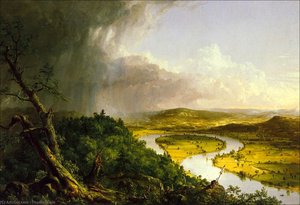
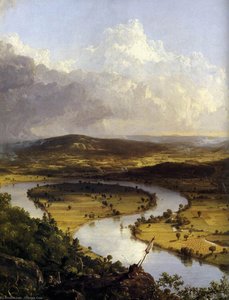
Cole is rightfully regarded as the founder of the Hudson River School, an art movement characterized by its romantic portrayal of the American landscape. However, to label him simply a “landscape painter” feels inadequate. His work transcended mere representation; it was deeply philosophical, often exploring themes of humanity’s relationship with nature, the passage of time, and the rise and fall of civilizations. Influenced by European Romanticism—particularly the works of Claude Lorrain and J.M.W. Turner—Cole adapted these sensibilities to an American context. Where European Romantics often depicted dramatic, sublime landscapes as a reflection of inner turmoil, Cole’s paintings frequently conveyed a sense of optimism and divine presence within the natural world. He saw in the vastness of the American wilderness a symbol of national potential and spiritual renewal. The Oxbow (1836), perhaps his most iconic work, exemplifies this perfectly—a sweeping vista that contrasts the wild, untamed river valley with the cultivated farmlands, representing both the promise and the challenges of westward expansion.Allegory and The Course of Empire
While celebrated for his realistic depictions of nature, Cole’s artistic ambition extended beyond pure landscape painting. He frequently employed allegory to convey complex moral and philosophical ideas. This is most powerfully demonstrated in his monumental series The Course of Empire, created between 1833 and 1836. Comprising five canvases—"Savage State," "Pastoral State," "Arcadian State," "Consummation," and "Destruction"—the series traces the cyclical history of a civilization, from its pristine origins to its inevitable decline. The paintings are not merely historical narratives; they serve as cautionary tales about the dangers of unchecked ambition and the fragility of human achievement. The Course of Empire resonated deeply with contemporary audiences, reflecting anxieties about the rapid industrialization and westward expansion that were transforming the American landscape. It cemented Cole’s reputation as a visionary artist capable of addressing profound societal concerns through his art.Legacy and Enduring Influence
Thomas Cole's untimely death in 1848 at the age of 47 marked a significant loss for the American art world. However, his influence continued to reverberate through generations of artists. He directly mentored Frederic Edwin Church, who would become one of the leading figures of the second generation of Hudson River School painters. His emphasis on observation from nature, combined with a deeply personal and symbolic approach to landscape painting, laid the foundation for a distinctly American artistic tradition.- Cole’s work continues to be exhibited in major museums across the United States, including the New-York Historical Society, the National Gallery of Art in Washington D.C., and the Smithsonian American Art Museum.
- His paintings are not merely historical artifacts; they remain powerfully evocative and relevant today, prompting viewers to contemplate their own relationship with nature and the enduring questions about humanity’s place in the world.
- The Thomas Cole National Historic Site in Catskill, New York, preserves his home and studio, offering visitors a glimpse into the life and work of this remarkable artist.

Thomas Cole
1801 - 1848 , United Kingdom
Quick Facts
- Artistic Movement Or Style: Hudson River School
- Artists Or Movements Influenced By This Artist:
- Asher B. Durand
- Frederic Edwin Church
- Date Of Birth: February 1, 1801
- Date Of Death: February 11, 1848
- Full Name: Thomas Cole
- Nationality: American
- Notable Artworks:
- The Course of Empire
- The Oxbow
- A View from Mount Etna
- The Voyage of Life
- Place Of Birth: Bolton, UK
Related Articles

Hudson River School: 10 Masterpieces That Capture America's Wild Beauty | AllPaintingsStore
Journey through America's breathtaking landscapes with our guide to the Top 10 Hudson River School masterpieces. Explore Thomas Cole, Frederic Church & more! Find museum-quality art reproductions and elevate your home decor at AllPaintingsStore.com.

Romantic Landscapes: 10 Masterpieces for Your Home | AllPaintingsStore
Journey through 10 Romantic landscape masterpieces by Friedrich, Turner & Cole. Explore emotional art, sublime nature scenes & iconic 19th-century paintings. Find museum-quality reproductions for your home at AllPaintingsStore.com – discover the full collection online!
Met Museum's 25 Masterpieces: Art History & Decor Inspiration | AllPaintingsStore
Journey through 25 iconic artworks at the Metropolitan Museum of Art! Explore Van Gogh, Monet, Rembrandt & more. Discover art history, inspiring stories, and museum-quality reproductions to elevate your home decor. Explore the full collection on AllPaintingsStore.com.

Beyond the Horizon: 10 Landscape Masterpieces for Your Home Decor
Journey through 10 breathtaking landscape paintings by Monet, Van Gogh & more! Explore iconic artworks, artistic techniques & find inspiration for your home decor. Museum-quality reproductions at AllPaintingsStore.com. Discover all masterpieces on AllPaintingsStore.com

The Sublime Landscape: Exploring the Hudson River School Movement
Explore the captivating world of the Hudson River School! Discover the history, artists, and defining characteristics of this iconic American art movement. Learn about Romanticism's influence & find inspiration for your collection.