Money-Back Guarantee · 100 days Free Worldwide Delivery
449,564artworks 30,613artists 4,660museums 32languages
Catalogue entry

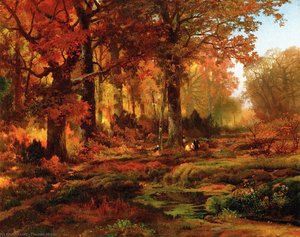
The Teton Range

1897. Oil On Canvas. Metropolitan Museum of Art.

Fig. 1. Thomas Moran, The Teton Range, 1897. Shown as the reproduction you are specifying: , .

§ 1Catalogue data

§ 2Abstract

Collectible Description

Experience Thomas Moran’s ‘The Teton Range’ (1897), a breathtaking Hudson River School landscape! Admire its majestic mountains & serene valley in this iconic oil painting – a must-see masterpiece.

Artist Biography

Explore the breathtaking American West landscapes of Thomas Moran (1837-1926). A key figure in the Hudson River School, known for detailed realism & romantic depictions of the Rocky Mountains, Yellowstone, and Grand Canyon.

§ 3Commentary

A Vision of the Sublime: The Majesty of the Teton Range

In the late nineteenth century, as the American frontier began to yield to the encroaching shadows of industrialization, Thomas Moran captured a world that felt both eternal and untouched. The Teton Range, executed in 1897, is far more than a mere topographical record of the Wyoming wilderness; it is a profound window into the soul of the American West. Through his masterful use of oil on canvas, Moran invites the viewer to stand upon a precipice, looking out over a landscape where the earth meets the heavens in a dramatic display of natural grandeur. The painting serves as a cornerstone of the Hudson River School tradition, embodying the Romantic ideal of the sublime—that breathtaking, almost overwhelming sensation of encountering a beauty so vast it inspires both awe and a touch of reverence.

The composition is a masterclass in layered storytelling, guiding the eye through a panoramic journey that begins in the rugged foreground. Here, the textures of weathered rocks and resilient vegetation ground the viewer in the physical reality of the mountains. As the gaze ascends, it meets the rushing vitality of a river carving its way through the valley, its movement mirrored by the rhythmic contours of rolling hills. The true protagonist, however, remains the towering, snow-capped peaks that dominate the horizon. These giants, rendered with meticulous precision, command the sky, their jagged silhouettes etched against a luminous atmosphere that suggests the infinite scale of the natural world.

Technique and the Alchemy of Light

Moran’s technical prowess lies in his ability to balance scientific accuracy with poetic expression. While his training as an engraver gifted him with an extraordinary eye for detail—allowing him to render every ridge, crevice, and alpine shadow with startling clarity—he was never a prisoner of mere realism. Instead, he utilized atmospheric perspective to breathe life into the distance. By subtly layering cool blues, soft violets, and hazy whites, he creates a convincing illusion of depth, making the far-off peaks appear to recede into a dreamlike mist. This technique ensures that the painting possesses a palpable sense of air and light, as if a mountain breeze might sweep through the room where it hangs.

The color palette is a sophisticated dialogue between warmth and coolness. The crisp, brilliant whites of the glacial snow and the ethereal blue of the sky provide a stark, refreshing contrast to the earthy ochres, deep greens, and rich browns of the valley floor. This interplay of light and shadow does more than define form; it evokes the shifting moods of the wilderness. One can almost feel the warmth of sunlight hitting a granite face or the sudden chill of a cloud passing over the summit. For the collector or interior designer, this dynamic range of color offers an unparalleled versatility, capable of anchoring a room with its quiet strength or serving as a vibrant focal point in a contemporary space.

A Legacy for the Modern Collector

To possess a reproduction of The Teton Range is to bring a piece of American history and natural philosophy into one's home. Beyond its aesthetic brilliance, the work carries a heavy historical weight, reflecting an era of westward expansion and the burgeoning movement to preserve these sacred landscapes as national treasures. While Moran’s work often presented the West as a pristine paradise, modern viewers can appreciate the painting as a poignant meditation on the relationship between humanity and the wild. It is a work that evokes tranquility, strength, and a deep-seated longing for the untouched.

For those seeking to curate an environment of sophistication and inspiration, this piece offers much more than decoration. It provides a sense of scale and a window to the infinite. Whether placed in a grand library, a serene study, or a modern living area, Moran’s vision of the Tetons continues to resonate, offering a timeless escape into the heart of the sublime. It is an investment in beauty, a tribute to the enduring power of nature, and a magnificent addition to any collection dedicated to the heights of American Romanticism.

Questions & Answers

How saturated is the palette of "The Teton Range"?

"The Teton Range" by Thomas Moran is recorded with a subtle color saturation.

What was Thomas Moran's age when "The Teton Range" was created?

Thomas Moran made "The Teton Range" at the age of 60. The artist was born in 1837 and the work is dated 1897.

Is "The Teton Range" by Thomas Moran a light or a dark artwork?

"The Teton Range" by Thomas Moran is recorded as balanced, with a gentle luminance luminance.

§ 4The artist

Thomas Moran

Thomas Moran

1837 - 1926, United Kingdom

Quick facts about Thomas Moran

  • Full Name: Thomas Moran
  • Nationality: American
  • Date Of Birth: 1837
  • Date Of Death: 1926
  • Place Of Birth: Bolton, United Kingdom
  • Notable Artworks:
    • Grand Canyon of Yellowstone
    • The Chasm of the Colorado
  • Artistic Movement Or Style: Hudson River School
  • Artists Who Influenced This Artist: ['J.M.W. Turner']
  • Artists Or Movements Influenced By This Artist: ['Rocky Mountain School']

Artist Biography

A Pioneer of the American West

Thomas Moran, born in Bolton, England, in 1837, wasn’t destined for a life steeped in the rugged beauty of the American landscape he would come to immortalize. His family's emigration to the United States in 1844, seeking opportunity and escaping the burgeoning industrialization of their homeland, proved pivotal. This early transatlantic journey instilled within young Moran a lifelong fascination with the sea – a theme that subtly echoed throughout his later depictions of landlocked vistas. Initially apprenticed as a wood engraver in Philadelphia, he quickly discovered his true calling lay not in replicating images but creating them. The meticulous detail demanded by engraving honed his observational skills, yet it was the burgeoning world of watercolor and the influence of artists like J.M.W. Turner that truly ignited his artistic spirit. Moran’s brother, Edward, also a marine artist, provided early collaboration and support, sharing studio space and fostering a shared dedication to their craft. This familial bond laid the foundation for a career that would redefine how America saw itself – and its western territories.

The Hudson River School and Beyond

Moran’s artistic development was deeply intertwined with the Hudson River School, though he ultimately transcended its conventions. While inheriting their reverence for nature and dramatic use of light and shadow, Moran brought a unique perspective shaped by his own experiences and an evolving American identity. The Hudson River School painters often focused on taming the wilderness, presenting it as a benevolent space ripe for cultivation. Moran, however, captured the West’s untamed grandeur with a sense of awe and respect that bordered on reverence. His style blended meticulous realism with romantic idealism, creating scenes that were both visually stunning and emotionally resonant. He wasn't merely documenting landscapes; he was crafting myths – visions of a land brimming with potential and spiritual significance. The influence of Turner is undeniable in Moran’s work—the swirling skies, the atmospheric perspective, and the emphasis on light as a transformative force all bear witness to this artistic debt. Yet, Moran infused these techniques with an American sensibility, focusing on the unique geological formations and vast scale of the Western territories.

Documenting a Nation's Expansion

Moran’s career reached its zenith during a period of intense national expansion and exploration. In 1871, he joined a government-sponsored expedition to Yellowstone, an area largely unknown to most Americans. The sketches and paintings that emerged from this journey were nothing short of revelatory. His monumental canvas, The Grand Canyon of the Yellowstone, purchased by the U.S. government for $10,000 – a staggering sum at the time – played a crucial role in galvanizing public support for establishing Yellowstone as the nation’s first national park in 1872. This wasn't simply artistic achievement; it was an act of conservation advocacy. Moran’s art didn’t just reflect the beauty of the West, it actively shaped its preservation. He continued to document other significant landscapes, including the Colorado River and the Grand Canyon, further solidifying his reputation as the premier painter of the American West. His work became synonymous with the spirit of exploration and the promise of a new frontier.

Legacy and Enduring Influence

Thomas Moran’s contributions extend far beyond his breathtaking canvases. He helped to define America's visual identity, shaping how generations perceived their own landscape. His paintings weren’t just representations of place; they were statements about national pride, environmental stewardship, and the power of art to influence public opinion. His legacy continues to inspire artists today, and his works remain highly sought after by museums and collectors worldwide. The Smithsonian American Art Museum, among many others, proudly displays his masterpieces, ensuring that his vision endures for future generations. While often categorized within the Hudson River School or the Rocky Mountain School, Moran’s artistic voice was distinctly his own—a powerful blend of observation, imagination, and a deep reverence for the natural world. He passed away in Santa Barbara, California, in 1926, leaving behind a body of work that continues to captivate and inspire, reminding us of the enduring beauty and fragility of the American West.

Key Works & Recognition

  • The Grand Canyon of the Yellowstone (1872): A pivotal painting instrumental in establishing Yellowstone National Park.
  • Chasm of the Colorado (1873-74): Showcasing the immense scale and dramatic beauty of the Grand Canyon.
  • Mountain of the Saints, Jackson Hole, Wyoming (1895): Demonstrating his mastery of atmospheric perspective and light.
  • Numerous sketches and watercolors documenting expeditions to Yellowstone, Colorado, and other Western territories.
Moran’s influence extends beyond specific paintings. He helped establish a visual language for understanding and appreciating the American West, fostering a sense of national identity rooted in its natural wonders. His work remains a testament to the power of art to shape perceptions, inspire conservation efforts, and celebrate the enduring beauty of the world around us.

§ 5Comparanda

§ 6Questions

Quick Facts

  • Notable elements or techniques: Dramatic lighting; Detailed brushwork
  • Medium: Oil on Canvas
  • Title: The Teton Range
  • Artist: Thomas Moran
  • Subject or theme: Mountain scenery

Art Quiz

There is only one correct answer for each question.

Question 1:
What artistic movement heavily influenced Thomas Moran’s depiction of The Teton Range?
Question 2:
Where is The Teton Range painting currently housed?
Question 3:
What prominent figure in the Hudson River School movement created this artwork?
Question 4:
Moran’s attention to detail and ability to capture the majesty of nature are best exemplified in which aspect of The Teton Range?
Question 5:
What is a key characteristic of Moran’s artistic style that contributes to the painting's emotional impact?

§ 7Cite this entry

AllPaintingsStore.com, “Thomas Moran, The Teton Range (1897)”, https://allpaintingsstore.com/en/art/thomas-moran-the-teton-range-8BWVZX-en/ArtistReproduction/ (accessed 5 October 2026).

§ 8The reproduction

Hand Made Oil Reproduction

Hand-painted oil on canvas in your size and frame, made to order by our artists. ( Switch to Print Switch to Digital Image)

It is specified on the order sheet in the margin; the present state of that sheet reads as follows.

The Teton Range

Reproduction Medium

Reproduction Size

-

Elite Senior Artist

More detail, finesse, and extra production time

-

Reproduction Frame

-

-

For artworks or reproductions larger than 105 cm (approximately 41 inches) on any side, the frame will be shipped as a kit, disassembled. This method ensures safe delivery and prevents damage during transport.

Professional assembly required - this is not a DIY product.
The kit must be assembled and the canvas stretched by an experienced professional framer, using wood glue (not supplied), a canvas stretching plier and clamps to hold the bars square while the glue dries. Incorrect assembly or uneven canvas tension can permanently damage the artwork and is not covered by our warranty.

  • All solid wood bars are included, precisely cut to size.

  • Assembled with the screws provided, plus wood glue for the corner joints, which is not supplied and must be sourced by your framer.

  • Professional tools are required and not included: a canvas stretching plier (tensioner) and clamps to hold the bars square while the glue dries.

Important:
The corner joints require wood glue, the bars must be held with clamps until the glue is fully dry, and tightening the canvas on the assembled frame requires a canvas stretching plier. None of these are included in the kit. Please arrange an experienced professional framer before ordering this size.

Nameplate

-

-

Protective Varnish

Glossy Varnish (enhances colors, protects against light/moisture)

-

Customize My Artwork

Examples of what can be changed: Replace face with customer photo; Add pet (e.g., replace cat with dog); Include hidden message in background; Change background landscape or elements.

-

Urgent

Worldwide Delivery () in 3/4 weeks instead of standard 5 weeks. (2 November). No compromise on quality.

-

Express Shipping

Worldwide Delivery () in 5 weeks. (9 November).

Included

Total Price

$ 258

Included with every order

  • Free Worldwide Express Shipping
  • High-Quality Linen Canvas
  • Full Shipping Insurance
  • Customs Tax Refund Guarantee
  • True Color Matching Guarantee
  • 100-Day Return Policy (Defects Only)
  • 100% Money-Back Guarantee
  • Bulk Discount Offer
Order sheet